
 Islamabad: Rising tobacco and nicotine use among Pakistan’s youth, especially around educational institutions, emerged as the central concern at a national review session on tobacco control held by the Aurat Foundation in Islamabad.
Participants from Parliament, government departments, health organizations, and civil society warned that easy availability of cigarettes, vapes, nicotine pouches, and flavored tobacco near schools is creating a growing public health threat. The discussion also pointed to a noticeable increase in tobacco use among women, indicating a shifting trend.
The session called for stronger legislation, faster policy action, and strict enforcement to counter the rapid spread of emerging nicotine products. Speakers emphasized that existing laws remain poorly implemented due to procedural delays, weak monitoring, and limited coordination between federal and provincial bodies.
The need for clear parental awareness, community engagement, and better recognition of new nicotine products was highlighted as an essential part of early prevention. Officials noted that families and schools often remain unaware of modern products marketed to young people.
Technical briefings identified major enforcement gaps and policy loopholes that allow the tobacco industry to expand its reach. Participants noted that companies are increasingly using social media trends, entertainment content, and youth-focused marketing to promote vaping in urban areas.
Government representatives reaffirmed ongoing federal efforts to implement the Prohibition of Smoking and Protection of Non-Smokers Health Ordinance 2002 and to tighten regulations where required. Provincial representatives also announced plans to introduce new resolutions to strengthen tobacco control.
Education sector officials raised alarms over the rise of nicotine products around private institutions and called for tougher regulatory checks. Regulatory authorities stressed the need for a broader social movement to counter tobacco use nationwide.
Closing the event, the Aurat Foundation reiterated its commitment to evidence-based advocacy, cross-sector collaboration, and long-term public awareness initiatives aimed at building a healthier, tobacco-free society.
Islamabad: Rising tobacco and nicotine use among Pakistan’s youth, especially around educational institutions, emerged as the central concern at a national review session on tobacco control held by the Aurat Foundation in Islamabad.
Participants from Parliament, government departments, health organizations, and civil society warned that easy availability of cigarettes, vapes, nicotine pouches, and flavored tobacco near schools is creating a growing public health threat. The discussion also pointed to a noticeable increase in tobacco use among women, indicating a shifting trend.
The session called for stronger legislation, faster policy action, and strict enforcement to counter the rapid spread of emerging nicotine products. Speakers emphasized that existing laws remain poorly implemented due to procedural delays, weak monitoring, and limited coordination between federal and provincial bodies.
The need for clear parental awareness, community engagement, and better recognition of new nicotine products was highlighted as an essential part of early prevention. Officials noted that families and schools often remain unaware of modern products marketed to young people.
Technical briefings identified major enforcement gaps and policy loopholes that allow the tobacco industry to expand its reach. Participants noted that companies are increasingly using social media trends, entertainment content, and youth-focused marketing to promote vaping in urban areas.
Government representatives reaffirmed ongoing federal efforts to implement the Prohibition of Smoking and Protection of Non-Smokers Health Ordinance 2002 and to tighten regulations where required. Provincial representatives also announced plans to introduce new resolutions to strengthen tobacco control.
Education sector officials raised alarms over the rise of nicotine products around private institutions and called for tougher regulatory checks. Regulatory authorities stressed the need for a broader social movement to counter tobacco use nationwide.
Closing the event, the Aurat Foundation reiterated its commitment to evidence-based advocacy, cross-sector collaboration, and long-term public awareness initiatives aimed at building a healthier, tobacco-free society.UPPER DIR: An American woman recently traveled thousands of miles from Illinois to a remote Pakistani district to marry a man who befriended her online over a year ago, praising the people here for their hospitability and urging other foreigners to ignore the “negative” perceptions about Pakistan.
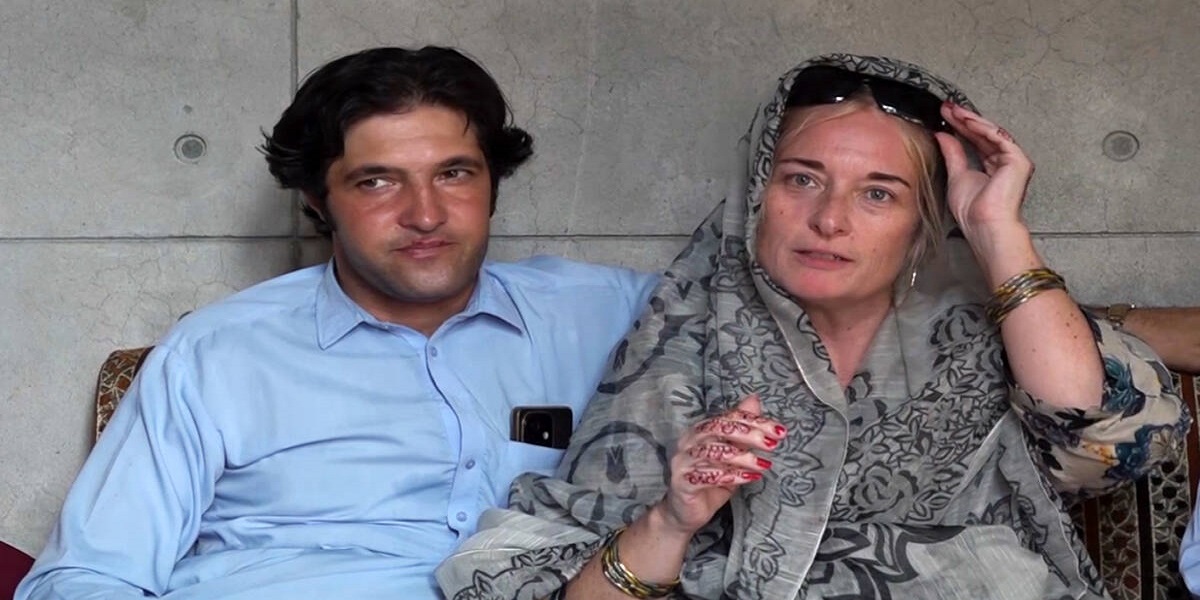
Mindy Rasmussen, a 47-year-old procurement specialist at an aviation repair station in Springfield, Illinois, arrived in Pakistan’s mountainous Upper Dir district’s Usheri Darra valley on June 29 to marry Sajid Zeb Khan, a 31-year-old who works at his father’s medical store.
She’s not the first foreigner who crossed countries to marry a resident of Upper Dir, a district known for its picturesque scenery. An Indian woman, Anju, converted to Islam in July 2023 and changed her name to Fatima before getting married to Nasrullah, a resident of Upper Dir.
Anju met Nasrallah on Facebook, with their romance making headlines worldwide at the time.
Rasmussen, who converted to Islam and adopted the name Zulekha Zeb before marrying Khan on July 2, said he befriended her on Facebook a year ago.
“He (Sajid Khan) sent me a friend request on Facebook and I thought he was very handsome, so I accepted,” Rasmussen revealed while talking to a local media person. “His first message to me was, ‘I am Sajid Khan from Pakistan.’“
Rasmussen said she responded to Khan and the two got to know each other better as time progressed.
“He is a really sweet, loving man and I fell in love with him over this past year that we have been talking,” she said.
Khan is the eldest of nine siblings, who include five sisters and four brothers. The newlywed couple are currently living in Usherai Darra, a famous remote tourist spot in Upper Dir in Khyber Pakhtunkhwa (KP) province.
Khan told media conversations with Rasmussen went from messages to video calls as they grew close. Rasmussen eventually spoke to Khan’s family before she proposed marriage.
“At the end, she proposed to me, saying, ‘Why don’t we get married as we are so close,’” he said.
Traveling to the US was always difficult for Khan, given that Pakistanis have to undergo extensive background checks for a US visa, sometimes leading to delays and denials. Hence, he invited Rasmussen to come to Pakistan instead.
And now that she’s here, he plans to take her to famous tourist attractions in KP.
“We will go around in our own land, like our Swat, Kumrat, Chitral, Usherai Darra, especially Nehag Darra,” he said.
Touched by the people’s hospitality in Pakistan, Rasmussen praised the “tightly knit” community for showering her with affection.
“The love that they have shown me, you know, we don’t really have this back in the US,” she said. “This level of community. I mean, everybody is a neighbor, is a friend, is a family,” she added.
Pakistan’s KP province, despite being home to several glacial lakes, mountain ranges and picturesque locations that lure tourists in droves, has suffered from a surge in militancy recently.
Rasmussen, however, said she had experienced neither “terrorism” nor any violence during her stay in the country. She advised foreigners not to harbor preconceived notions about KP.
“Come with an open mind and you will see for yourself that this is a safe place, a peaceful place and just wonderful people,” she said.
However, her visa expires on August 14 and she is in Pakistan for only a month.
“I plan to go back to the US and then we are going to get Sajid’s [immigration] paperwork going and he is going to come to the US with me,” she said.
Khan, meanwhile, insists he didn’t marry Rasmussen to secure an easy path to American citizenship, saying that she was his “honor” now.
“She has arrived here by choice and has married me by choice,” he said. “Now, she can live by choice and leave by choice.”
Read more: Sindh Govt Suspends SBCA Chief Over Lyari Building Collapse
