

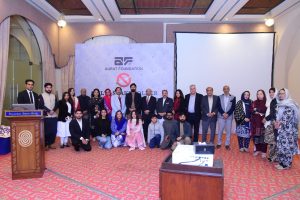
 Islamabad: Rising tobacco and nicotine use among Pakistan’s youth, especially around educational institutions, emerged as the central concern at a national review session on tobacco control held by the Aurat Foundation in Islamabad.
Participants from Parliament, government departments, health organizations, and civil society warned that easy availability of cigarettes, vapes, nicotine pouches, and flavored tobacco near schools is creating a growing public health threat. The discussion also pointed to a noticeable increase in tobacco use among women, indicating a shifting trend.
The session called for stronger legislation, faster policy action, and strict enforcement to counter the rapid spread of emerging nicotine products. Speakers emphasized that existing laws remain poorly implemented due to procedural delays, weak monitoring, and limited coordination between federal and provincial bodies.
The need for clear parental awareness, community engagement, and better recognition of new nicotine products was highlighted as an essential part of early prevention. Officials noted that families and schools often remain unaware of modern products marketed to young people.
Technical briefings identified major enforcement gaps and policy loopholes that allow the tobacco industry to expand its reach. Participants noted that companies are increasingly using social media trends, entertainment content, and youth-focused marketing to promote vaping in urban areas.
Government representatives reaffirmed ongoing federal efforts to implement the Prohibition of Smoking and Protection of Non-Smokers Health Ordinance 2002 and to tighten regulations where required. Provincial representatives also announced plans to introduce new resolutions to strengthen tobacco control.
Education sector officials raised alarms over the rise of nicotine products around private institutions and called for tougher regulatory checks. Regulatory authorities stressed the need for a broader social movement to counter tobacco use nationwide.
Closing the event, the Aurat Foundation reiterated its commitment to evidence-based advocacy, cross-sector collaboration, and long-term public awareness initiatives aimed at building a healthier, tobacco-free society.
Islamabad: Rising tobacco and nicotine use among Pakistan’s youth, especially around educational institutions, emerged as the central concern at a national review session on tobacco control held by the Aurat Foundation in Islamabad.
Participants from Parliament, government departments, health organizations, and civil society warned that easy availability of cigarettes, vapes, nicotine pouches, and flavored tobacco near schools is creating a growing public health threat. The discussion also pointed to a noticeable increase in tobacco use among women, indicating a shifting trend.
The session called for stronger legislation, faster policy action, and strict enforcement to counter the rapid spread of emerging nicotine products. Speakers emphasized that existing laws remain poorly implemented due to procedural delays, weak monitoring, and limited coordination between federal and provincial bodies.
The need for clear parental awareness, community engagement, and better recognition of new nicotine products was highlighted as an essential part of early prevention. Officials noted that families and schools often remain unaware of modern products marketed to young people.
Technical briefings identified major enforcement gaps and policy loopholes that allow the tobacco industry to expand its reach. Participants noted that companies are increasingly using social media trends, entertainment content, and youth-focused marketing to promote vaping in urban areas.
Government representatives reaffirmed ongoing federal efforts to implement the Prohibition of Smoking and Protection of Non-Smokers Health Ordinance 2002 and to tighten regulations where required. Provincial representatives also announced plans to introduce new resolutions to strengthen tobacco control.
Education sector officials raised alarms over the rise of nicotine products around private institutions and called for tougher regulatory checks. Regulatory authorities stressed the need for a broader social movement to counter tobacco use nationwide.
Closing the event, the Aurat Foundation reiterated its commitment to evidence-based advocacy, cross-sector collaboration, and long-term public awareness initiatives aimed at building a healthier, tobacco-free society.SRINAGAR: Amid growing concerns over the sale of rotten and uninspected meat, people of Srinagar have urged the municipal authorities to reopen official slaughterhouses of the city.
Srinagarites revealed that the move is essential to guarantee access to clean, safe and nutritious meat, as street vendors continue to sell questionable products with little oversight.
For over a month, authorities, including the health department and police, have ramped up raids across the city, seizing large quantities of rotten and unfit-for-consumption meat. Fearing strict action, several individuals involved in the illicit meat trade have been seen discarding spoiled meat themselves. Despite these efforts, citizens complain that the municipal authorities have yet to guarantee the supply of clean and safe meat to the public.
“During the ongoing drives, our teams have confiscated considerable amounts of inedible meat and taken strict action against those flouting food safety norms,” an official from the municipal health department said, requesting anonymity as they were not authorized to speak publicly. “However, the challenge remains that without a robust system in place, ensuring consistent quality is difficult.”
Historically, every district and sub-district headquarters in the valley operated municipal slaughterhouses, where local butchers brought livestock for official inspection and slaughter. A veterinary inspector from the municipality would examine each animal, approving only those fit for human consumption. Once slaughtered, the meat was stamped with municipal clearance, while weak or diseased animals were rejected and returned. This system, residents recall, was reliable and ensured only safe meat reached markets.
However, deteriorating law and order led to the closure of these slaughterhouses. For a time, municipal officials continued inspections at butchers’ homes, but that practice also faded away. At present, a lack of oversight means vendors openly sell various types of meat from carts on city streets often with questionable quality and no official inspection.
Read more: Mughal Road Emerges As Lifeline For Kashmir Amid Highway Closure
