ISLAMABAD: The Oil and Gas Regulatory Authority has increased liquefied natural gas (LNG) prices by up to 28 percent for May and issued a new price notification for consumers on the Sui Northern and Sui Southern gas networks.
Under the new rates, the LNG price for Sui Southern has been set at $16.04 per million British thermal units (MMBtu), an increase of $3.51 per MMBtu, the notification said.
The regulator also raised LNG prices on the Sui Northern Gas Pipelines Limited system by $3.40 per mmBTU.
Under the revised rates, the new LNG price for Sui Northern consumers has been set at $16.98 per mmBTU.
The revised prices will be applicable for the month of May, according to the OGRA notification.
Islamabad: ACT Alliance Pakistan has appreciated the Government of Pakistan, Prime Minister Muhammad Shehbaz Sharif, and the Federal Board of Revenue for continuing enforcement against the illegal tobacco industry, saying that firm and consistent action against tax evasion is essential for protecting Pakistan’s revenue base, formal businesses, and investor confidence.
In a statement, ACT Alliance’s Country Director Mubashir Akram said that the government’s recent enforcement posture against illegal cigarette manufacturing, non-duty-paid products, smuggled brands, and violations of the Track and Trace System reflects a much-needed seriousness in defending the documented economy.
“The illegal tobacco industry steals more than Rs. 300 billion from Pakistan’s tax revenue every year. The actual size of the illegal cigarette trade may be three to four times larger than the tax theft itself because the business includes manufacturing, transport, warehousing, wholesale distribution, retail sales, cash circulation, and protection networks,” Akram said.
He said Pakistan cannot afford to treat illegal cigarettes as a routine market violation. “This is organized economic sabotage. Every illegal cigarette pack sold without tax damages the national exchequer, weakens legal businesses, and undermines the credibility of the state’s enforcement system,” he said.
Akram said ACT Alliance Pakistan fully recognizes the importance of the government’s recent actions and believes these efforts must be sustained without interruption. “The Prime Minister and the FBR deserve appreciation for pushing enforcement in a difficult market where illegal operators have enjoyed space for far too long. The challenge now is continuity. Enforcement must not come in waves. It must become a permanent discipline of the state,” he said.
He added that enforcement against the illegal tobacco industry should be seen as part of a much broader national effort against all forms of illegal economy, including smuggling, counterfeiting, under-invoicing, non-duty-paid goods, and tax evasion in major sectors.
According to Akram, consistent action across the illegal economy can add enormous value to Pakistan’s fiscal position.
“If Pakistan keeps pressure on illegal businesses across sectors, the country can recover very large sums in tax revenue over time. This can add tens of billions of dollars to national tax income, improve documentation, and increase the circulation of lawful capital in the market,” Akram said. “Money that currently moves through illegal and undocumented channels must return to the formal economy, where it can support investment, employment, taxation, and growth.”
He said the enforcement campaign is also directly linked to Pakistan’s ability to attract domestic and foreign investment. As the world’s fifth-largest country by population, Pakistan offers a major consumer market, a young labor force, and broad business opportunities. However, investors look beyond population size. They also study whether the state can enforce rules, protect compliant businesses, and prevent illegal operators from capturing market share.
“Domestic and foreign investors are watching whether Pakistan rewards legality or allows illegality to dominate. If the state protects tax-paying businesses, investors will see Pakistan as a serious market. If illegal operators can use pressure to block enforcement, investors will read that as a warning,” Akram said.
He expressed concern over media reports that those involved in the illegal cigarette trade may attempt to use political, administrative, or other forms of influence against FBR officials and law enforcement agencies to stall or halt enforcement operations. “This would be extremely damaging. If illegal cigarette operators succeed in pressuring the system, it will weaken the standing of the government and damage Pakistan’s reputation before those responsible for bringing foreign direct investment into the country,” Akram said.
“No investor wants to enter a market where tax evaders can challenge enforcement through influence. That would be viewed as erosion of the state’s authority against the illegal economy.”
Akram urged the government to protect FBR officers, Customs teams, Inland Revenue officials, and other enforcement personnel from pressure and intimidation. He said officials acting against illegal businesses are not merely conducting raids, they are defending Pakistan’s economic sovereignty.
“These officers are standing between Pakistan’s tax base and the illegal cigarette mafia. They should receive full institutional backing, political support, and public recognition,” he said.
ACT Alliance Pakistan called for continued action against illegal cigarette factories, undeclared tobacco processing, non-TTS products, smuggled cigarette brands, illegal warehouses, and retail outlets selling non-duty-paid products. It also urged stronger coordination among FBR, Pakistan Customs, Inland Revenue, provincial administrations, police, Rangers, and district authorities.
“Pakistan loses trillions of rupees every year because of the illegal economy. The cigarette sector alone shows how damaging this problem has become. The government must not step back. It must move forward with greater force, better coordination, and complete resolve,” Akram said.
He concluded by saying that Pakistan’s message to investors must be clear. “The state stands with legal business, not with tax evaders. Compliance will be protected. Illegal trade will be punished. That is the only way Pakistan can strengthen revenue, rebuild confidence, and unlock its true economic potential.”
ISLAMABAD: Deputy Prime Minister and Foreign Minister Muhammad Ishaq Dar Friday said that the government had been successful in the repatriation of 11 Pakistani nationals, alongside 20 nationals of brotherly country Iran, through Singapore, who were aboard vessels seized in the high seas by the United States.
In a post on X, he said, “All individuals are in good health and high spirits. The welfare and well-being of Pakistanis abroad, particularly those in distress, remains our government’s highest priority. All individuals have reached Bangkok from Singapore and already boarded the flight scheduled to reach Islamabad later tonight. Our Irani brothers will then be facilitated to return to their homeland,” he added.
He said, “My sincere appreciation to the Foreign Minister Vivian Balakrishnan and the Prime Minister and the Government of Singapore for their continued support and engagement throughout this process, extended at my request. I also thank Foreign Minister of Iran, brother Abbas Araghchi, for reposing trust in Pakistan for the repatriation of our Iranian brethren.”
He said, “I extend gratitude to Government of the United States and Secretary Marco Rubio for close coordination in facilitating the smooth return of 31 Pakistani and Irani nationals, and to the Government of Thailand for facilitating, at our request, the transit of these individuals through Bangkok.”
“My heartfelt thanks to my colleagues at the Ministry of Foreign Affairs, Ministry of Interior, and Pakistan’s Missions in Singapore and Thailand for their timely coordination and dedicated efforts, ensuring the smooth, safe, and successful completion of the repatriation process,” he added.
ISLAMABAD: Pakistan has successfully conducted a training launch of the indigenously developed Fatah-4 ground-launched cruise missile, according to the military’s media wing.
As per statement issued by the Inter-Services Public Relations (ISPR), the test was aimed at evaluating the missile’s technical performance and improving the operational readiness of troops.
The ISPR said that the Fatah-4 is equipped with advanced avionics and state-of-the-art navigational systems.
The missile system is capable of engaging long-range targets with high precision, reflecting Pakistan’s growing indigenous defence capabilities.
Military officials said the training launch was conducted by the Pakistan Army Rocket Force Command to validate the technical parameters of different sub-systems integrated into the weapon system.
The exercise was conducted to enhance the operational efficiency of troops while also assessing the missile’s improved accuracy and survivability features, according to the ISPR.
The military described the exercise as part of ongoing efforts to strengthen the operational preparedness of Pakistan’s strategic forces.
The launch was witnessed by senior officers from the Pakistan Army Rocket Force Command, as well as scientists and engineers associated with the missile’s development programme.
The ISPR said Asif Ali Zardari, Shehbaz Sharif, Chief of Army Staff, Chairman Joint Chiefs of Staff Committee, Chief of Naval Staff, and Chief of Air Staff congratulated the team involved in the successful launch.
ISLAMABAD: President Asif Ali Zardari on Wednesday conferred Pakistan’s civil awards on various personalities including the Pakistani nationals and foreigners in recognition of their outstanding services in various fields, APP reported.
The investiture ceremony was organised at the Aiwan e Sadr in which different personalities were decorated with the civil awards in recognition of their services in health, education, literature, journalism, public, research, diplomatic matters, sports and economy.
The ceremony was attended by First Lady Aseefa Bhutto, the federal ministers, Chairman Senate, parliamentarians, members of the civil society, diplomats, media and a large number of people.
Nishan-i-Imtiaz (posthumous) was conferred upon late Nawabzada Nasrullah Khan, and Irfan ul Haq Siddiqui in recognition of their outstanding services to the country.
ISLAMABAD: The State Bank of Pakistan (SBP) said on Wednesday it had received $1.3 billion from the International Monetary Fund (IMF) following the lender’s approval of the latest disbursements under two financing arrangements.
In a post on X, the central bank said, “The IMF Executive Board completed the third review under the Extended Fund Facility (EFF) in its meeting held on May 8 and approved the disbursement of SDR 760 million for Pakistan. Furthermore, the IMF Executive Board has also approved the disbursement of the second tranche of SDR 154 million under the Resilience and Sustainability Facility (RSF).”
“Accordingly, SBP has received SDR 914 million (equivalent to about US$ 1.3 billion) under the EFF and RSF in value May 12 from the IMF,” it said.
It further added that the amount would be reflected in the country’s foreign exchange reserves for the week ending on May 15.
Earlier, the IMF approved the latest review of Pakistan’s economic reform programme, paving the way for the release of nearly $1.1 billion under the Extended Fund Facility (EFF) and an additional $220 million through the Resilience and Sustainability Facility (RSF). With this latest tranche, total disbursements under both programmes have climbed to approximately $4.8 billion.
While announcing the funding approval, the IMF said the support would help strengthen Pakistan’s short-term economic position, but cautioned that the external outlook remains uncertain. In its post-review statement, the Fund warned that Pakistan’s recent economic gains could still face risks from rising global instability, particularly due to spillover effects from the ongoing conflict in the Middle East.
“The authorities’ strong policy implementation, despite the Middle East conflict, has helped preserve economic stability and improve financing as well as external sector conditions,” the IMF said.
According to IMF, shocks stemming from the Middle East war highlighted the need to preserve strong policies and continue structural reforms aimed at achieving durable long-term growth.
IMF Deputy Managing Director and Acting Chair Nigel Clarke also stressed the risks arising from the external situation and the need for continued policy discipline. “Amid a more challenging and highly uncertain external environment since the onset of the war in the Middle East, Pakistan needs to maintain strong macroeconomic policies while accelerating reform efforts, which are critical to managing further shocks and fostering higher sustainable medium-term growth,” he said.
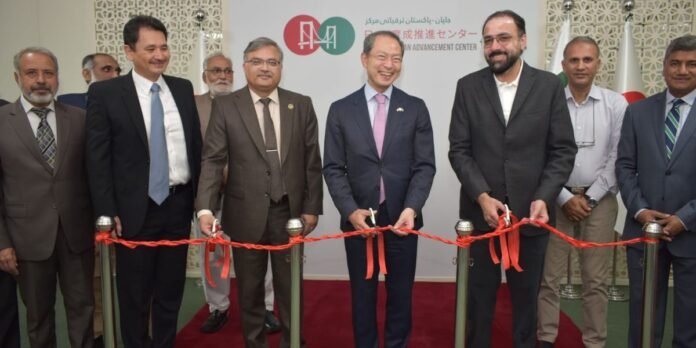
ISLAMABAD: Japan government donated over 168 English-language books to Allama Iqbal Open University (AIOU) Islamabad on Monday under the “Read Japan Project, while also inaugurating a new center aimed at promoting academic, cultural and employment links between the two countries.
The books, donated through the Nippon Foundation’s “Read Japan Project” launched in 2008, cover subjects including Japan’s history, politics, economy, security, international relations, philosophy, literature, language and culture.
Akamatsu Shuichi, Ambassador of Japan to Pakistan, presented the diverse collection spanning Japan’s history, politics, economy, security, international relations, philosophy, literature, language, culture and more to Prof. Dr. Nasir Mahmood, AIOU Vice-Chancellor during a hand over ceremony held on May 12.
Ambassador Akamatsu congratulated students and faculty, stating, “books are bridges of knowledge that allow you to explore the rich tapestry of Japan, understand our perspectives, and even inspire new ideas and innovations here in Pakistan.” He praised JPAC as a key step to strengthen Japan-Pakistan ties in terms of education, employment, and entrepreneurship.
In his remarks, Prof. Dr. Nasir Mahmood expressed sincere gratitude to the Nippon Foundation and the Embassy of Japan, noting the donation of books would help students learn about Japan and enhance bilateral relations. He expressed his determination to cultivate outstanding students and strengthen relations with Japan through JPAC.
Federal Minister for Overseas Pakistanis and Human Resource Development, Chaudhry Salik Hussain, also attended the event and praised JPAC’s initiatives, expressing hope they would further promote friendship and cooperation between Pakistan and Japan.
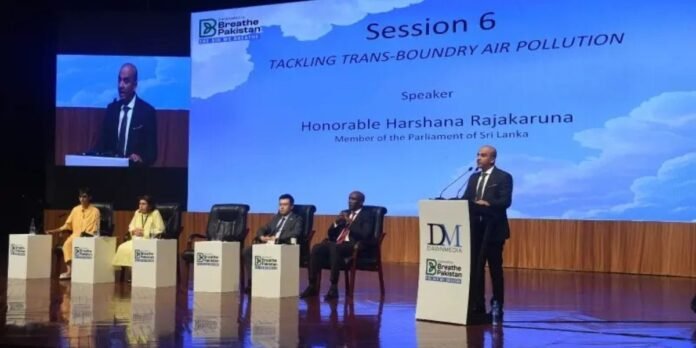
ISLAMABAD: The second edition of the Breathe Pakistan International Climate Change Conference, held by DawnMedia, concluded in Islamabad on Thursday after two days of discussions on climate resilience, climate finance and equitable policymaking.
The conference brought together policymakers parliamentarians, international organisations and climate experts to examine Pakistan’s climate vulnerabilities and the reforms needed to strengthen climate resilience.
Across both days, speakers stressed that climate change was no longer solely an environmental issue, but a broader economic and development challenge requiring coordinated implementation, regional cooperation and long-term planning.
Discussions highlighted the need for climate-responsive urban planning, investment in energy infrastructure, stronger inclusion of vulnerable communities in policymaking, and greater regional collaboration on shared environmental challenges.
The day featured addresses and discussions involving Khyber Pakhtunkhwa Sohail Afridi, Punjab Senior Minister Marriyum Aurangzeb, Romina Khurshid Alam, Mohamed Yahya, Shehzad Roy, Sharmila Faruqui, representatives from the UN, UNEP, WHO, Unicef, IFAD, IRENA, IEEFA, SECP, and others.
In her closing remarks, Dawn CEO Nazafreen Saigol Lakhani thanked speakers, partners, guests and the media for contributing to the conference and helping bring visibility to climate issues.
She said the discussions over the two days reinforced that climate change was now a present reality, with Day 1 focusing on its impact on agriculture, water systems and livelihoods, while Day 2 centred on implementation, resilience and equitable climate action.
Highlighting the role of journalism in climate discourse, she said: “At DawnMedia, we recognise that the role of media in this space is essential. Breathe Pakistan is not just about convening conversations but sustaining them and driving accountability.”
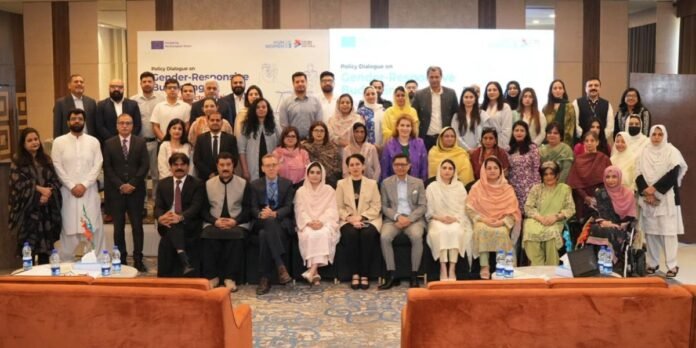
Islamabad: Through European Union financing and support, UN Women Pakistan convened a high-level policy dialogue on gender-responsive budgeting in justice sector institutions in Khyber Pakhtunkhwa and Balochistan, bringing together key stakeholders to strengthen equitable, accountable and evidence-based public finance systems.
UN Women is the United Nations entity dedicated to gender equality and the empowerment of women. It works globally to eliminate discrimination against women and girls, empower women, and achieve equality between women and men.
The dialogue focused on translating fiscal evidence into actionable reforms by examining how provincial budget allocations shape women’s access to justice and protection services.
Insights from the Gender Analysis of Provincial Budgets FY 2025–26 underscored a critical gap between increased overall spending and limited targeted investment in gender-responsive services within the justice sector.
In his keynote remarks, Jeroen Willems, Head of Cooperation to the European Union Delegation to Pakistan, underscored the importance of aligning financial systems with justice sector reform and said, “Gender-responsive budgeting is not merely a technical exercise, it is a governance imperative.
Ensuring that justice sector resources are allocated and utilized in ways that respond to the needs of women and girls is essential to building equitable, transparent and effective institutions.”
Speaking at the event, Fahmida Iqbal Khan, Deputy Country Representative, UN Women Pakistan, emphasised the need to translate investments into justice outcomes and stated, “While justice sector allocations have increased, the key challenge lies in ensuring that these investments lead to improved access to justice for women and girls.
Gender-responsive budgeting is critical to ensuring that justice systems are not only strengthened, but also inclusive and responsive to those most in need.”
Abdul Khaliq Sheikh, Secretary, Ministry of Human Rights, highlighted the importance of institutional accountability within justice systems and said that Integrating gender perspectives into justice sector budgeting processes is essential to ensure that institutions effectively respond to the needs of all citizens, particularly women and vulnerable groups.
He said that strengthening accountability across justice institutions will be key to delivering equitable justice outcomes.
The dialogue featured technical presentations and a moderated discussion on strengthening gender-responsive budgeting within justice sector institutions, including police, prosecution and judiciary systems.
Technical experts presented key findings from the gender budget analysis, highlighting critical gaps between increased overall sector allocations and limited targeted investment in gender-responsive services, such as survivor support, reporting mechanisms and gender-sensitive infrastructure.
These insights informed a panel discussion titled “From Fiscal Growth to Gender Outcomes: What Must Change in Upcoming Development Budgets?”, which brought together representatives from provincial finance and planning departments, justice sector institutions, civil society and development partners.
Participants identified priority reforms for upcoming development cycles, including strengthening gender budget tagging within justice portfolios, improving data and tracking systems, and enhancing coordination across institutions responsible for justice delivery.
The event concluded with a shared commitment to advance gender-responsive public finance reforms within the justice sector, ensuring that future provincial budget allocations translate into improved access to justice, protection services, and institutional responsiveness for women and girls in KP and Balochistan.
The dialogue was convened under the European Union-funded programme “Promoting Rule of Law and Enhancing the Criminal Justice System in Khyber Pakhtunkhwa, Newly Merged Districts and Balochistan,” with a total value of approximately USD 20 million, implemented by UNDP, UN Women and UNODC to strengthen rule of law and expand equitable access to justice, particularly for women and marginalized groups.
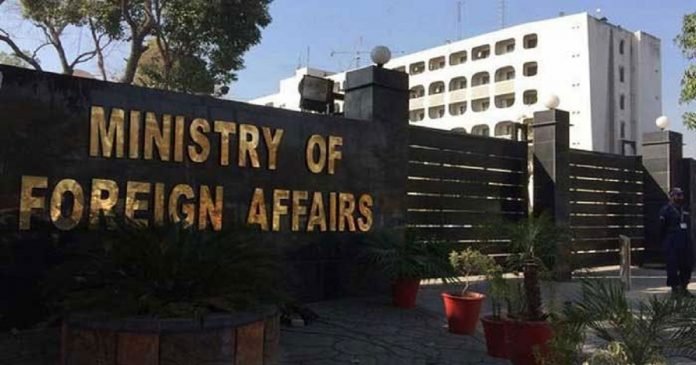
ISLAMABAD: Pakistan has rejected a statement by the British Special Representative regarding the situation along the Pakistan-Afghanistan border, describing it as one-sided and not reflective of the ground realities or the complex situation in the region.
Lindsay had shared a post by the UN Assistance Mission in Afghanistan (UNAMA) on the social media platform X, which stated it had documented “tens of civilians killed or injured” in strikes in eastern Afghanistan, including a university.
Foreign Office spokesperson Tahir Andrabi reiterated that Pakistan continues to face cross-border terrorism, with reports of attacks from Afghan Taliban forces on the Pakistani side.
He added that these incidents have resulted in the martyrdom of 52 civilians and injuries to 84 others.
Andrabi said since the announcement of the temporary pause, “indiscriminate and unprovoked cross-border attacks by the Afghan Taliban, and terrorist activities by Afghan Taliban-supported Indian proxies inside Pakistan, resulted in the martyrdom of 52 civilians and 84 injuries”.
The spokesperson rejected the Afghan authorities’ claims of civilian casualties, dismissing them as baseless and without evidence.
Islamabad urged the international community to view the situation in the region in light of Pakistan’s sacrifices and stance against terrorism, calling for a fact-based, impartial perspective.