As Pakistan celebrates its 78th Independence Day, the nation stands at a crucial juncture, reflecting on a journey marked by triumphs as well as profound challenges. The words of Elif Shafak on collective narcissism and the illusion of a singular worldview resonate with particular poignancy. The intellectual claustrophobia she describes—where we surround ourselves only with our own mirror image—has been a recurring challenge for Pakistan, a country born from the idea of a shared Muslim identity but built upon a rich and complex tapestry of diverse cultures, languages, and histories.
The very foundation of Pakistan was an attempt to forge a collective identity, a ‘unity in diversity.’ Yet, this ideal has often been tested. The historical record, as seen in the accounts of Stanley Wolpert and Justice Javed Iqbal regarding the two funerals of Jinnah, reveals the early pressures to project a monolithic religious image, sacrificing individual identity for a perceived unified national front. The public Sunni janazah led by Maulana Shabbir Ahmad Usmani, a Deobandi scholar, alongside a private Shia service, foreshadowed a long-standing tension between the ideal of a diverse nation and the political desire for a singular, unifying narrative.
This tension, when left unaddressed, led to devastating consequences. The fall of Dhaka in 1971, a tragic and sensitive chapter in Pakistan’s history, stands as a stark reminder of the dangers of political and ethnic alienation. As analysts have noted, the grievances of East Pakistan were political in nature, but they were not handled with the inclusivity required to reconcile diverse groups. The failure to transfer power to the Awami League after its electoral victory, combined with external interference, ultimately shattered the vision of a united nation. The loss of East Pakistan was not just territorial; it was a blow to the country’s identity and its ability to embrace its constituent parts.
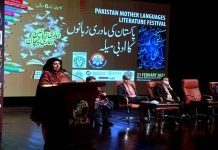
Today, the path forward for Pakistan in its 78th year and beyond lies in embracing the very diversity that has at times been a source of friction. Moving beyond a hackneyed and overused national narrative, Pakistan must foster one that is truly inclusive. A strong national identity must be built on the pillars of collective wisdom, shared humanity, cultural harmony, traditional richness, tolerance, and inclusivity. This requires actively celebrating the country’s multiple cultural, linguistic, and ethnic identities—Punjabi, Sindhi, Pashtun, Baloch, and others—and allowing a new generation of voices, poets, and thinkers to contribute their experimental ideas. This is a tapestry that needs more threads, not fewer. Only through conscious and continuous effort to respect and draw strength from its many facets can Pakistan overcome disillusionment and forge a resilient, cohesive, and strong national narrative on the global stage.
The truth is what we must embrace. Our history, our languages, our 80 distinct cultural ethos—that is who we are. Not a dictated singular identity, but a shared one. Our unity lies in justice, in equality, and in acknowledging all the threads that make up this tapestry: the rivers, the coastlines, the people.
The Economy’s Tapestry: Thriving in Diversity
This push for social cohesion is not merely a moral imperative; it is also an economic one. A nation’s economy thrives on diversity, transforming its varied cultural and linguistic resources into engines of growth. A diverse workforce, drawing on multiple traditions and skills, fuels innovation and entrepreneurship. This is how new markets are created and new solutions found. A successful Pakistani economy would leverage its unique regional strengths—from the fertile agricultural lands of Punjab to the maritime trade along the Makran coast—to build a more resilient and less dependent future.
Furthermore, a diverse and inclusive economy projects a powerful ‘soft image’ globally. A nation that celebrates internal harmony and offers justice and equality to all its citizens is far more attractive to foreign investors, tourists, and trade partners. This enhances competitiveness and builds bridges to international markets, with multilingual and culturally fluent citizens expanding global reach.
The Urdu verse poignantly captures our historical struggle: ‘مر گئی سرو پہ جب ہو کے تصدق قمری / اس سے اس دم بھی نہ طوق اپنے گُلو کا نکلا’ (When the pigeon sacrificed itself for the cypress, even then the collar around its neck was not removed). It speaks to a deep legacy of servitude and the failure to truly be free.
For Pakistan to achieve real cohesion and unity, it must break free from the chains of a dictated identity. It must strive for a society where diversity is celebrated, justice and equality are paramount, and every citizen feels they have a rightful and equal place in the national narrative. This is the only path toward building a resilient, strong, and truly unified Pakistan on the global stage.