

ISLAMABAD: World Health Organization (WHO) has accredited Pakistan’s first private sector drug testing laboratory for quality control used by United Nations agencies.
Prime Health (PVT) LTD, located in the federal capital- a state-of-the art laboratory is first drug testing lab of Pakistan that has qualified WHO’s acceptable level of compliance of Good Practices for Pharmaceutical Quality Control Laboratories (GPPQCL).
The distinction has made Prime Health one of the very few independent labs in entire region that meet WHO standards.
“We are pleased to inform you that the Prime Health Pvt Ltd is considered to be operating at an acceptable level of compliance with WHO Good Practices for Pharmaceutical Quality Control Laboratories and will be included in the list of prequalified quality control laboratories together with the area of expertise inspected and considered prequalified”, WHO wrote in its official letter recognizing Prime Health Pvt Ltd for use by United Nations agencies.
Pharmaceutical industry views this development a significant mile-stone that can help them export their products after an international standard certification from an independent lab established in private sector.
Earlier, only a couple of Pakistani laboratories-all in the government sector had this accreditation. Bureaucratic hick-ups in the government sector have been one of the major reason to discourage exports, especially in this sector as every country in the world needs quality certification before importing a drug.
Interestingly, Pakistan is a rare example, where no certification is required on imported drugs.
Country’s drug regulatory authority is still working to formulate a mechanism for quality assurance of imported drugs. Pakistan is a big market of nutro-products which includes vitamins and food supplements.
Exports of medicines from Pakistan stand at around a mere 200 million US dollars as against India’s exports worth US dollars 20 billion.
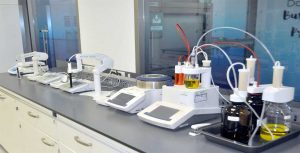
Management of Prime Heath, claims they have used the most modern equipment imported from Germany and Japan in their laboratory and are using United State’s Federal Drug Authority (FDA) compliant software, to make sure that the drugs tested by it meet the international standards.
Talking to a select group of reporters here Dr Ambreen Amir, Chief Operating Officer Prime Health private ltd said there were around 700 pharmaceutical companies in Pakistan and the country had an enormous potential for export of generic medicines.
She said the establishment of an independent laboratory meeting the international standards would help pharma industry find new destinations which it could not access in the past due to stringent compliance requirements of the regulations in US, Europe and other developed countries.
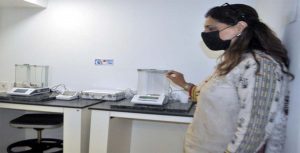
About the capacity of the WHO prequalified lab, she said it can perform comprehensive analysis from credible prediction of in vivo disintegration and dissolution profile of a tablet to testing for any impurities and determination of a medicine’s shelf life under specific temperature and humidity conditions.
Afghanistan used to be top on the list of destinations for the medicines from Pakistan, but over the years it has lost a significant market share to India there, with exports dropping from 75 million US dollars in 2016 to US dollars 65 million in 2018.
Trade Development Authority of Pakistan (TDAP) has called for identification of new markets for the country’s pharmaceutical products as exports to traditional destinations are consistently declining.
State-owned TDAP urged the industry to identify newer regions to do business and advised the government to set up exhibition stalls in potential markets. Consistent lack of exploring new markets by pharmaceutical exporters, over the past few years, indicates the trend towards stagnation.
“Their (exports) inability to penetrate new markets needs to be addressed,” TDAP said in a report. “The top buyers are consistently Afghanistan, Sri Lanka, Philippines and Vietnam. The same buyers, year after year, are indicative of a concentration risk. New markets need to be explored.”
Over the past three years, the top markets for Pakistan have not varied much. Afghanistan, Sri Lanka, Philippines, Vietnam, Lithuania and South Sudan have been the biggest markets for Pakistani pharmaceuticals.
However, market share of Pakistani medicines in Afghanistan has been on the downward trend for the past three years, falling to $65 million in 2018 from $75 million in 2016 due to loss of market share to India. Similarly, market share in Vietnam declined to 0.4 percent in 2018 from 1.0 percent in 2016 due to increasing presence of Indian products.
Pakistani medicine exports to Sri Lanka were $20 million, representing a five percent market share. The Philippines was the third largest customer of Pakistan with $18 million imports. However, the market share in the south East Asian economy was extremely small at 1.2 percent due to the large amount of medicine imports worth $1.3 billion.

The management of Prime Health claimed that it is 1st Contract Analytical Laboratory that provides comprehensive analytical laboratory services to the pharmaceutical and related industries.
It can not only serve as premier analytical laboratory services for pharma industry of Pakistan but to international clients. Among the services provided by this newly set-up lab include:
Pharmaceutical Analytical Services (Drug Substance and Drug Products), impurity profiling, water testing, method validation and microbiological testing.
The lab can also conduct complete stability testing & storage services as per ICH guidelines. Its comparative dissolution section can study protocol, systematic method development& validation package for dissolution profile generation and study report-F1 innovator (reference) product and F2 test product graph comparison.