
Islamabad: Rising tobacco and nicotine use among Pakistan’s youth, especially around educational institutions, emerged as the central concern at a national review session on tobacco control held by the Aurat Foundation in Islamabad.
Participants from Parliament, government departments, health organizations, and civil society warned that easy availability of cigarettes, vapes, nicotine pouches, and flavored tobacco near schools is creating a growing public health threat. The discussion also pointed to a noticeable increase in tobacco use among women, indicating a shifting trend.
The session called for stronger legislation, faster policy action, and strict enforcement to counter the rapid spread of emerging nicotine products. Speakers emphasized that existing laws remain poorly implemented due to procedural delays, weak monitoring, and limited coordination between federal and provincial bodies.
The need for clear parental awareness, community engagement, and better recognition of new nicotine products was highlighted as an essential part of early prevention. Officials noted that families and schools often remain unaware of modern products marketed to young people.
Technical briefings identified major enforcement gaps and policy loopholes that allow the tobacco industry to expand its reach. Participants noted that companies are increasingly using social media trends, entertainment content, and youth-focused marketing to promote vaping in urban areas.
Government representatives reaffirmed ongoing federal efforts to implement the Prohibition of Smoking and Protection of Non-Smokers Health Ordinance 2002 and to tighten regulations where required. Provincial representatives also announced plans to introduce new resolutions to strengthen tobacco control.
Education sector officials raised alarms over the rise of nicotine products around private institutions and called for tougher regulatory checks. Regulatory authorities stressed the need for a broader social movement to counter tobacco use nationwide.
Closing the event, the Aurat Foundation reiterated its commitment to evidence-based advocacy, cross-sector collaboration, and long-term public awareness initiatives aimed at building a healthier, tobacco-free society.SYDNEY/ISLAMABAD: The Global Peace Index 2025 has classified the Kashmir dispute as one of the world’s most dangerous nuclear flashpoints, warning of a potential full-scale war between nuclear-armed neighbors India and Pakistan.
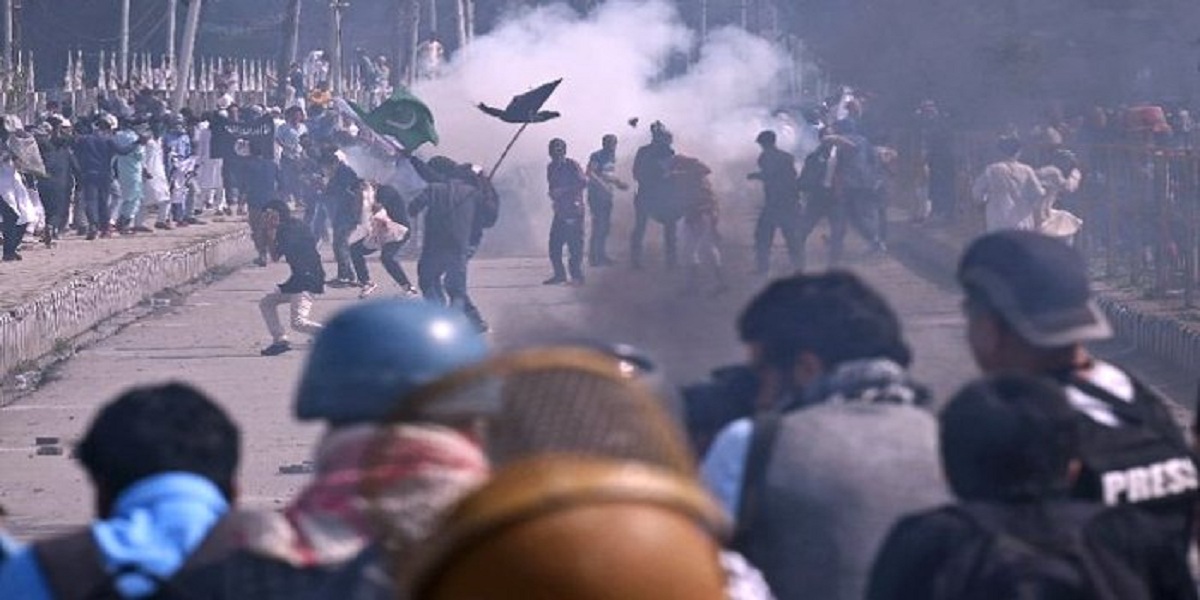
According to the Kashmir Media Service (KMS), the report attributes growing instability in the region to India’s heavy militarization of Indian Illegally Occupied Jammu and Kashmir (IIOJK) and its controversial policies, including the revocation of Article 370 in 2019. Since 1989, thousands of Kashmiris have been killed in state violence, the report notes.
India has deployed nearly 500,000 troops in IIOJK, making it the most militarized region in the world. In contrast, Pakistan maintains a comparatively modest force of 60,000 troops along the Line of Control in Azad Jammu and Kashmir (AJK), reflecting a stark difference in approach.
The report specifically references India’s unprovoked missile strike on Pakistan in May 2025, following the Pahalgam incident, as a “reckless act of militarism” with the potential to spiral into a catastrophic conflict. Although this event falls outside the GPI 2025’s data collection window, it will be included in the 2026 index.
Critically, the report notes the global community’s refusal to adopt India’s narrative by referring to the April 22 Pahalgam assailants as “gunmen” rather than terrorists—a significant diplomatic signal.
Mounting Tensions and Militarized Governance
The GPI notes that since the revocation of Kashmir’s special status in August 2019, India has intensified crackdowns, imposed communication blackouts, and ramped up arrests. The size of IIOJK’s police force has swelled to 130,000, compared to peaceful AJK, which shows no signs of excessive militarization.
The report underscores the growing domestic risks within India as well, warning that prolonged escalation may lead to anti-Muslim violence, political unrest, and destabilization across South Asia.