By Rehmat Mehsud
Nestled in the rugged terrain of South Waziristan, a remarkable transformation is underway—one that seeks to replace the echoes of gunfire with the sounds of learning. The Waziristan Education City is not merely an infrastructure project; it is a vision forged in struggle, a tribute to sacrifice, and a promise of peace through education.
A Dream Forged in Struggle
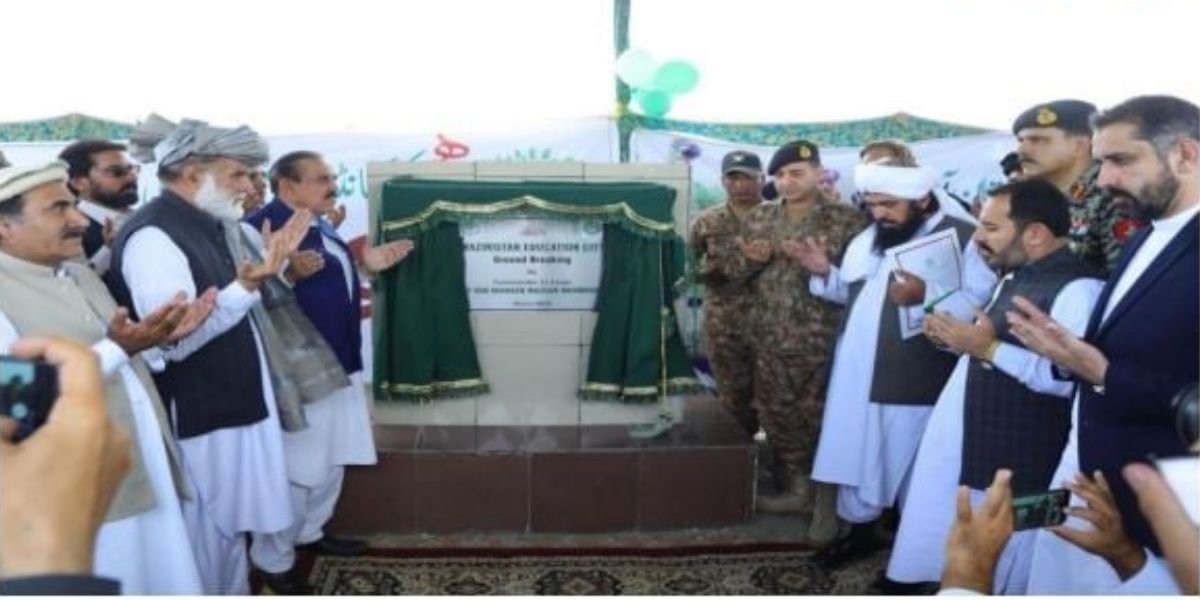
The dream of the Education City was first envisioned by the Mahsud Welfare Association, an organisation devoted to educational uplift and community service. In 2018, the then Corps Commander of 11 Corps formally inaugurated the project—a symbolic moment marking the shift from conflict to reconstruction. However, the initiative remained stalled for years, forgotten by successive provincial governments. Yet the people of Waziristan refused to let the dream die.
The Unseen Sacrifices
No meaningful progress in Waziristan can be discussed without acknowledging the sacrifices of Pakistan’s security forces, police, and civilians. For more than two decades, they stood as the frontline defence against extremism. Countless lives were lost in the fight to reclaim the region from militancy. Civilians endured forced displacement, trauma, and relentless loss. It is their sacrifice that has enabled projects like the Waziristan Education City to be realised today.
Education as the Ultimate Antidote
Waziristan’s painful history has taught a clear lesson: extremism cannot be defeated by force alone. Only education can extinguish the fires of radicalisation. In a region where opportunity has long been absent, the Education City aims to offer a meaningful alternative to violence. Through quality education, vocational training, and civic engagement, it seeks to empower youth with the tools to create a peaceful and prosperous future.
A Community’s Unyielding Spirit
Despite neglect by the state, the Mahsud Welfare Association persisted. Its members tirelessly lobbied authorities, keeping the dream alive. Their efforts bore fruit when Chief Minister Khyber Pakhtunkhwa Ali Amin Khan Gandapur, attending the site’s Annual Prize Distribution Ceremony, announced the project’s inclusion in the provincial development budget—a long overdue but crucial commitment.
The Shamankhel tribe made an extraordinary gesture by donating over 7,000 kanals of land free of cost. This act of generosity underscores a deep-rooted belief in education as the most powerful agent of change.
Visionaries Leading the Charge
The role of Rehmat Khan Mahsud—a respected civil servant—and his team of bureaucrats, entrepreneurs, overseas Pakistanis, educators, and journalists has been vital. Their advocacy recalls the legacy of Sir Syed Ahmed Khan, who too championed education in the face of adversity. Similarly, the political support of MPA Asif Khan Mahsud and his family has been central to the project’s progress.
A Regional Hub for Knowledge and Peace
The Waziristan Education City aspires to be more than a local initiative. It aims to become a regional hub, welcoming students not only from across Khyber Pakhtunkhwa, but from Balochistan and neighbouring Afghanistan. In a region so often defined by conflict, this initiative offers a new narrative—one rooted in intellectual growth and cross-border collaboration.
The comprehensive master plan includes modern schools, vocational training centres, colleges, a university, boarding facilities, and healthcare units—a complete ecosystem for nurturing both minds and communities.
Transparency and the Road Ahead
As construction moves forward, the challenges are far from over. Ensuring financial transparency, strong governance, and trust will be critical. But given the Mahsud Welfare Association’s track record, there is ample reason to be optimistic about their stewardship.
A Beacon of Hope
The Waziristan Education City stands as a symbol of resilience, a tribute to sacrifice, and a pathway to peace. It reminds us that even in regions long scarred by violence, education can heal, uplift, and transform. For Pakistan, and for the future of its youth, such initiatives are not merely important—they are essential.