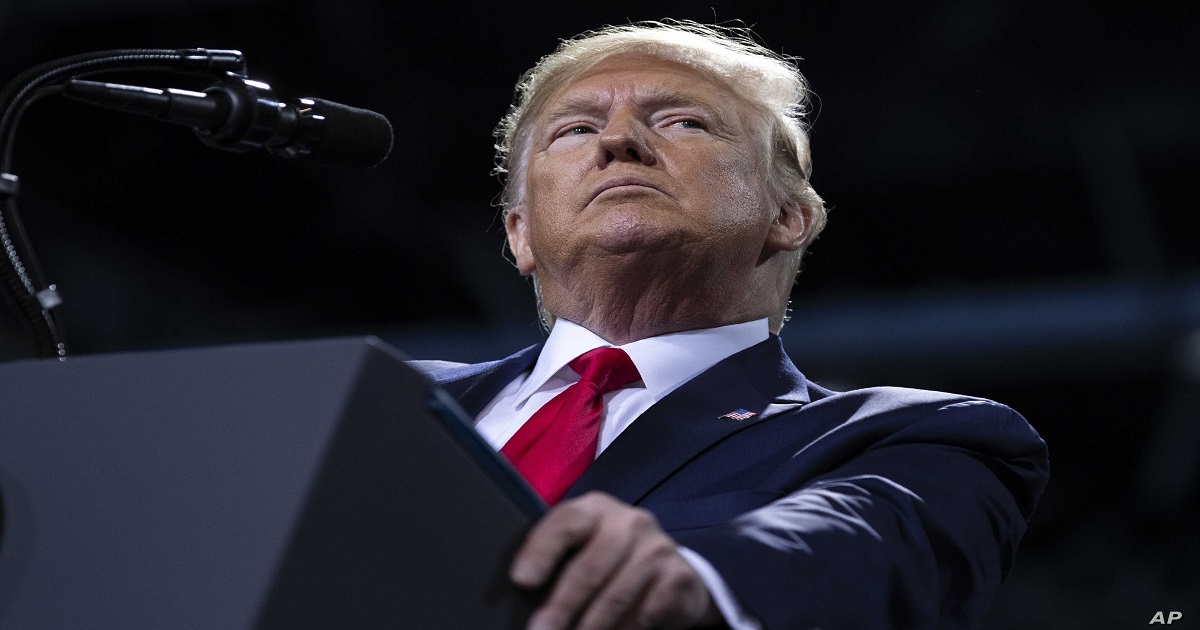
President Donald Trump’s recent visit to Europe—highlighted by a high-profile meeting with British Prime Minister Keir Starmer at Turnberry, Scotland—was supposed to be a show of unity. Instead, it became a theatre of division. The diplomatic spectacle laid bare the vast chasm between Trump’s worldview and that of European leaders. His abrasive tone, patronising lectures, and blind allegiance to Israeli narratives only reinforced the reality that Europe is no longer a junior partner in the transatlantic alliance—but is rapidly distancing itself from a self-absorbed America.
From the outset, the atmosphere at Turnberry was tense. Trump, surrounded by the grandeur of his own golf resort, delivered awkward, condescending monologues to European leaders, as if addressing subordinates rather than allies. In one of the most uncomfortable moments of the visit, he attempted to lecture the European Union on immigration, painting migrants as invaders and demanding urgent action. ‘You’re being overrun,’ he declared, boasting about how America had sealed its own borders.
European Commission President Ursula von der Leyen, while diplomatic, made it clear that Europe would address immigration “the European way”—balancing border security with humanitarian obligations. Legal immigration, she emphasised, would continue. This assertion, though calmly delivered, infuriated Trump. He cut her off mid-sentence, dismissed her explanation, and launched into another tirade about how European leaders were failing their people.
The clash did not stop at immigration. In his usual disdainful manner, Trump criticised Europe’s commitment to renewable energy. He ridiculed wind turbines, calling them an eyesore, bird killers, and a waste of money. ‘They’re ruining your countryside,’ he said. But Trump failed to acknowledge that Europe’s investment in wind energy has significantly lowered production costs, reduced dependence on fossil fuels, and advanced the global fight against climate change. His remarks exposed not only a lack of environmental awareness but also a stubborn ignorance that Europe no longer tolerates.
But the most explosive divergence came when the conversation turned to Gaza. Trump, echoing Israeli Prime Minister Netanyahu’s rhetoric, focused entirely on the Israeli hostages held by Hamas. He praised Israel’s efforts to free twenty hostages—ignoring the over 70,000 Palestinians killed and the countless others starving in what has become an open-air slaughterhouse. His selective sympathy was jarring, especially in the face of overwhelming evidence of mass civilian casualties, destroyed infrastructure, and deliberate starvation.
Starmer, to his credit, refused to remain silent. ‘It’s a humanitarian catastrophe,’ he said bluntly. ‘People in Britain are revolted by what they see.’ His words echoed not only the sentiment of the British public but of much of Europe. While Trump continued blaming Hamas for every drop of blood spilled, Starmer and other European leaders demanded accountability from Israel, aid corridors for Gaza, and an urgent ceasefire.
The divergence extended beyond policy to demeanour. In front of cameras, Trump insulted London’s Mayor Sadiq Khan, calling him a ‘nasty man.’ This wasn’t new—Trump has a history of personal attacks on leaders who disagree with him. But the moment underscored how deeply he resents being challenged, and how little regard he has for democratic norms. Starmer, visibly composed, did not dignify the insult with a direct rebuttal. But the message was clear: Europe’s leaders are tired of Trump’s petulance and disrespect.
Even in press briefings, Trump repeatedly interrupted Starmer, treating him less like a peer and more like a political amateur. Whether discussing Gaza, immigration, or green energy, Trump dominated the conversation with the same bombast and self-righteous tone that has alienated even America’s closest allies.
While Trump views foreign relations as a performance of dominance, Europe is increasingly operating from a place of principle. Ursula von der Leyen, Emmanuel Macron, and now Keir Starmer represent a bloc that no longer sees the U.S. as the default moral compass. They are now charting their own course—one that prioritises international law, humanitarian protection, and strategic autonomy.
This shift has been building for some time. Since Trump’s return to the White House, he has repeatedly undercut NATO, threatened tariffs, and dismissed EU unity. But Europe is no longer in a position of dependence. In fact, it is stepping up—taking on more responsibility in NATO, investing more in its own defence, and even offering financial assistance to stabilise global crises where the U.S. now hesitates.
Where the United States under Trump uses aid and weapons as tools of coercion, Europe is focusing on diplomacy and sustainable development. The U.S. might still wield military might, but Europe is winning on legitimacy, credibility, and moral authority.
The differences have become irreconcilable. Trump’s alignment with Netanyahu and his unwillingness to criticise Israel’s disproportionate actions in Gaza have left Europe with no choice but to go its own way. France has committed to recognising a Palestinian state. Over 200 MPs in Britain have signed a joint letter urging immediate recognition. Spain, Ireland, and Belgium are considering similar steps. This marks a political and ethical rupture from America’s blank-check approach to Israeli aggression.
The relationship is not just cooling—it is fracturing. Europe has outgrown the need for American validation. The old days, where Washington led and Brussels followed, are over. The so-called honeymoon—rooted in World War alliances and Cold War dynamics—has officially ended. In its place is a cold, transactional relationship marked by mistrust, divergent goals, and public humiliation.
Trump alienated the very allies he once relied upon. And in doing so, he quietly closed a chapter. The transatlantic alliance, once the bedrock of global democracy, now looks like a formality—strained, hollow, and destined for dissolution. What began as an awkward visit ended with a clear verdict: the game is over. The U.S. no longer has the upper hand. The world’s balance of power has shifted—and Europe is no longer looking to America for answers.