ISLAMABAD: Pakistan, this monsoon season is facing worst for another wave of flash floods sweeping across Khyber Pakhtunkhwa, Gilgit-Baltistan, and now Punjab, underscoring the country’s growing vulnerability to climate-driven disasters.
A Post-Disaster Needs Assessment (PDNA) conducted after the 2022 deluge — which displaced millions and caused massive damage — put losses at $14.9 billion and recovery needs at $16.3 billion.
While donors pledged $10.9 billion at the 2023 Geneva conference, only about 20% has been mobilised in the three years since, leaving critical recovery and resilience-building efforts stalled.
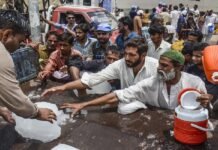
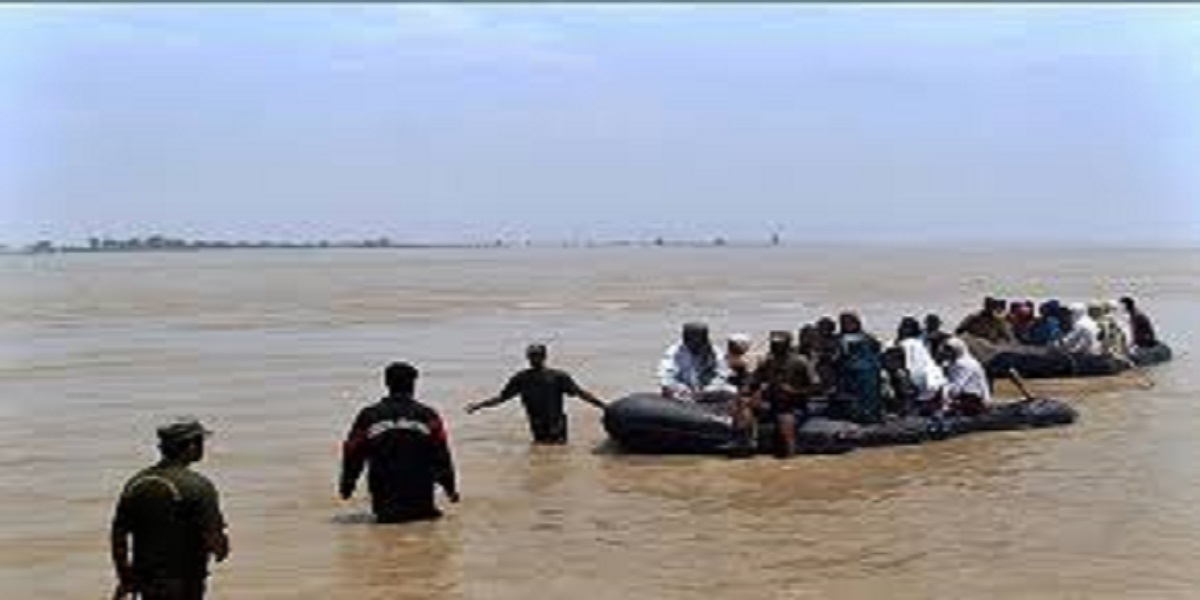
Images of inundated villages, destroyed crops, and displaced families serve as a stark reminder of the cost of inaction and the growing urgency for global climate justice and accountability.
The World Bank estimated that Pakistan required $348 billion for the next seven years to address climate and development challenges.
Three years after the catastrophic floods of 2022, Pakistan’s ambitious recovery and reconstruction agenda — underpinned by the Post-Disaster Needs Assessment (PDNA) and the Resilient Recovery, Rehabilitation, and Reconstruction Framework (4RF) —faces significant setbacks.
While the total recovery needs were estimated at $16.3 billion over a 3-to-5-year horizon, the actual financial progress stands at less than 20% of the target.
Launched in October 2022, the PDNA assessed the economic damages and losses at $14.9 billion and $15.2 billion, respectively, across 17 sectors. These were consolidated into four Strategic Recovery Objectives (SROs) in the 4RF.
The 4RF became the foundation of Pakistan’s pitch to international donors at the Geneva Conference in January 2023, where $10.9 billion in pledges were secured.
Despite strong commitments, only $3.4 billion worth of projects have been executed. Donor financing remains heavily skewed, with multilateral institutions such as the World Bank, ADB, AIIB, and IDB accounting for 90% of total pledges.
However, disbursement patterns reveal critical bottlenecks: The World Bank has initiated projects totaling $2.1 billion. The ADB has operationalised nearly a third of its pledged amount.
The Islamic Development Bank has allocated only $600 million to flood-related activities — relegating the rest ($3.6 billion) to commodity financing under commercial terms. AIIB has offered limited budgetary support with minimal direct flood relevance.
Saudi Fund for Development’s $1 billion is tied to oil financing, not flood recovery. This dramatically reduces the effective recovery funding to around $6 billion.
Worryingly, SRO-2, which covers agriculture and livelihoods, the sectors that bore the brunt of the floods, has attracted less than $200 million, a mere 4.5% of its need. Given agriculture’s role in GDP and employment, this imbalance poses long-term economic risks.
The Paris Club countries collectively pledged $799 million, but only 14.6% had been disbursed by August 2024. Countries like France and Japan led initial commitments, but overall delivery remains sluggish.
Germany and Italy have yet to meaningfully engage, while remote, hard-hit districts in Balochistan and Sindh remain underserved.
The bifurcation in aid allocation continues: infrastructure projects attract concessional loans, while soft sectors (health, inclusion, governance) rely on scarce grants.
Read more: Tessori Terms India’s Release Of Water Into Pak Rivers As Water Terrorism