
Islamabad: Rising tobacco and nicotine use among Pakistan’s youth, especially around educational institutions, emerged as the central concern at a national review session on tobacco control held by the Aurat Foundation in Islamabad.
Participants from Parliament, government departments, health organizations, and civil society warned that easy availability of cigarettes, vapes, nicotine pouches, and flavored tobacco near schools is creating a growing public health threat. The discussion also pointed to a noticeable increase in tobacco use among women, indicating a shifting trend.
The session called for stronger legislation, faster policy action, and strict enforcement to counter the rapid spread of emerging nicotine products. Speakers emphasized that existing laws remain poorly implemented due to procedural delays, weak monitoring, and limited coordination between federal and provincial bodies.
The need for clear parental awareness, community engagement, and better recognition of new nicotine products was highlighted as an essential part of early prevention. Officials noted that families and schools often remain unaware of modern products marketed to young people.
Technical briefings identified major enforcement gaps and policy loopholes that allow the tobacco industry to expand its reach. Participants noted that companies are increasingly using social media trends, entertainment content, and youth-focused marketing to promote vaping in urban areas.
Government representatives reaffirmed ongoing federal efforts to implement the Prohibition of Smoking and Protection of Non-Smokers Health Ordinance 2002 and to tighten regulations where required. Provincial representatives also announced plans to introduce new resolutions to strengthen tobacco control.
Education sector officials raised alarms over the rise of nicotine products around private institutions and called for tougher regulatory checks. Regulatory authorities stressed the need for a broader social movement to counter tobacco use nationwide.
Closing the event, the Aurat Foundation reiterated its commitment to evidence-based advocacy, cross-sector collaboration, and long-term public awareness initiatives aimed at building a healthier, tobacco-free society.MULTAN: A worsening flood crisis has gripped several regions across Punjab as India continued Water Terrorism and released additional water into the Sutlej River while Chenab River is also experiencing high flood level.
The situation has led to widespread displacement, crop damage, and infrastructure strain in multiple districts.
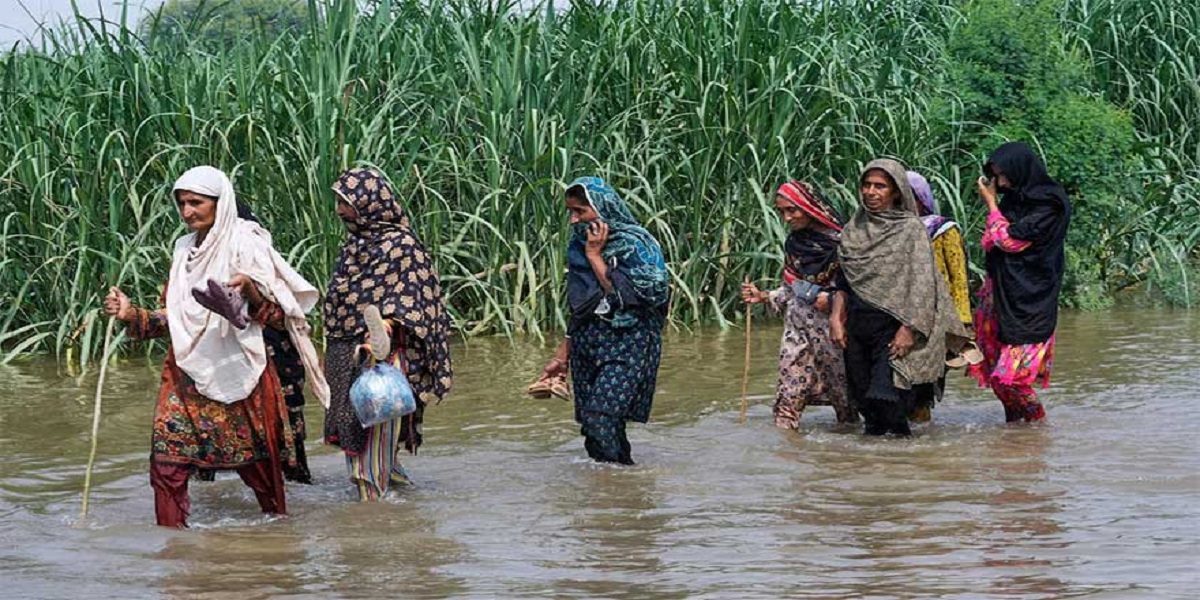
In Jalalpur Pirwala, floodwaters breached embankments due to the fast-flowing Chenab River, submerging dozens of villages. Residents climbed onto rooftops to escape rising waters. Emergency has been declared in Jalalpur Pirwala and Shujabad, with evacuation orders issued for affected towns.
It may be recalled India released more water into the Sutlej River on Sunday and informed the government of Pakistan diplomatically. The government issued flood alerts after severe water flow was recorded downstream of Harike and Ferozepur on the Sutlej. At Head Panjnad, the inflow and outflow reached over 609,669 cusecs, while at Head Trimmu, the Chenab’s flow was recorded at 543,000 cusecs.
In Multan’s Jalalpur Pirwala, embankments at Shah Rasool and Beat Wahi villages collapsed, allowing water to enter homes in Bahadurpur and nearby areas. Authorities are attempting to protect the city embankment as Chenab waters threaten to break through. Additional rescue assets, including 50 boats and 5 drones, have been deployed.
Rescue 1122 confirmed that operations continued overnight, rescuing 143 people in a midnight operation from Karam Wali and Darabpur, while 2,343 individuals were rescued across Multan in the past 24 hours.
Cumulatively, over 10,810 people have been evacuated in the Multan district alone.
In Jhang, a second major flood wave in the Chenab inundated over 300 villages, damaging crops on 281,000 acres. In Muzaffargarh’s Azmatpur area, a breached embankment forced over 7,000 residents to flee.
Severe flooding has reached Bahawalpur’s Northern Bypass area, while in Chiniot, medium-level flooding submerged over 100 villages, cutting off road access to several areas.
Read more: Flood Flowing Towards South; Sindh Put On High Alert