
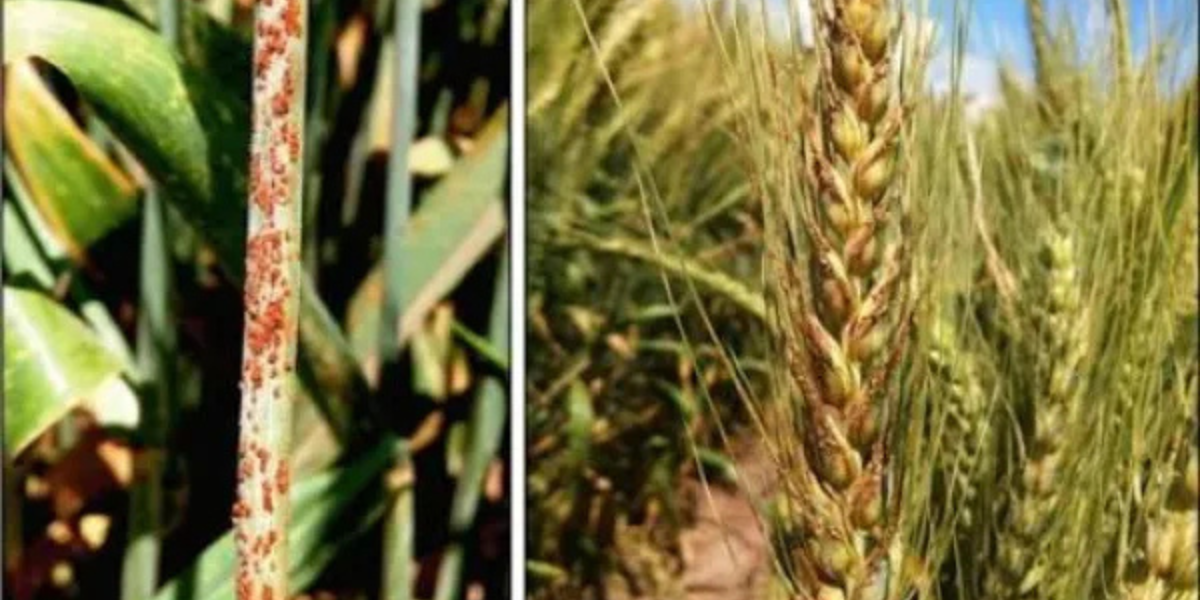
ISLAMABAD: Pakistani and Chinese scientists have identified 47 important genes in wheat that could help develop new varieties resistant to a major fungal disease and better able to withstand climate challenges. The joint research has been published in the international journal Rice (SpringerOpen) in October 2025, Gwadar Pro reported on Thursday.
The study was led by Babar Hussain of University of Central Punjab (Pakistan) and Qasim Raza of University of Chinese Academy of Sciences (China), with Dr. Rana Muhammad Atif of University of Agriculture Faisalabad (UAF) serving as the corresponding author. It also involved experts from Australia and the United States.
The research focuses on a group of genes known as MLO (Mildew Locus O), which determine how wheat plants respond to powdery mildew, which is one of the world’s most damaging wheat diseases, capable of cutting yields by more than half if uncontrolled.
“This study provides a compendium of wheat MLO genes, which could be functionally characterized to confirm their roles in PM resistance and further exploited in wheat breeding programs for the development of climate-resilient cultivars,” the authors wrote.
Using the latest wheat genome data, the team mapped 47 of these MLO genes across all 21 wheat chromosomes. They found that 10 of these genes are particularly active when the plant faces disease or environmental stress, making them promising targets for future breeding and gene-editing efforts.
Importantly, key experiments were conducted in China, where researchers tested wheat varieties under controlled conditions. This included N9134, a Chinese wheat line known for its strong resistance to powdery mildew.
“Seeds of both genotypes were obtained from Peking University Institute of Advanced Agricultural Sciences, China”, as per the study. “A PM-resistant wheat line, N9134, that shows high resistance to all Blumeria graminis races in China, along with a susceptible wheat cultivar, Fielder, were selected for quantitative real-time PCR-based expression analysis,” the study explained.
The findings show that previously unused genetic diversity in wheat can be harnessed to build stronger, disease-resistant, and climate-resilient crops.
This breakthrough provides a solid foundation for breeding improved wheat varieties, which is crucial for countries like Pakistan, where wheat is a staple food and climate change is making crop diseases more severe.
Also read: LDA Seals 85 illegal Properties