When we landed in China last week as part of a delegation invited by the Chinese Consulate General in Lahore, we expected to observe China’s remarkable economic transformation, modern infrastructure and technological advancement. But something much simpler caught my attention: bicycles.
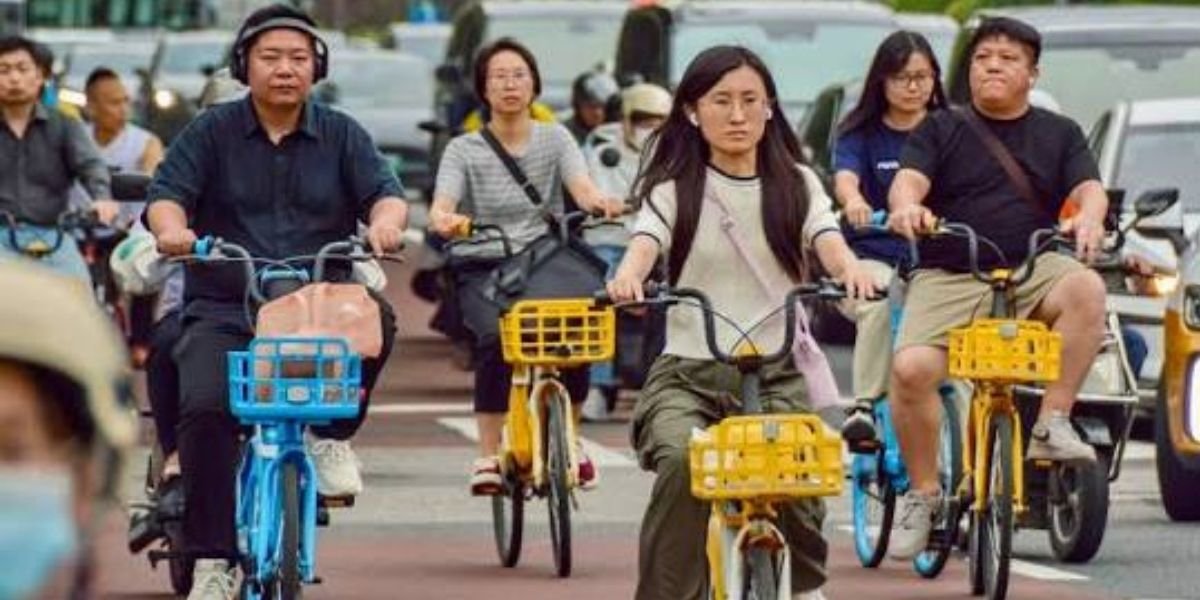
During our visits to Beijing, Shanghai, Shenzhen and Guangzhou, we repeatedly saw people riding bicycles on roads alongside dedicated cycling lanes. Young people, office workers and ordinary citizens were using bicycles not merely for exercise or recreation, but as a normal means of getting from one place to another.
What was more impressive was the ease with which an ordinary person could become a cyclist. One does not necessarily need to own a bicycle.
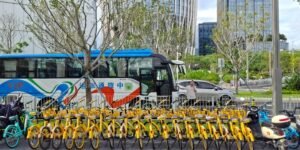
In many parts of these cities, shared bicycles are parked almost everywhere. A person can locate one through a mobile application, scan a QR code, unlock it and ride to the destination. After reaching the destination, the bicycle can be returned at an authorised parking location.
It is a remarkably simple idea, and sometimes small ideas can produce big changes. China has made the bicycle part of everyday transport. The shared-bicycle system is now operating on a massive scale. China has not treated cycling merely as a recreational activity; it has incorporated two-wheel mobility into the urban transport system.
For a visitor, the procedure is surprisingly straightforward. China’s major shared-bike operators can generally be recognised by their yellow, blue and green colours. Users can access the cycling services through their respective apps or through platforms such as WeChat and Alipay. Anyone can download a mobile application and register on it. Foreign visitors can generally use their passports where supported and link a valid payment method.
The application shows nearby available bicycles on a map. If you see one on the street, you can simply scan its QR code, press the unlock button and the bicycle is ready to ride. After reaching your destination, you take the bicycle to an authorised parking area and lock it. The application then ends the journey and calculates the fare.
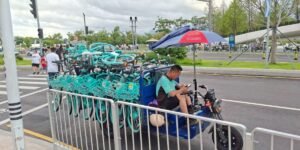
The price is another reason the system has become attractive. In other words, the bicycle is available without the financial burden of buying, maintaining and parking one’s own vehicle.
It is not just about bicycles — it is about replacing car journeys, which is perhaps the most important lesson for Lahore and other cities in Punjab that are badly affected by smog. Instead of starting a motorcycle or car for a short journey, a person can walk to the nearest shared bicycle, ride it to the destination and leave it there. This is why the bicycle becomes more than an exercise machine.
There is a dire need to promote this practice in cities such as Lahore, Multan, Faisalabad and Gujranwala, where the situation gets worse during the smog season. A bicycle produces no tailpipe emissions. When a bicycle replaces a trip that would otherwise have been made by a petrol- or diesel-powered vehicle, pollution and carbon emissions can be reduced.
Chief Minister Punjab Maryam Nawaz and Senior Minister Maryam Aurangzeb have visited China along with other cabinet members. The provincial government should learn from China how it has tackled its air-pollution problem through a combination of measures, including the promotion of cycling and electric bikes.
“There is a strong feeling that bike-sharing has shifted some journeys away from private cars, reducing vehicle kilometres and carbon emissions,” a Pakistani student, Raza Khan, told this scribe in Beijing.
However, this does not mean that bicycles alone cleaned China’s skies. Improvements in air quality have involved far-reaching policies affecting coal use, industry, power generation, vehicle emissions and public transport. Cycling can nevertheless contribute to one crucial part of the equation.
It made me think about Lahore, which does not have a shortage of people who need to travel short distances. It has a shortage of convenient, affordable and easily accessible alternatives to motorcycles, cars and rickshaws.
The scale of Lahore’s air-quality problem is alarming. Lahore’s smog, of course, is not caused by traffic alone. Industrial emissions, brick kilns, crop-residue burning, construction dust and unfavourable winter weather all contribute to the problem.
No serious solution can simply be called a ‘bicycle policy’, but perhaps bicycles can be one important piece of a larger solution. A person visiting a market could unlock a bicycle, ride for 10 or 15 minutes and leave it at an authorised parking point.
The technology already exists and the basic concept is not complicated. What is required is planning, regulation and infrastructure. Punjab could begin with pilot projects rather than attempting to transform Lahore overnight.
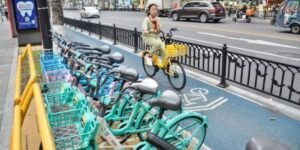
A shared-bicycle programme could initially be introduced around major Metrobus and Orange Line stations, universities, government offices, commercial centres and large residential areas.
Most importantly, cycling should be promoted not as something associated with poverty or leisure, but as a modern, healthy and environmentally responsible form of urban mobility.
There is another benefit that is sometimes lost in the discussion about smog: cycling is physical activity.
That is one reason the Chinese model is impressive. The bicycle was not being promoted only as an environmental symbol; rather, it was being treated as a normal means of transportation.
Perhaps it is time for Lahore to take a ride.