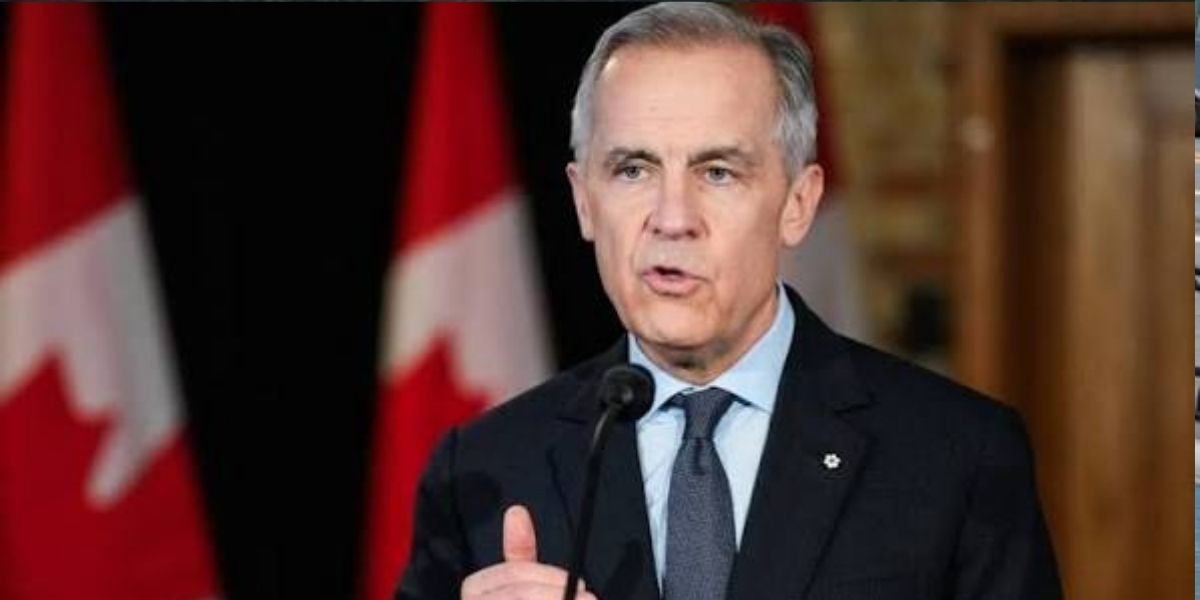
Mark Carney’s remarkable address at Davos earlier this year was more than a Canadian response to a changing world. It amounted to an intellectual challenge to the assumptions upon which much of the post-war international system was built.
His central proposition was unsettling: the world is experiencing not merely a transition but a “rupture”, in which great powers like the United States increasingly use tariffs, finance, supply chains and economic integration as instruments of leverage. Countries that continue believing accommodation will automatically purchase security may therefore be living inside what Carney called a “pleasant fiction”.
For decades, Europe, Asia, the Middle East and many developing countries organised significant parts of their security and economic policies around an American-led international system. The problem was not the partnership itself. The danger arose when partnership became dependency, dependency encouraged complacency, and complacency was mistaken for permanent security.
Europe offers perhaps the clearest warning. For decades, it relied heavily upon American military power while concentrating its own resources on economic and social development. Yet Washington is now explicitly pressing Europeans to assume greater responsibility for defending their continent. More dramatically, European governments were confronted with American pressure over Greenland and tariff threats against allies that resisted Washington’s position. Britain publicly called such tariffs against allies “wrong”, while European leaders insisted that Denmark and Greenland’s sovereignty was non-negotiable.
This is precisely the kind of contradiction Carney wants middle powers to recognise. An alliance can remain valuable without being treated as an insurance policy against every future contingency. Friendship between states is ultimately governed by interests, and interests change.
Canada learned the same lesson with exceptional severity. Few relationships appeared more permanent than that between Canada and the United States. Their economies became deeply integrated, their defence structures intertwined, and their border became one of the most economically consequential in the world. Yet Canada is currently confronting substantial American tariffs and escalating commercial tensions. In August, Washington imposed 50 per cent tariffs on roughly $20 billion worth of Canadian goods after negotiations failed; Canada subsequently prepared equivalent retaliation.
Carney’s response has therefore been not to sever relations with America but to reduce Canada’s vulnerability to any single relationship. Canada is seeking new trade arrangements, investing in strategic industries and building coalitions with other middle powers. His government says Canada is pursuing links between the European Union and the Trans-Pacific Partnership that could encompass 1.5 billion people.
The lesson travels far beyond the Atlantic. Middle Eastern states historically dependent upon American security guarantees must also reassess what sovereignty requires in an era when regional wars, sanctions and great-power confrontation can impose enormous costs on countries that did not design those conflicts.
Pakistan and many developing economies face a different vulnerability. Their dependence may be financial rather than military: external financing, international institutions, export markets, technology, energy or foreign investment can narrow the space available for genuinely independent decision-making. The larger truth is more important: excessive dependence on any external centre of power creates leverage, and leverage can eventually become coercion.
Here, China provides an instructive contrast, though not a flawless model. China spent decades building the economic, industrial, technological and military foundations that allow it to negotiate with Washington from a fundamentally different position. It developed enormous manufacturing capacity, infrastructure, foreign-exchange resources, technological capabilities and increasingly sophisticated armed forces. It did not achieve autonomy by isolating itself; paradoxically, it used global integration to accumulate national strength.
Consequently, when Washington pressures Beijing, China possesses instruments with which to respond. It means sovereignty becomes more credible when backed by capability.
Iran demonstrates another, much harsher version of strategic autonomy. Whatever judgment one makes about its government or policies, decades of sanctions and confrontation have forced Tehran to develop a considerable capacity to operate without the degree of Western economic and security integration enjoyed by many regional states. The costs to Iranian society have been substantial. Yet its experience illustrates the same principle from another direction: independence has a price, but dependence carries risks of its own.
The objective for other countries should therefore not be to become China or Iran. Nor should they simply replace Washington with Beijing. Changing masters is not strategic autonomy.
The real objective should be diversified sovereignty. A country that depends upon one state for defence, another single market for exports, one financial network for transactions, imported energy for survival and foreign technology for critical infrastructure possesses formal sovereignty but limited strategic freedom.
Carney captures this brutally when describing middle powers negotiating individually with a hegemon: they negotiate from weakness, compete to become the most accommodating and eventually perform sovereignty while accepting subordination. That observation should resonate across Asia, Africa and the Middle East.
Countries must begin measuring national strength differently. Military capability matters, but so do food security, energy, technological capacity, industrial production, critical minerals, financial resilience, educated human capital and diversified trade. A nation unable to feed itself, fuel itself or defend itself, Carney warns, has few options when international rules cease protecting it.
Building these capabilities inevitably demands sacrifice. Governments must invest in education, research, infrastructure, domestic manufacturing, energy, agriculture, artificial intelligence and defence. They must mobilise their human resources instead of allowing talent to remain underdeveloped. Above all, citizens must understand that sovereignty cannot indefinitely be outsourced while independence is simultaneously expected.
But no middle power can realistically reproduce the scale of China or the United States. That is why Carney’s second prescription is as important as the first: middle powers must combine their strength.
His memorable warning that countries absent from the negotiating table risk finding themselves “on the menu” captures the predicament perfectly. Great powers possess the markets, militaries and financial leverage to act alone. Most other states do not. Their answer must therefore be coalitions — on trade, technology, critical minerals, energy, finance, maritime security and defence — constructed around common interests rather than blind allegiance.
This is where his invocation of Václav Havel acquires extraordinary relevance. Systems of domination survive not simply because the powerful impose them but because others participate in rituals they privately know to be false. Carney’s metaphorical instruction to middle powers is therefore to stop performing the ritual — to “take the sign out of the window”. The wiser conclusion is: never make another country indispensable to your survival.
Donald Trump’s transactional approach has merely made this structural reality harder to ignore. Alliances, markets and security guarantees remain useful, but none substitutes for national capability. Protection granted by another power can be renegotiated; market access can be restricted; financial infrastructure can become leverage; yesterday’s strategic assumption can become tomorrow’s vulnerability.
The choice confronting middle powers is therefore not between America and China, East and West, submission and isolation. It is between dependency and strategic autonomy.
Build strength at home. Diversify abroad. Cooperate with others without surrendering decision-making. Defend international law consistently. Develop citizens capable of accepting the costs of genuine independence. And never confuse the favour of the powerful with permanent security.
That is the deeper significance of Carney’s speech. The era in which countries could outsource their strategic destiny and call the resulting comfort sovereignty is fading. The nations that recognise this early will endure the rupture with dignity. Those that continue competing for the favour of great powers may eventually discover the cruelest truth of international politics:
A security umbrella belongs to the country holding the umbrella — and it can close it whenever it chooses.