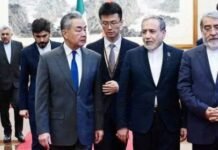
The decision to allow Iranian President Masoud Pezeshkian and Foreign Minister Abbas Araghchi to attend the United Nations General Assembly comes at an uncomfortable moment for President Donald Trump.
More than 200 days into the war, Iran remains an adversary Washington must confront both diplomatically and militarily. Meanwhile, Americans face higher fuel prices, rising military expenditure and growing doubts about the administration’s strategy. The Iranian delegation’s arrival in New York will put those contradictions on an international stage.
The political contrast is striking. A government facing American military pressure will send its president and foreign minister to speak before the world from American soil.
Their presence does not mean surrender by either side. But it challenges any expectation that military force would quickly remove Iran from the diplomatic equation. Tehran remains a key participant in any effort to end the conflict.
The decision can therefore be seen as preserving room for political engagement while military pressure has failed to produce an enduring settlement.
It also leaves open a channel at a time when the costs of continuing the war are becoming harder to separate from American domestic life. The question is whether the administration will use that opening to pursue an achievable outcome or continue relying on promises of eventual success.
For American households, the war’s consequences are becoming increasingly tangible.
On September 17, the national gasoline average reached $4.44 per gallon, nearly 50 per cent above its pre-war level. Diesel reached a record $6.40.
These figures translate geopolitical conflict into the cost of commuting, delivering goods, operating machinery and running businesses. Families do not need a strategic briefing to understand the difference between assurances that events are under control and a fuel bill that keeps rising.
Diesel makes the burden especially widespread. Its cost affects trucking, agriculture, construction and other activities that sustain everyday commerce.
Businesses may absorb part of the increase, while others pass it on to customers. Energy specialists have also warned of higher heating costs.
The pressure intended to influence events overseas consequently reaches American kitchens, workplaces and household budgets. Other supply disruptions are also contributing to these prices, but the Iran war is an important part of the economic strain.
That strain creates a direct link between foreign policy and public frustration.
A prolonged war becomes politically harder to sustain when citizens cannot identify either its destination or its benefits. Initial uncertainty can turn into opposition as costs accumulate.
The administration must explain why continued sacrifice will produce a better outcome, rather than simply ask the public to wait. Its difficulty is that recent polling shows substantial doubt about whether it has a clear strategy.
A September Fox News survey found that 71 per cent of registered voters believed the administration lacked a clear plan to end the conflict. The figure included 43 per cent of Republicans and 83 per cent of independents.
Sixty per cent said the decision to take military action was wrong. These results cannot be dismissed as opposition confined to Democrats. They indicate dissatisfaction among voters whose confidence the administration needs, including within its own political coalition.
With the midterms approaching, those doubts carry political consequences.
Electoral outcomes remain uncertain, and national polling cannot determine control of either chamber. Nevertheless, Republicans face the task of defending a government whose handling of the war has attracted broad criticism.
Higher living costs make that task more difficult because they bring the consequences of distant decisions into voters’ daily lives.
The military picture adds another layer.
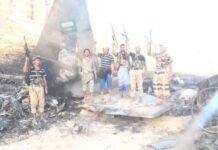
Photographs supplied to CBS News by active service members showed damaged aircraft, buildings, vehicles and equipment at American positions in Kuwait and Saudi Arabia. They give visible form to losses otherwise expressed through official statements and aggregate figures.
Such images raise questions about force protection, preparedness and the resources required to sustain operations. They also show that technological superiority has not insulated American assets from serious damage.
The financial accounting reinforces those questions.
The Congressional Budget Office estimated that the conflict had cost the Department of Defense approximately $38 billion through August 1.
Expenditure on this scale requires an explanation of objectives and results. Americans are entitled to ask what further operations are expected to achieve, how long they will continue and what alternatives have been examined.
Rising expenditure cannot itself become a reason to continue spending in pursuit of an undefined conclusion.
This is the background against which Iran’s leaders will arrive.
Their visit gives Washington an opportunity to connect existing intermittent contacts with a concentrated gathering of international officials.
Trump’s planned discussions with Gulf leaders add a regional dimension. Those governments have their own interests in reducing attacks and restoring commercial stability.
Their presence could help identify terms that address practical concerns, even if the parties remain far apart on larger political questions.
A breakthrough need not begin with a presidential handshake or a comprehensive agreement.
It could start with authorised exchanges through intermediaries, a defined negotiating agenda or reciprocal measures that reduce immediate risks.
What matters is whether communication produces changes in conduct. A visit followed only by competing speeches would leave the central problem intact.
A visit that establishes sustained talks could become an important step towards ending a war that continues to impose costs without a settled political outcome.
Washington’s strongest response would be to treat that possibility seriously.
Seeking an agreement would not erase American power. It would recognise that military capability and political success are different things.
The Iranian delegation’s presence offers no guarantee of peace, but it creates an opportunity to test whether diplomacy can achieve what continued confrontation has not.
After more than 200 days, the administration owes Americans more than another prediction of success. It owes them a credible course towards ending the war and limiting its further human and economic damage.