Friendship is tested not during ceremonies, state dinners or commercial negotiations, but in moments of danger.
When a country faces missiles, drones and attacks on its critical infrastructure, it discovers whether its powerful partner’s security promises carry real weight or are merely diplomatic language.
The contrasting treatment of Israel and Saudi Arabia by the United States has now brought this uncomfortable reality into sharp focus. Washington has repeatedly mobilized its intelligence, naval, air and missile-defence capabilities to protect Israel.
Yet when Saudi Arabia requested direct American military assistance against escalating Houthi attacks, President Donald Trump declined to open another front and limited American support largely to intelligence and targeting assistance.
Neither Israel nor Saudi Arabia has a NATO-style mutual-defence treaty with the United States. In practice, however, Israel enjoys something approaching an operational American defence guarantee, while Saudi Arabia remains principally a customer, investor and regional partner whose protection is conditional.
For decades, Israel has received approximately $3.8 billion annually under the ten-year US-Israel security assistance memorandum signed in 2016. That agreement provides $33 billion in Foreign Military Financing and $5 billion for missile defence through fiscal year 2028.
After the October 7, 2023, attacks, additional emergency appropriations, weapons transfers and regional US military deployments expanded American support considerably.
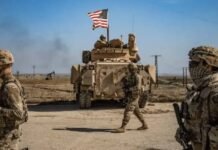
This relationship goes far beyond selling weapons. The United States shares high-level intelligence with Israel, replenishes its military stocks, deploys forces to the region and has directly helped intercept missiles and drones aimed at Israeli territory.
Regardless of the economic or military cost, Washington has demonstrated that it is prepared to participate actively in Israel’s defence.
Saudi Arabia’s relationship with Washington is fundamentally different. The kingdom receives negligible conventional foreign aid because it is a wealthy country. Instead, it purchases American weapons, finances military cooperation and hosts or supports US strategic infrastructure.
Its importance rests on energy, investment, arms contracts, intelligence cooperation and its geographical position—not on an unconditional promise that American forces will defend it.
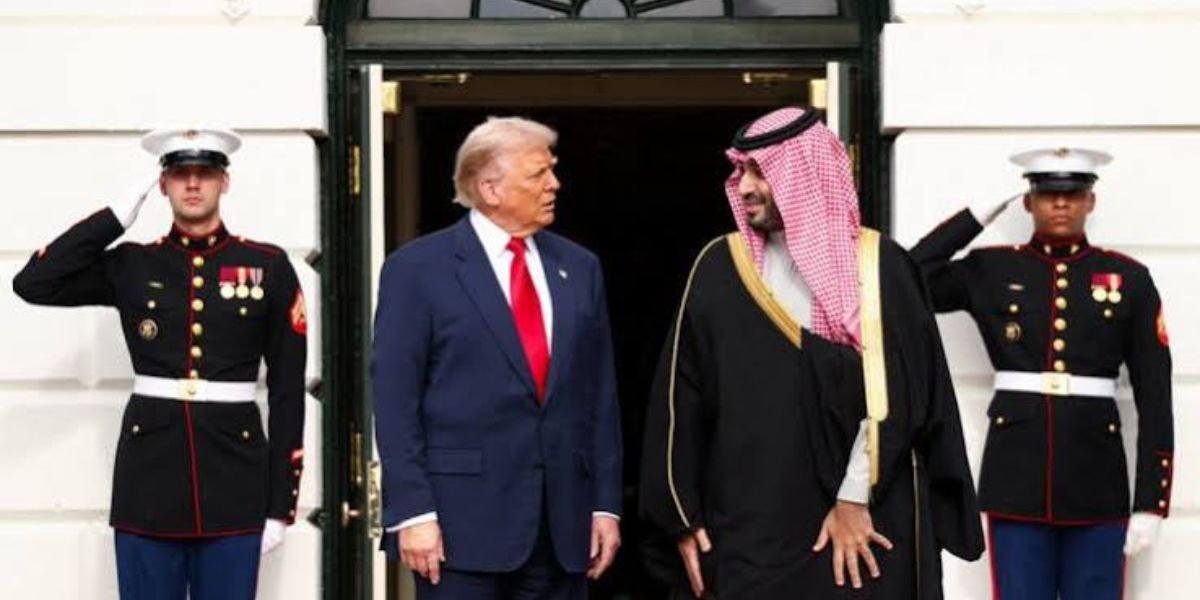
Saudi Arabia pledged hundreds of billions of dollars in investments, purchases and commercial cooperation with the United States.
The White House announced a $600 billion Saudi commitment in May 2025, including a defence-sales framework valued at nearly $142 billion. These headline figures, however, combine investments, procurement plans, memoranda and long-term commercial intentions; they should not all be interpreted as money already transferred into the American economy.
Nevertheless, the scale of Saudi economic engagement is enormous. Riyadh has purchased American aircraft, air-defence systems, missiles, training and technical support while investing in American technology, energy and infrastructure.
Yet when the kingdom faced a direct security emergency, commercial importance did not translate into the level of military protection routinely extended to Israel.
The recent Houthi escalation has demonstrated that distinction. Missile and drone attacks have threatened Riyadh, Yanbu and Saudi energy infrastructure. Saudi authorities reported intercepting an attempted ballistic-missile attack on the capital, while the Houthis claimed strikes against several sensitive and petroleum-related targets threatening to Saudi cities and oil-export capacity.
But when Saudi Arabia, which has done much more than Israel has ever done for the USA, sought direct US military action against the Houthis, Trump refused point blank to undertake offensive strikes. President even when attacks unsettled Saudi and other Gulf markets.
Whereas, while defending Israel, Trump is ready to sacrifice its own soldiers and prestige and billions of billions of dollars of expensive military hardware, but when it comes to helping Saudi Arabia against legitimate targets, it started giving lame excuses such as it does not want to become trapped in another prolonged Yemen campaign, risk greater confrontation with Iran or expend scarce interceptors and precision weapons indefinitely.
But from Riyadh’s perspective, the refusal exposes the limitations of decades of dependence upon the American security umbrella.
Saudi Arabia is suffering from a war it neither initiated nor initially wanted. Disruption around the Strait of Hormuz threatens its eastern export routes, while Houthi pressure jeopardizes infrastructure and navigation toward the Red Sea. Any sustained interruption of the East-West Pipeline or ports serving those routes would damage Saudi revenue, increase global oil prices and undermine the kingdom’s ambitious development programme.
The kingdom must now ask a difficult question: were American bases and deployments in the Gulf established primarily to protect Gulf states, or to protect wider US interests—including Israel, shipping routes and Washington’s regional military position?
The evidence suggests that these facilities do not constitute an automatic guarantee that America will fight whenever a host government comes under attack.
There is an immense possibility that the United States or Israel could have secretly enabled Houthi attacks in order to weaken Saudi Arabia, which is the signature modus of operandi of Israel to fracture and weaken any Muslim country in the middle east which now or in distant future could threaten implementation of Israel’s greater Israel project.
Riyadh must therefore avoid falling into an escalation trap. A widening confrontation with the Houthis would impose greater costs upon Saudi cities, infrastructure and development than upon a movement experienced in surviving air campaigns and operating from difficult terrain. A simultaneous confrontation with Iran would be more dangerous still.
The United States has shown Saudi Arabia the precise limits of their relationship. Washington will sell weapons, provide intelligence and cooperate when American interests coincide with Saudi needs. It may not, however, fight Saudi Arabia’s wars.
That realization should not lead Riyadh toward reckless confrontation. It should lead to strategic independence. If even the world’s greatest military power cannot impose a sustainable solution through force, Saudi Arabia should not sacrifice its economy and national transformation by attempting the same.
Its strongest response is to escape the trap, mend regional fences and prevent other powers from deciding when, where and against whom the kingdom must fight.
The most appropriate immediate initiative would be for the Organisation of Islamic Cooperation to convene an emergency summit, bringing together Iran, Saudi Arabia, the GCC states, Yemen’s internationally recognized government, representatives of the Houthis and other influential Muslim countries.
The OIC should provide a neutral platform on which every party can state its security concerns, political objectives and conditions for ending hostilities. Through mediation, compromise and reciprocal concessions, the participants could formulate a practical roadmap for de-escalation.
Whenever two or more Muslim countries fight, the result is not merely an individual national loss but a collective loss for the entire Muslim ummah. Even if one side gains more in a negotiated settlement, its gains remain within the Muslim world; continued warfare, by contrast, destroys Muslim lives, economies and strategic strength for the benefit of outside powers.
The Muslim countries must therefore stop exhausting one another and redirect their combined diplomatic, economic and political influence toward securing justice for the Palestinian people, including a viable two-state solution that enables Palestinians to live in freedom, security and dignity.