In the heart of Islamabad, behind data-heavy dashboards and decades of satellite monitoring, the Pakistan Meteorological Department (PMD) keeps a vigilant eye on a nation increasingly defined by climate volatility.
Mahr Sahibzad Khan, Director General of the PMD, does not speak in apocalyptic metaphors but in data, cause-and-effect, and an urgent plea:
“The world has crossed the 1.5°C temperature threshold. The effects are here. For Pakistan, the cost is already being paid.”
From relentless heatwaves scorching cities to melting glaciers feeding erratic floods, Pakistan faces a full-spectrum climate crisis—despite contributing less than 1% of global greenhouse gas emissions.
“It’s a cruel paradox,” Khan reflects. “The countries emitting the least are the ones suffering the most.”
Urban Sprawl: Concrete Over Commons
One key driver of local climate stress, Khan explains, is unregulated urbanization. Cities like Lahore, Karachi, and Islamabad are expanding rapidly—not vertically, as in climate-smart cities, but horizontally, consuming fertile land and replacing natural surfaces with concrete.
“This horizontal infrastructure traps heat during the day and releases it at night, creating urban heat islands. It’s not just uncomfortable—it’s deadly during heatwaves,” says Khan.
Massive housing societies, often developed without environmental assessments, have altered natural drainage systems and increased the risk of flash floods.
“We’ve lost sight of ecological balance,” Khan adds, pointing out how green spaces are shrinking while paved areas multiply.
The Hidden Cost Beneath: Groundwater Depletion
While solar energy is often lauded as the future, Khan reminds us of an even more threatened resource: groundwater.
“Solar energy is free,” he says pointedly, “but water is not. And it’s running out.”
Pakistan relies heavily on underground aquifers for drinking water and agriculture, yet unregulated extraction continues with little oversight.
“We need urgent policies—groundwater regulation, metering, and pricing models that promote conservation,” Khan emphasizes.
Climate Apartheid: When the Poor Pay the Price
In a moment of stark honesty, Khan points to a growing divide in climate impact within Pakistan.
“The ‘haves’ are often the polluters—large homes, air conditioning, high energy use—while the ‘have-nots’ suffer most from the effects: floods, droughts, heatstroke.”
Informal settlements are the first to be hit by urban flooding, and rural farmers are struggling with unpredictable weather patterns and declining crop yields.
Transboundary Climate: India’s Fires, Pakistan’s Smog
Khan is blunt about one of the major environmental flashpoints between Pakistan and its eastern neighbor.
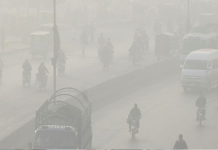
“The stubble burning in Indian Punjab every post-harvest season is one of the biggest contributors to smog in our air.”
Air quality in cities like Lahore deteriorates to hazardous levels every winter.
“Weather is not a domestic phenomenon; it’s transboundary,” he says. “Pollution doesn’t recognize borders.”
What the World Promised—and Broke
The 2015 Paris Climate Accord was a milestone moment, with the world pledging to limit global temperature rise to 1.5°C above pre-industrial levels by 2050. But that ceiling has already been breached.
“We’re at 1.55°C—and counting,” Khan warns. “What was once a distant concern is now a lived reality.”
Pakistan, among the countries most vulnerable to climate change, still faces slow and insufficient global commitments to climate finance and adaptation assistance.
A Path Forward: Technology, Trees, and Transformations
Despite the grim outlook, Khan is not without hope.
“We can still act—radically, decisively.”
He points to China’s shift to electric vehicles and reduction in coal usage as examples Pakistan can learn from.
“We must avoid redundant options like coal-fired power plants and embrace climate-friendly technologies.”
Tree plantation, already a policy focus, must continue with scale and consistency.
“Our ecosystem is a gift—from mountains to the sea. It’s all connected. Disrupt one part, and the whole cycle feels the impact.”
At the same time, individual choices matter. Khan calls for a fundamental change in lifestyle—reduced consumption, energy efficiency, water conservation, and sustainable transport choices.
“Climate action starts at home.”
The Role of Media and the PMD’s Evolving Mandate
The Pakistan Meteorological Department is more than a weather agency; it is becoming a frontline climate communicator.
“We’re using every tool—TV, radio, social media, even WhatsApp groups—to keep the public informed,” Khan says.
The department, established in 1866 at the Lahore observatory, has amassed over a century and a half of weather data, now mobilized to model future risks and inform policy decisions.
“Awareness is our first line of defense,” Khan states. “And the media plays a critical role. More coverage of climate stories—more space, more airtime—means more informed citizens and better-prepared communities.”
No Time to Wait
Pakistan stands at a crossroads. With glaciers melting, water reserves shrinking, and weather patterns turning erratic, the consequences of inaction are no longer theoretical.
As DG Mahr Sahibzad Khan underscores, the solution lies in smart urban planning, renewable energy, regional diplomacy, and, most importantly, public engagement.
“Climate change is not coming. It’s here. And we must change before it changes everything.”