
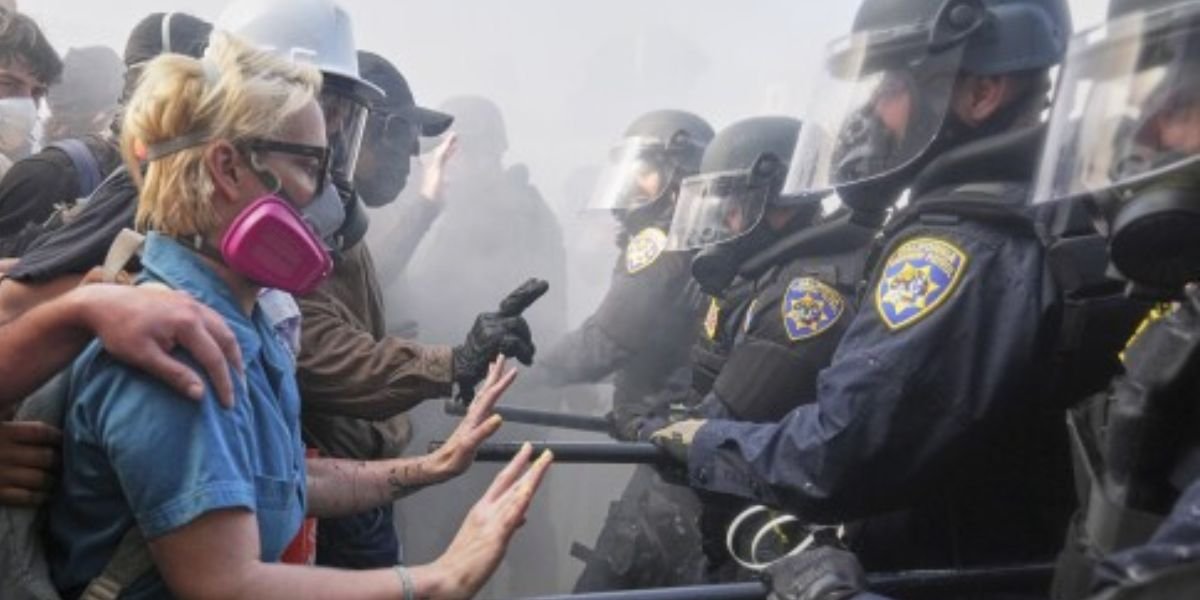
For decades, the United States has fashioned itself as a beacon of hope—an enduring promise for the world’s displaced, the persecuted, and the ambitious. But under President Donald Trump’s renewed immigration crackdown, led by militarized ICE operations, that promise now teeters on a dangerous edge. The immigration debate has mutated from one of legality to one of selective justice, policy hypocrisy, and unacknowledged culpability.
Trump’s rhetoric is characteristically incendiary. He claims “millions and millions” of illegal immigrants—labeled as criminals, traffickers, and offenders—have “invaded” the United States. His administration, he says, is simply restoring order. ICE raids, like the June 7 operation in Los Angeles that netted five individuals with criminal histories, are showcased as triumphs. But such spectacles raise a pressing question: if these individuals are indeed so dangerous, how did they gain access to the U.S. in the first place?
As a legal immigrant, I’ve navigated the labyrinthine U.S. immigration system. My family applied in 2007; we were approved in 2024. Seventeen years of scrutiny—employment checks, biometric screenings, interviews, and background verifications. The process is unforgiving. In theory, it is near-impossible for anyone with a checkered past to legally enter. So how, then, have thousands entered without detection or documentation?
This is the crux of America’s immigration dilemma—not the mere presence of illegal immigrants, but the systemic failures that allowed them in. The loopholes are not random; they are the consequence of policy negligence, institutional lapses, and sometimes, willful blindness.
Worse still, many undocumented migrants are fleeing crises engineered—or at least exacerbated—by U.S. foreign policy. Iraq was destabilized after the 2003 invasion. Syria’s civil war was fanned by regime-change pursuits. Libya was bombed into chaos. Palestine suffers under decades of U.S.-backed Israeli occupation. The fall of Kabul unleashed another wave of desperate Afghans. These displaced individuals—often undocumented, unverified, and desperate—were let in with speed, sidestepping the grueling checks imposed on law-abiding applicants from peaceful countries.
Shouldn’t accountability begin here? If those who enter illegally must face consequences, then so too should those policymakers, agencies, and officials whose actions—abroad and at home—enabled these migrations.
The U.S. government, however, has shown no appetite for such introspection. There are no commissions to investigate how known criminals crossed borders. No accountability for bureaucrats who failed to enforce existing laws. Immigration policy oscillates wildly between administrations—open arms today, crackdowns tomorrow—fueling dysfunction, resentment, and division.
Trump’s current strategy reflects this dysfunction. Rather than reform the system, his administration has chosen to militarize it. Deportation squads operate with masked officers, unmarked vehicles, and alarming disregard for due process. Children are traumatized. Families are torn apart. In Los Angeles, over 10,000 protesters recently rallied against these raids—most waving Mexican flags, few waving American ones. That symbolism matters. It signals alienation.
Supporters argue that Trump is only enforcing existing laws—that Obama deported 5 million, Clinton 12 million, and Bush pioneered expedited removals. “This is overdue,” they insist. Yet the tone and tactics of the Trump administration reveal a deeper agenda—less about enforcement, more about political theater.
Trump has cast all undocumented immigrants as threats. He’s turned immigration into a wedge issue, feeding fear for electoral gain. It’s a convenient narrative: blame “outsiders” for the economic anxieties of the “forgotten American.”
As a legal immigrant, I stand at a painful crossroads. I uphold the rule of law. But I also reject the dehumanization of migrants—many of whom are victims of a geopolitical order America helped shape.
Let’s also not forget: Trump is the grandson of an immigrant. In 1885, Friedrich Trump arrived in the U.S. as a 16-year-old German with little more than a dream. That same dream now risks being crushed under the weight of executive orders, fear campaigns, and selective justice.
The way forward is not complicated—only uncomfortable:
-
Enforce law—but with precision and humanity. Raids should be targeted, transparent, and respectful of basic rights.
-
Demand accountability from within. Those who allowed or enabled undocumented entries—intentionally or otherwise—must face consequences.
-
Invest in real border integrity. Use advanced technology, manpower, and coordination to prevent illegal crossings, especially by those with criminal intent.
-
Address root causes. The U.S. must rethink its foreign policy interventions. Destabilizing regions only fuels displacement. Migration begins at the bombsite, not the border.
Immigration is not America’s weakness—it is its legacy. But without accountability, justice, and compassion, that legacy may turn into a lie.
It is time to fix the system—not weaponize it.