
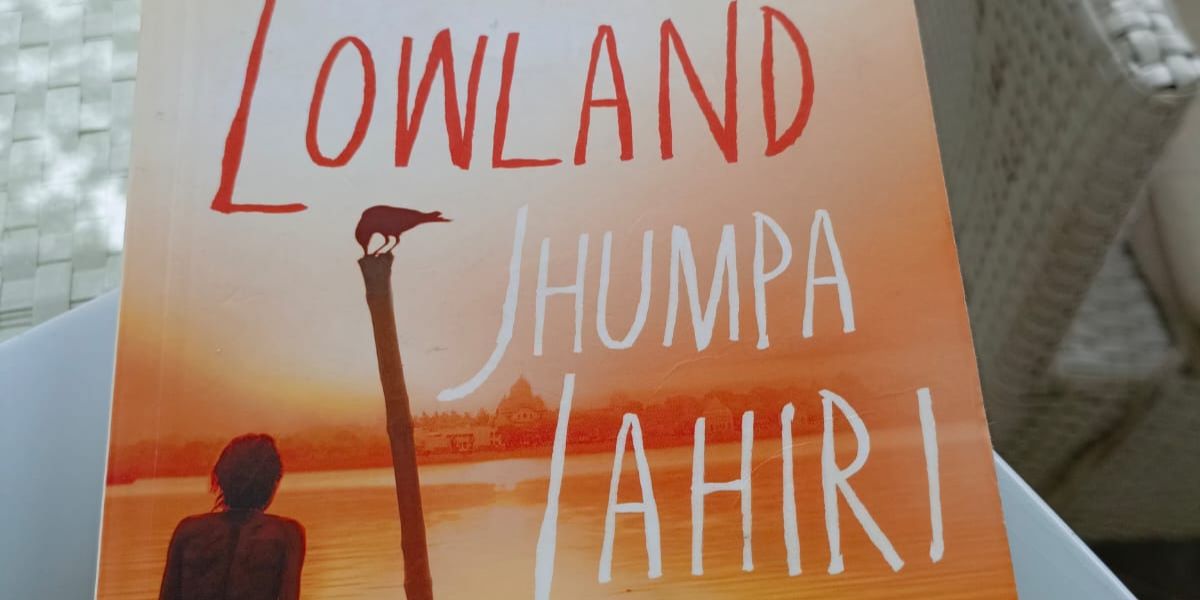
Jhumpa Lahiri’s The Lowland is a poignant yet uneven exploration of identity, family, and political turmoil, set against the backdrop of Calcutta in the 1960s–70s and the quiet suburbs of Rhode Island.
The novel revolves around two brothers, Subhash and Udayan. While Subhash seeks a stable life in the United States, Udayan becomes entangled in the Naxalite movement, a radical rebellion against India’s entrenched social injustices. Through this lens, Lahiri examines how political ideologies fracture families, rippling across continents and generations.
One of the novel’s more compelling aspects is Lahiri’s depiction of environmental destruction in the lowlands of Calcutta, layered with the impact of overpopulation and urban sprawl. These scenes, painted with Lahiri’s precise prose, bring a forceful environmental undertone that, for me, was the only truly intriguing thread in the narrative.
Lahiri’s language remains beautiful, pulling readers into the rains and chaos of Calcutta and the fog-draped quiet of Rhode Island. The emotional terrain—love, loss, exile, identity—is familiar to anyone who has read The Namesake. Yet, despite these thematic depths, The Lowland left me unmoved.
For many, The Lowland will be a thoughtful, elegantly crafted meditation on family and identity, particularly for those who appreciate Lahiri’s quiet storytelling style. If you loved The Namesake, you may find comfort in the familiar themes here.
For me, however, the novel was stale—several days spent in the company of similar stories, characters, and unexciting events that never quite came alive, despite the political and environmental stakes Lahiri sets up.