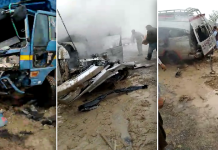
Calm Returns To Sweida After Violence Killed Over 1,100

Sweida - The News Today - TNT
Islamabad:  Rising tobacco and nicotine use among Pakistan’s youth, especially around educational institutions, emerged as the central concern at a national review session on tobacco control held by the Aurat Foundation in Islamabad. Participants from Parliament, government departments, health organizations, and civil society warned that easy availability of cigarettes, vapes, nicotine pouches, and flavored tobacco near schools is creating a growing public health threat. The discussion also pointed to a noticeable increase in tobacco use among women, indicating a shifting trend. The session called for stronger legislation, faster policy action, and strict enforcement to counter the rapid spread of emerging nicotine products. Speakers emphasized that existing laws remain poorly implemented due to procedural delays, weak monitoring, and limited coordination between federal and provincial bodies. The need for clear parental awareness, community engagement, and better recognition of new nicotine products was highlighted as an essential part of early prevention. Officials noted that families and schools often remain unaware of modern products marketed to young people. Technical briefings identified major enforcement gaps and policy loopholes that allow the tobacco industry to expand its reach. Participants noted that companies are increasingly using social media trends, entertainment content, and youth-focused marketing to promote vaping in urban areas. Government representatives reaffirmed ongoing federal efforts to implement the Prohibition of Smoking and Protection of Non-Smokers Health Ordinance 2002 and to tighten regulations where required. Provincial representatives also announced plans to introduce new resolutions to strengthen tobacco control. Education sector officials raised alarms over the rise of nicotine products around private institutions and called for tougher regulatory checks. Regulatory authorities stressed the need for a broader social movement to counter tobacco use nationwide. Closing the event, the Aurat Foundation reiterated its commitment to evidence-based advocacy, cross-sector collaboration, and long-term public awareness initiatives aimed at building a healthier, tobacco-free society.

SWEIDA: Calm returned to southern Syria’s Sweida province on Sunday after a week of sectarian violence between Druze fighters and rival groups that killed more than 1,100 people.

A ceasefire appeared to be holding after earlier agreements failed to end fighting between longtime rivals the Druze and the Bedouin that spiralled to draw in government forces, the Israeli military and armed tribes from other parts of Syria.

Advertisment

Local and International media have reported that no clashes were heard on Sunday morning, with government forces deployed in some locations in the province to enforce the truce.

The first humanitarian aid convoy entered the city on Sunday, Red Crescent official Omar Al-Malki said, adding that it would be followed by others.

He said the convoy came “in coordination with the government bodies and the local authorities in Sweida,” which are controlled by the Druze.

The Syrian government meanwhile said a Druze group blocked its own convoy from entering the city.

Hanadi Obeid, a 39-year-old doctor, told local media person that “the city hasn’t seen calm like this in a week.”

The Syrian interior ministry said overnight that Sweida city was “evacuated of all tribal fighters, and clashes within the city’s neighborhoods were halted.”

Interim President Ahmed Al-Sharaa had on Saturday announced a ceasefire in Sweida and renewed a pledge to protect Syria’s ethnic and religious minorities in the face of the latest sectarian violence since the rebels overthrew longtime ruler Bashar Assad in December.

A spokesman for Syria’s tribal and clan council was quoted as saying that fighters had left the city “in response to the call of the presidency and the terms of the agreement.”

“The situation is totally calm… We aren’t hearing clashes”, said a medical professional while talking to media on Sweida.

Residents of Sweida city, who number at about 150,000, have been holed up in their homes without electricity and water, and food supplies have also been scarce.

The local media revealed that the morgue at Sweida’s main hospital was full and bodies were lying on the ground outside the building.

The United Nations migration agency said more than 128,000 people in Sweida province have been displaced by the violence.

Read more: Britain Facing Legal Action For Refusal To Evacuate Sick Kids From Gaza

Subscribe
Notify of
0 Comments
Inline Feedbacks
View all comments