
By Zia Uddin
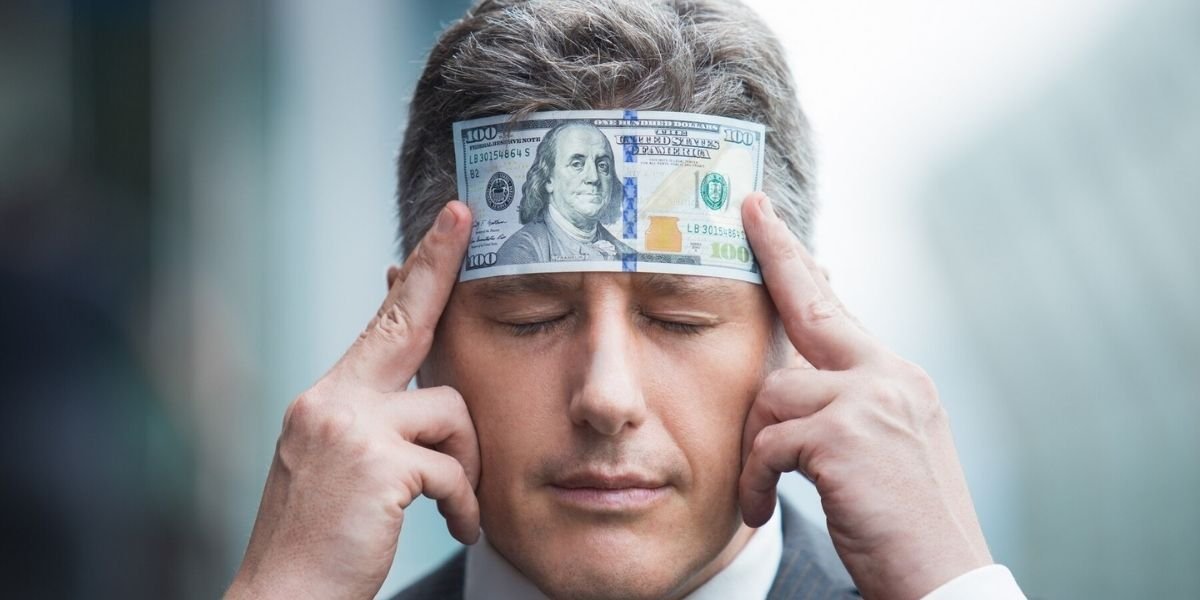
Imagine earning a salary raise you have dreamed about for years. For a few weeks, life feels extraordinary. But then, surprisingly, it feels ordinary again. Sound familiar? This phenomenon sits at the fascinating intersection of economics and psychology—a field that is fundamentally reshaping how we understand prosperity, policy, and the pursuit of happiness.
The Easterlin Paradox: More Money, Same Happiness?
In 1974, economist Richard Easterlin made a startling discovery—despite dramatic increases in economic growth and average income in the United States over several decades, reported happiness levels remained largely unchanged (Easterlin, 1974). This finding, now known as the Easterlin Paradox, sparked a revolution in economic thinking. It suggested that beyond a certain threshold, additional income contributes very little to human happiness. Countries could be getting richer on paper while their citizens remained emotionally stagnant.
A landmark study by psychologists Daniel Kahneman and Angus Deaton reinforced this idea. Analysing data from 450,000 Americans, they found that emotional wellbeing rose with income but plateaued at around $75,000 per year—beyond which more money brought diminishing emotional returns (Kahneman & Deaton, 2010). More recently, Matthew Killingsworth (2021) challenged this conclusion with a study suggesting happiness continues rising with income even beyond that point, though the debate itself reveals how complex the relationship truly is.
Hedonic Adaptation: Why We Always Want More
Psychologists call it hedonic adaptation—our remarkable ability to return to a baseline level of happiness after both positive and negative life events (Brickman & Campbell, 1971). Lottery winners, research shows, are no happier than the average person just one year after their windfall. We quickly adapt to new cars, bigger homes, and higher salaries, always recalibrating our expectations upward in what economists call the hedonic treadmill.
This has profound implications for economic policy: if citizens endlessly chase rising income standards without gaining lasting happiness, growth-only policies may be fundamentally misguided.
What Actually Makes Economies Happy?
The World Happiness Report—published annually by the United Nations Sustainable Development Solutions Network—consistently finds that the happiest nations are not necessarily the wealthiest. Nordic countries such as Finland, Denmark, and Iceland regularly top the rankings, not because of income alone but due to strong social trust, robust healthcare systems, low corruption, and a sense of personal freedom (Helliwell et al., 2023).
These findings align with the capabilities approach developed by Nobel Prize-winning economist Amartya Sen, who argued that true development should be measured not by GDP alone but by people’s freedom and ability to live lives they value (Sen, 1999).
Behavioural economists such as Richard Thaler and Cass Sunstein, alongside Kahneman, have shown that people are notoriously poor at predicting what will make them happy—a concept known as affective forecasting error (Thaler & Sunstein, 2008). We often overestimate the happiness a promotion will bring and underestimate the joy of simple daily experiences: a morning walk, meaningful conversation, or a sense of purpose at work.
From Theory to Policy: The Economics of Wellbeing
Governments are now beginning to listen. Bhutan famously replaced Gross Domestic Product with Gross National Happiness as its primary development index. New Zealand and Scotland have adopted wellbeing budgets that prioritise mental health, environmental sustainability, and social connection alongside economic indicators.
These are not merely idealistic experiments—they are evidence-based responses to decades of research showing that happiness is both measurable and governable (Layard, 2005).
The economics of happiness teaches us something profound: prosperity is not merely about accumulating wealth but about building lives and societies rich in meaning, trust, health, and freedom. As economies grow increasingly complex, the most important question policymakers can ask is not simply how to make nations richer—but how to make people genuinely, lastingly, and sustainably happier.
The author is a PhD scholar at the School of Economics, Quaid-i-Azam University (QAU), Islamabad. He is a policy analyst who writes on green economic growth, environmental sustainability and climate change. Email: ziapyare@gmail.com