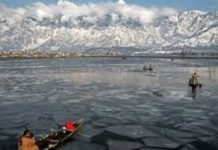

ISLAMABAD: Chilla-e-Kalan is a Persian word which means Major Cold and is local name given to 40 day period of harsh winter in Kashmir, the coldest part of winter, starting from December 21, to January 29 every year. Though the cold weather starts in Kashmir right from November after autumn. But Chilla-i-Kalan is the harshest part of Kashmir’s cold weather. Due to subzero temperatures, tap water pipelines freeze partially during this period and the Dal Lake, Jewel of Kashmir, also freezes. Dal Lake, get a roof of frost, a thick layer on which people move easily and even play cricket.
40-day long Chilla-e-Kalan is followed by 20-day long Chilla-i-Khurd, the smallest part of cold that occurs between January 30 and February 18 and a 10-days long Chilli Bachha starts from February 19 to February 28.
During these 40 days nights in Kashmir are chilly with around minus 10 and day temperatures thrive in single digits and some time minus.
During Chilla-e-Kalan, the weather in valley of Kashmir continues to remain cold with minimum temperatures hovering below the freezing point. The snow that falls during this time period freezes and lasts longer. It is this snow that adds to the glaciers of the Valley and replenishes the perennial reservoirs that feed the rivers, streams and lakes in Kashmir during the months of summer. Any snowfall after the Chilla-e-Kalan does not last long.
Although Kashmir is known as ‘Paradise on Earth’ Tourist resorts like Sonamarg, Gulmarg, Pahalgam etc receive heavy snow that added in the tourism activities, particularly Gulmarg become a hub for tourists who like winter games. Kashmir is turning into a tourist cum sports arena during winter.
Chilla-e-Kalan, besides all what is known or unknown in and outside Kashmir, is bringing very charming cuisines and Kashmiris are enjoying a special breakfast known as sumptuous Hareesa.
What Kashmiri people who are remaining indoors during the Chilla-e- Kalan. Kashmiris put on traditional Pheran (Long woolen gown both for males and females) to protect from cold. Though modern day down jackets are available but Pheran seems to be affordable and more reliable in harsh winters.
The first day of Chilla-e-Kalan is being celebrated as ‘World Pheran Day’ in an outside Kashmir and people in Kashmir and Europe, England are celebrating the day with a traditional zeal and one can mark Kashmiris in coldest parts of Europe wearing Pheran.
Chilla-e-Kalan affects the daily life of Kashmiris. Use of Pheran (Kashmiri dress) and a traditional Kanger, a portable fire pot increases to keep a person warm if moves outdoors.
Kanger, a traditional and portable earthen firepot, covered with beautiful willow branches, is used to keep warm and ward off freezing intense cold. Despite having different avenues of heating, Kanger in which coal is used is most reliable. It keeps a person warm for a day. The coal is replaced every morning.
Kanger and Paharen go together. Either of the two is useless without each other Chilla-e-Kalan during old days was harsher than the present era and heavy snowfall was making huge mountains of frozen snow and was difficult for people to move. Kashmiris were using dried vegetables as almost all vegetables during autumn days were being dried on rooftops and were being used in winter.
Dried vegetables are frequently consumed by Kashmiris as most of the time fresh supplies go scarce due to blocking of roads after heavy snowfall. The agricultural land also remains under snow.
Kashiris are use to have heavy spicy foods that make them warms. Waer, is a traditional spicy red tinged paste of mixed spices: Mothers would usually make paste of mixture of spices and keep it preserved. This mixture is primarily used in preparing the dried vegetables and making them mouthwatering.
Kashmirs are fond of pickles mostly made of home grown vegetables with Nadru (lotus stem). It is an essential part of meals during Chilla-e-Kalan. The pickles are prepared after a laborious and painstaking preparation for a few days and then kept dumped underground for over a month to enhance its taste. The pickles were stored in clay cookware. During harsh winter months it is extensively used.
Celebrating Chilla-e-Kalan with sumptuous Hareesa is a quintessential part of tradition. Hareesa is prepared from minced meat mixed with rice flour. The mutton is kept in an earthen oven overnight so that the flavors drown in.
People spend most of the time in Hamaam or central heating room in which floor was made of limestone on hollow base. The stones are supported with concrete pillars. The hollow space underneath is used to light the wood to make stone slab warm.
In the past, Hamaam used to be only in Masjids and locals would spend most of the time there. Now-a-days many homes also have Hamaam as an alternative to the modern central heating system.
In the past, due to more harsh winters and comparatively more snowfall which would accumulate up-to few feet in Srinagar and more in rural areas, lakes big or small would freeze for days even months together. Children would make it a point to play cricket on frozen surfaces over the lakes. It was a favorite pass time during Chilla-e-Kalan.
Again in the past, due to heavy snowfall, it was one of the main tasks of elders to clear tin roofs of heavy loads of snow. Rich people would hire experts for the job. However, in villages, which experience more snowfall than Srinagar, climbing to the rooftop to clear the snow is still prevalent.
Fighting with snowballs used to be the favorite sport among youth in Chilla-e-Kalan. Two rival parties would make snow bunkers and frontline warriors would make snowballs to be hurled with full force at the opposing camp till one party would completely destroy the bunker of the rival team.
Read more: US Sanctions have Dangerous Implications for Strategic Stability of Region: FO