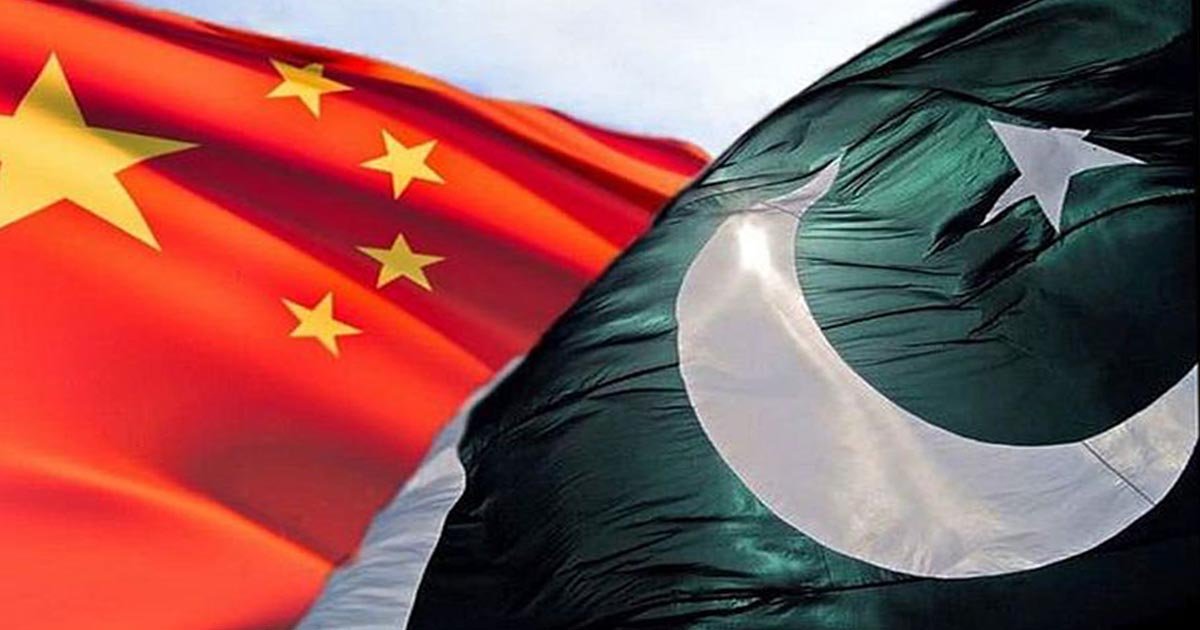
In a historic and unequivocal declaration, Professor Victor Gao — a close associate and advisor of China’s late paramount leader Deng Xiaoping and Vice President of the influential Center for China and Globalization (CCG) — publicly affirmed what analysts have long speculated but seldom heard officially: China will unconditionally stand with Pakistan in peace and war against any nation threatening its sovereignty and territorial integrity.
“China and Pakistan are all-weather ironclad allies. No one should second-guess this alliance between China and Pakistan. China will always come to Pakistan’s help and assistance whenever Pakistan’s sovereignty and territorial integrity will be threatened by any country,” Gao stated during a broadcast on Indian television in front of strategic commentators.
This was no mere diplomatic rhetoric. Gao’s words carry considerable weight due to his proximity to China’s policymaking elite and represent a firm strategic message. The “any country” Gao referred to implicitly includes India, the United States, or any actor contemplating hostile actions against Pakistan.
Context: Rising Tensions and Military Developments
Gao’s statement emerged amid escalating tensions following the Pahalgam terrorist attack in India, which killed several civilians. India attributed the attack to Pakistan-based groups and retaliated with missile strikes targeting Pakistani airbases, including Noor Khan and Murid, according to Pakistan’s Inter-Services Public Relations (ISPR). Pakistan reported no significant damage but vowed the right to retaliate “at the time and place of its choosing.”
China’s response diverged from India’s swift attribution. It called for a thorough, transparent, and impartial investigation, aligning diplomatically with Pakistan. Gao emphasized:
“We need to call for an impartial and complete investigation into the background of this attack before any country should seize this opportunity to escalate tensions or conflict between India and Pakistan.”
He also reminded observers of the terrorist attacks inside Pakistan targeting Chinese nationals, underscoring the importance of factual clarity over politicized assumptions.
Military Alliance and Strategic Depth
China’s commitment extends beyond words to tangible military support. Over 60% of Pakistan’s current military arsenal is Chinese-origin, including the JF-17 Thunder fighter jets (co-developed with China), Yuan-class submarines (providing second-strike capabilities), HQ-series air defense systems, and P-10 and P-15 cruise and ballistic missiles. Recent reports highlight the arrival of Chinese Y-20 cargo aircraft in Pakistan, delivering defense equipment and signaling growing interoperability.
Gao made this point unmistakably clear:
“You are talking about a war between Pakistan and India on the one hand, and then you are talking about an ironclad alliance between China and Pakistan, and China’s full commitment to defend Pakistan’s sovereignty and territorial integrity.”
Expanding China’s Security Perimeter
Professor Gao’s declaration effectively extends China’s security perimeter beyond its borders. His explicit warning that the alliance activates against “any country” threatening Pakistan’s sovereignty implies that Chinese defense commitments could confront U.S. or Indian actions, or any multilateral interventions perceived as hostile.
This stance reflects China’s broader strategic posture. It is already engaged in proxy tensions with the United States over Taiwan and trade, and territorial disputes in the South China Sea, notably with the Philippines. Now, China signals its readiness to back Pakistan robustly in the South Asian theater.
Gao cautioned about the risks:
“The deterioration of the situation between India and Pakistan is a reason for great concern. These are two big countries, both armed with nuclear weapons… the consequence will be too much for either India or Pakistan to bear.”
He urged all stakeholders to focus on de-escalation and careful fact-finding rather than allowing isolated attacks to trigger wider conflict.
The Water Weaponization Warning
Perhaps most notably, Gao highlighted the potential weaponization of water resources—an underappreciated but critical risk in a region heavily dependent on the Indus River basin. India has previously threatened to restrict Pakistan’s water access under the Indus Waters Treaty.
Gao warned sternly:
“In the context of war, any stopping of a dam or the flow of water causing drought or loss of life in another country may be considered a war crime. In a non-war context, any such action may be considered a crime against humanity.”
This statement serves as both a legal and diplomatic shield, signaling that China is prepared to deploy international mechanisms to defend Pakistan against such strategic sabotage.
Strategic Implications for India
India’s strategic calculus must now adjust to this reality. For years, Indian planners presumed limited strikes or hybrid warfare against Pakistan could be contained without provoking third-party escalation. China’s unequivocal stance shatters that illusion. India faces the prospect of confronting a two-front challenge: Pakistan supported by an assertive China, not only militarily but diplomatically and economically.
Gao’s remarks also carried a clear invitation to de-escalate:
“This is the right time to call on both India and Pakistan to exercise the maximum restraint and seek a peaceful solution.”
With over 1.6 billion people living within this volatile arc from the Himalayas to the Arabian Sea, the human cost of further escalation is not theoretical — it is existential.
Conclusion
Beijing’s message is clear and uncompromising: China will stand shoulder to shoulder with Pakistan if South Asia becomes a battleground. This historic commitment alters the strategic balance in the region and raises the stakes for any actor considering aggression against Pakistan.