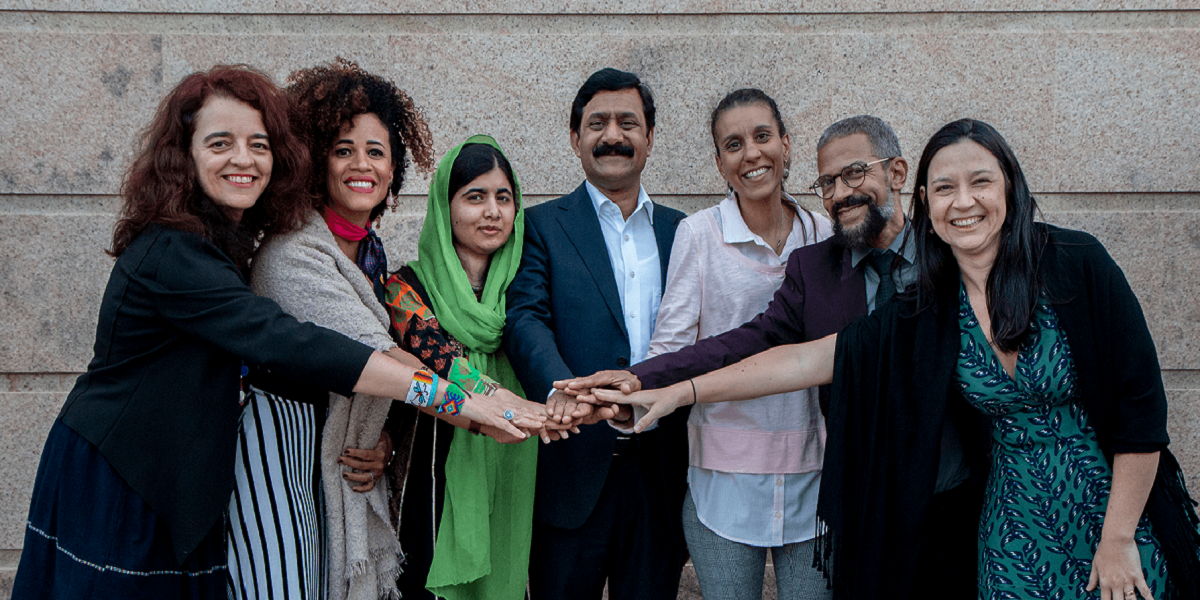
ISLAMABAD: Malala Fund with the help of Education Champion Network commissioned a research report, “Girls’ education and COVID-19 in Pakistan” to highlight the impact of school closures on students, across the country, with an emphasis on girls’ experiences.
The Education Champion Network supports the grassroots girls’ education advocates in Pakistan. These champions serve as the voice of girls’ education and help communities develop solutions. Representatives from the network include activists, academics and education leaders.
Currently, there are 22.8 million out-of-school children in Pakistan. Out of these 53% (13.4 million) are girls.
The report notes the pandemic’s effecths on household finances and how this economic crisis has the potential to prevent even more girls from completing their education. Girls also had a harder time accessing devices and distance learning during the initial lockdown. This is unlikely to change now.
COVID-19 has widened existing educational inequalities in Pakistan, particularly affecting girls in more marginalised areas and poorer households, making girls most at risk of dropping out, particularly in interior districts.
The report highlights that during lockdown, government support for distance learning principally relied on TV, radio and e-learning, but the majority of the students surveyed did not have access to these. Only 20% of girls and boys reported to spend time on educational TV and just 3% on educational radio.
About 60% of the respondents had smartphones, but three-quarters of those with access reported only being able to afford data intermittently. Girls were almost 40% more likely than boys to say that they never had access to a mobile device and the most frequently cited reason for not accessing a phone was being afraid to ask. Only 1% of the interviewed students used Edtech for distance learning.
Madiha Rehman, Director Programs – AzCorp Entertainment stated that while there are effective Edtech platforms available in Pakistan, in most of the rural areas accessibility to the internet remains a major challenge. In households where there is access, girls are often not allowed to use the internet.
There is a need for the government to launch a multi-stakeholder response to ensure the availability and access to high-speed internet across the country. The government also needs to devise disaster management protocols for education systems that foresee school closures. In such a system, the teachers need to be technologically literate with infrastructure and skills to help children continue their learning through blended learning platforms during any future pandemics. However, all these efforts will not yield the desired results unless communities and parents are educated not only on the importance of girls’ right to education but also to normalize the access to technology for girls.
Qamar Naseem, founder of Blue Vein stated, this is alarming to note in the findings of the report that girls from more marginalized communities and/or poorer households tended to be the least optimistic about returning to school.
Girls were more likely to cite withdrawal of parental permission, while boys were more likely to point to the expense of school and the need to earn income for their households. The report also reveals gender disparity in the way boys and girls spent their time during the school closure. About 40% girls reported spending time on household chores compared to 11% boys. Whereas, 19% girls reported spending time on leisure activities such as playing with friends compared to 44% boys.
The report notes that already struggling with limited financing — with budgetary allocations to education accounting for only 2% of the GDP — the additional demands placed on the education system by COVID-19 have placed an extra strain on resources. However, far from providing the cash needed to meet the needs, for the phased reopening of schools from September, the government has actually rerouted funds.
The annual budget, announced in June, did not include any special grants or emergency provisions for COVID-19 related expenditures for the education sector.
Areebah Shahid, Country Director Pakistan Youth Change Advocates stated that the government needs to Introduce an immediate increase in education development budgets across the board and roll-back any cuts on the development budget introduced during the fiscal year 2020-21.
The government should also adopt a budgetary practice where one-third of the education budget is allocated for administrative expenses (utilities, salaries, fuel, maintenance etc.) and two-third for development expenditure (e.g. creation of new schools and up-gradation of existing ones, teacher training, provision of teaching aides, enhancement of stipend programs for out-of-school girls, more effective enrollment drives etc.)
Actors at all levels can help, but ultimately the government — at federal and provincial levels — must take the lead.