
By Muhammad Qasim Bhutta
United Kingdom has been the epi-centre of attraction to the world for years. The country welcomed people from all over the world and provided opportunities for development. Diversity and inclusiveness became the beauty of Great Britain. The concept of liberalism, democracy, and free and open market, placed Europe on the peak of economic growth and gave people a better life to live and grow.
Many people from South Asia moved to the UK during industrial development. The UK needed manpower to run its industries while South Asians wanted more employment opportunities. Over time, their dominance kept growing and spreading from small scale opportunities to larger ones.
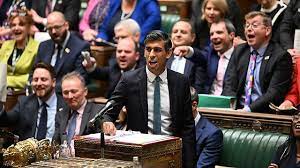
Currently, the South Asian community is a rising political force in the UK, with several prominent politicians of South Asian descent holding important political positions. For the first time, the UK elected an off-colour as its Prime Minister – PM Rishi Sunak – whose ancestors are from South Asia.
Recently, the first Muslim and South Asian was elected as the Prime Minister of Scotland. That is the beauty of this system which gave opportunity to a Muslim to become mayor of a historical and capital city of an ex-colonial master. There can be many other examples of inclusiveness and acceptance in the UK. These are developments that everyone can see and argue that they have strong government structures, where everyone can participate and achieve what they want to do.
The growing influence of the South Asian diaspora in British society could potentially lead to stronger ties between the UK and their countries of origin. However, it also raises questions about the extent to which British South Asians prioritize interests of their adopted country, and whether this could create tension or conflict in the future. While the increased representation of South Asians in British Politics is a welcome development, it is important to consider its wider implications in domestic politics and for international relations and diplomacy.
On the positive side, greater representation of South Asians in politics could lead to policies that reflect the diverse needs and aspirations of various communities they represent in a better way. This could help address long-standing issues such as inequality, discrimination, and social exclusion faced by many South Asians and other minority communities in the UK. Increased representation in politics could also inspire future generations to become more politically active and engaged.
However, there are also potential negative implications, such as a backlash from those who may view increased representation of South Asians as a threat to the dominant culture or a dilution of ‘Britishness.’ There may also be concerns about sectarianism and the potential for representation of specific religious or ethnic groups to create divisions among different communities.
Furthermore, South Asian dominance in UK politics may not necessarily translate into greater representation and support for other minority groups who may not have the same level of political influence or representation. There could also be concerns that South Asian politicians may prioritize the interests of their own communities over the wider interests of society as a whole.
In addition to that, it can be seen as a positive step towards greater representation and inclusion of minority communities in UK politics. On the other hand, it also raises concerns about potential conflicts of interest and the influence of external factors on UK policy towards South Asia. This raises questions about whether South Asian politicians in the UK can truly represent the interests of all British citizens, regardless of their cultural background. Additionally, this trend could exacerbate tensions between India and Pakistan, especially if British policy is seen as being biased towards one side or the other.
From an international relations and diplomacy perspective, the South Asian community’s dominance in the UK has several implications. For one, it means that, the UK is likely to maintain strong ties with South Asian countries, as the community has deep cultural and economic connections to the region. This could be beneficial for the UK in terms of trade, investment, and diplomatic relations.
There could be some challenges for international relations and diplomacy. For instance, it may create tensions with other minority groups within the UK who feel marginalized or excluded. Additionally, it could lead to perceptions of favouritism or bias towards South Asian countries in the UK’s foreign policy decisions.
The South Asian community in the UK could also mean that the country’s foreign policy towards South Asian countries is influenced by domestic politics. Politicians may be more inclined to take a pro-South Asian stance to secure the support of the community. The country may be more likely to take a neutral stance on issues that could potentially harm its relations with South Asian countries, such as conflicts involving India and Pakistan.
The South Asian community’s dominance in the UK may also result in the country being perceived as biased towards South Asian countries by other countries, particularly those with whom the UK does not have a significant minority population. This could damage the UK’s relationships with these countries and potentially harm its reputation on the global stage.
It is important for the UK to strike a balance between its domestic concerns and its foreign policy objectives to ensure a fair and balanced approach. It will be important for the UK to navigate these challenges carefully and work towards building strong and inclusive relationships with all communities, both within and outside its borders.
It is important to encourage greater diversity and inclusiveness in UK politics, it is crucial that this be done in a way that promotes wider social cohesion and the interests of all communities, and South Asian dominance in politics is not seen as a threat to other minority groups or the wider society. (Edited by Khadijah Kamili)
Also Read: Vegetarianism in India
The writer is London-based researcher and scholar of Peace, Conflict and Development. He can be reached at mq76156@gmail.com