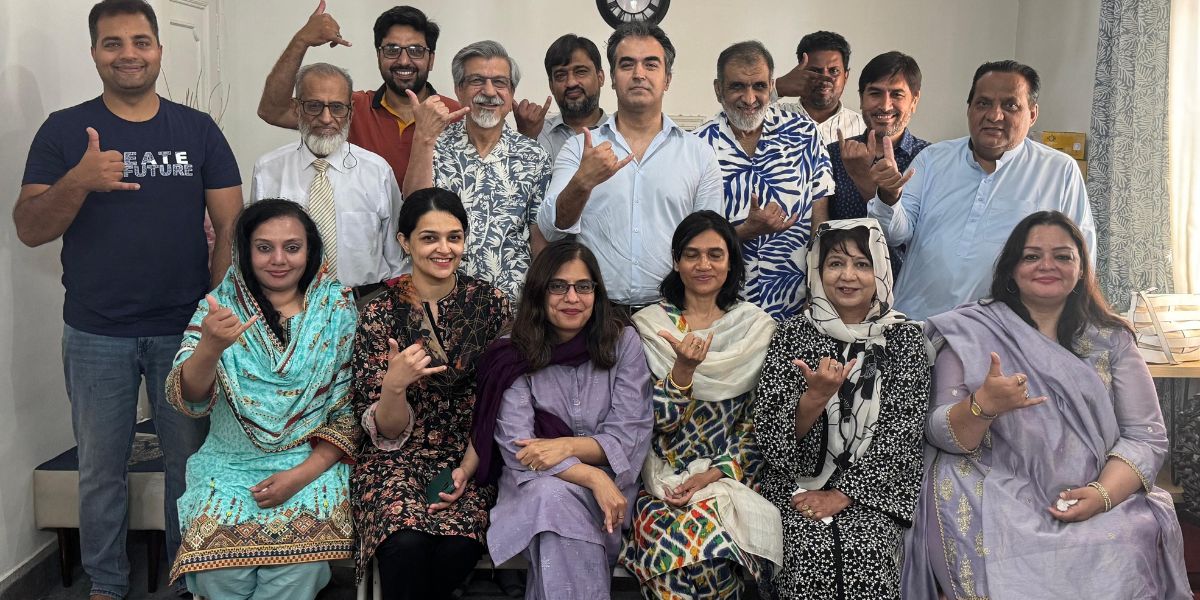
ISLAMABAD: The Islamabad chapter of the East-West Center Alumni Association (EWCA) has ushered in a new era of leadership following its annual elections for the 2025–26 term, held this week through a secret ballot process.
Afzal Khan Mandokhel, a prominent alumnus of the 2016 New Generation Seminar that spanned Honolulu, Phnom Penh, and Yangon, has been elected as the new President. Mandokhel vowed to revitalize the chapter by deepening people-to-people diplomacy between Pakistan and the United States and creating more opportunities for young professionals to engage with the East-West Center (EWC).
“We aim to reinvigorate the chapter by identifying emerging leaders and promoting collaborative dialogue that brings communities closer across borders,” Mandokhel said in a statement following his election.
Joining him in the new leadership team is Muhammad Ashraf, elected unopposed as Vice President, and seasoned journalist Faiz Paracha, who steps into the role of General Secretary. Paracha, an alumnus of the EWC’s 2022 Cross-Border Reporting Fellowship in Kathmandu, described the chapter’s future vision as a “dynamic hub of ideas and action.”
“We want to create meaningful opportunities and strategic collaborations that reflect the East-West Center’s global spirit—right here in Pakistan,” Paracha said.
The newly elected executive committee members include Tahir Amin, Shakirullah, Ashfa Hashmi, and Sanam Junejo. The election process, conducted in line with the chapter’s democratic traditions, was overseen by an election committee and required candidates to declare their nominations in advance.
Congratulatory messages poured in from former leaders of the chapter, including founding president Dr. Faisal Arjumand and outgoing president Abu Akif, a former federal secretary. They were joined by outgoing members Tayyaba Gul, Dr. Asad Ghuffran, and Usman Rafique, who pledged full support to the incoming team.
The East-West Center, established by the U.S. Congress in 1960, serves as a regional hub for education, dialogue, and research focused on promoting understanding among the peoples of Asia, the Pacific, and the United States. In 2021, it was ranked 4th globally among government-affiliated think tanks by the University of Pennsylvania’s Think Tanks and Civil Societies Program.
With the new leadership at the helm, the Islamabad chapter appears poised to further its mission of fostering cross-cultural connections and amplifying the EWC’s impact across the region.