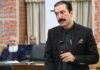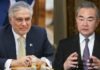

NEW DELHI: Indian External Affairs Minister S. Jaishankar, speaking at a book launch event, firmly stated that the “era of uninterrupted dialogue” with Pakistan is over, emphasizing that actions have consequences.
The Minister expressed India’s unwavering stance that New Delhi would not resume regular diplomatic talks with Islamabad until Pakistan takes effective measures to curb terror groups involved in cross-border terrorism.
Addressing the abrogation of Article 370 and 35A of the Indian Constitution, Jaishankar asserted that there is no chance of reversing the decision. “As far as Jammu and Kashmir is concerned, Article 370 is done,” he said.
During his speech at the book release of Ambassador Rajiv Sikri’s book, *Strategic Conundrums: Reshaping India’s Foreign Policy*, Jaishankar also touched on the broader challenges of maintaining diplomatic relations with neighboring countries. “For every country, neighbors are always a conundrum. They can never be fully resolved. They are ongoing relationships that will always present challenges,” he said, citing recent diplomatic issues with the Maldives and Bangladesh.
“People sometimes come and say, ‘This happened in Bangladesh’ or ‘That happened in the Maldives.’ They need to look around the world and tell me which country doesn’t face challenges with its neighbors. It is in the very nature of being a neighbor that these things will happen,” he remarked.
India’s relationship with Pakistan remains volatile, with border disputes in Jammu and Kashmir serving as a frequent flashpoint. New Delhi has consistently raised concerns over Pakistan’s support for cross-border terrorism, stressing that “terror and talks” cannot coexist. India maintains that the bilateral relationship hinges on Pakistan’s ability to control terror groups operating from its territory.
In the region, many leaders from Jammu and Kashmir’s regional parties have advocated for dialogue and diplomacy with Pakistan as a means to achieve lasting peace.
However, it remains unclear whether Prime Minister Modi or the Minister of External Affairs will make the trip to Pakistan for the upcoming SCO meeting, with Pakistan currently holding the rotating chairmanship of the organization.
The minister’s comments have sparked considerable speculation about whether India will attend the SCO meeting in Islamabad.
Meanwhile, Foreign Office spokesperson Mumtaz Zahra Baloch revealed that Pakistan had extended an invitation to Prime Minister Narendra Modi for the upcoming SCO meeting in Islamabad.
The SCO Heads of Government meeting is scheduled for October 15-16, preceded by a series of ministerial and senior officials’ meetings focusing on various areas of cooperation among member states.
Baloch confirmed that invitations had been sent to the leaders of all member countries, adding that some nations had already confirmed their participation. However, she did not disclose which countries had responded affirmatively.
Despite the invitation, the Ministry of External Affairs has remained silent on whether Prime Minister Modi will attend the SCO meeting.
The uncertainty is further compounded by the ongoing elections in Indian-held Jammu and Kashmir, which are set to conclude by October 4. It is widely speculated that New Delhi may not announce its decision until after the election results are declared.
Read more: Omar Assures to Revoke PSA If Voted into Power