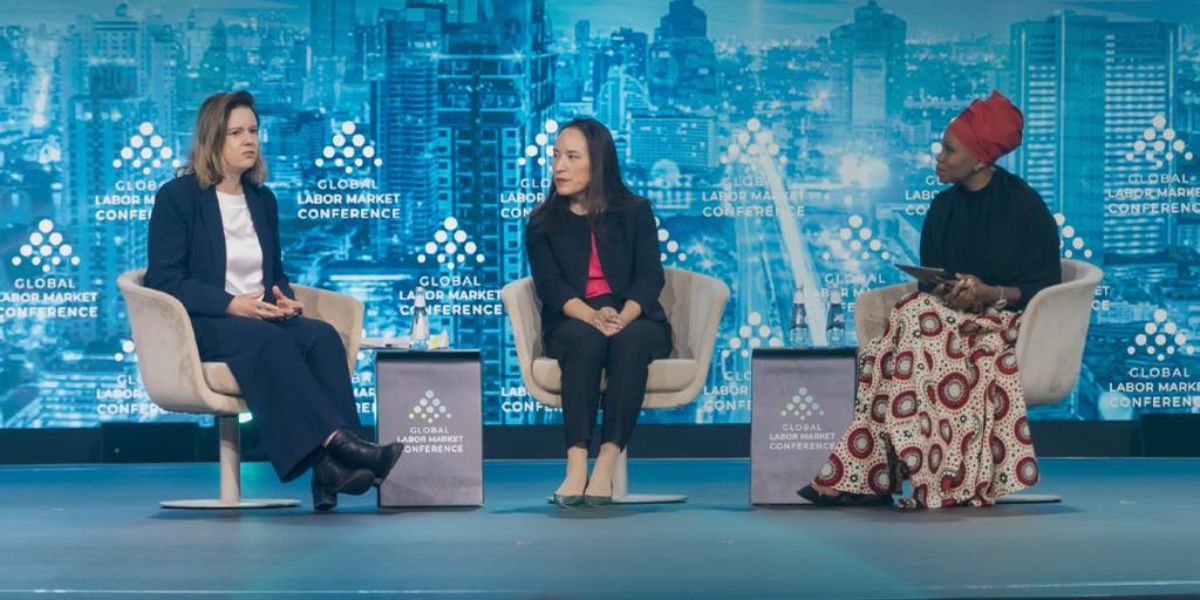
Riyadh: Speakers at the Global Labor Market Forum examined how global mobility is increasingly shaping economic growth, workforce resilience, and competitiveness, as migration patterns evolve in response to demographic shifts, technological change, and labor shortages.
During the session titled ‘From Movement to Momentum: Global Mobility as an Economic Force’, DHL Group Executive Vice President Lillian Lin Ueng and International Organization for Migration (IOM) Head of Labour Mobility Elizabeth Warn discussed how migration has moved beyond a labor supply issue to become a core economic and strategic consideration for both businesses and policymakers.
Lin Ueng highlighted that global mobility is central to DHL’s operations, noting that approximately 15 percent of the company’s workforce is employed outside their country of nationality. She emphasized that diverse teams contribute directly to innovation and productivity, particularly in logistics and supply chains, where seasonal demand and labor flexibility are critical. As migration patterns shift, she noted, companies are increasingly required to adapt to changing labor availability across markets.
Warn underscored that migration governance must be approached holistically, stressing that labor mobility cannot be addressed in isolation from housing, education, health, and social systems. She noted that both origin and destination countries are now competing for talent, requiring stronger coordination, better data, and long-term planning. She also highlighted the role of remittances, emphasizing the importance of financial literacy and formal channels to maximize their impact on communities.
Speakers agreed that effective mobility policies and corporate practices must balance economic opportunity with integration, protection, and sustainability to ensure migration contributes to inclusive and durable growth.
Also read:‘KASHMIR: WAIT & SEE’ book launch and photo exhibition concludes at PNCA