
By Muhammad Ahsan Arshad
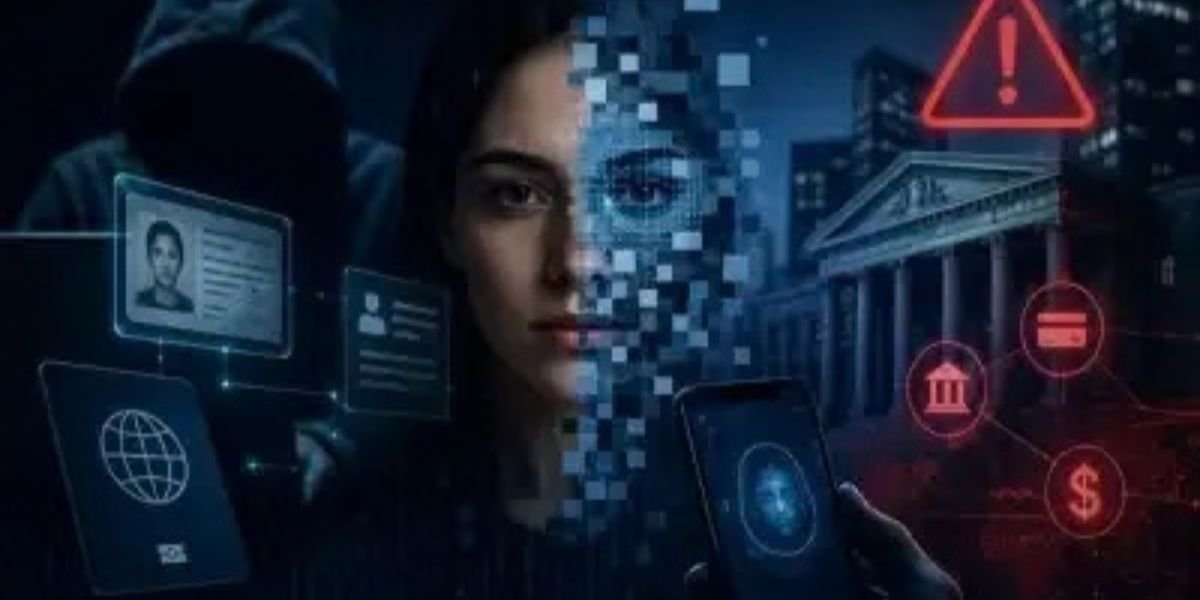
The more people move their money online, the more opportunities they may create for fraudsters.
In a study of 16,387 mobile money account owners across 35 economies, based on data from the World Bank’s Global Findex 2024 survey, about 34 percent reported that an unknown person had asked them for their mobile money PIN or password. That is not simply a nuisance.
It is a warning about how the nature of financial crime is changing as more of our financial lives move online.
The study examined whether people who are more deeply engaged with digital payment systems are more likely to be approached by someone seeking their credentials. It found a consistent positive association.
The researchers created a Digital Payment Exposure Index, ranging from zero to five, based on activities such as using digital payments, using the internet, owning a smartphone, paying utility bills digitally, and sending or receiving remittances into an account.
After accounting for factors including age, gender, education, income, employment, location and saving habits, higher digital engagement remained associated with a greater likelihood of reporting a credential-fraud attempt. The predicted probability was roughly 29 percent for users at the lower end of the exposure scale and about 41 percent for those at the higher end.
The reason is not difficult to understand. Every digital transaction creates another point of contact. A person who pays electricity bills through a mobile application, receives remittances digitally and regularly uses a smartphone has a financial life that is increasingly connected. Those connections are useful to legitimate service providers, but they can also provide opportunities for criminals to construct convincing stories.
A fraudulent message saying that an electricity payment has failed, for example, may sound credible precisely because the recipient actually pays electricity bills digitally.
A request to “verify” an account may appear plausible because the person regularly uses that account. The more familiar the digital routine, the easier it may be for a fraudster to imitate it.
This does not mean that digital finance is a problem. Mobile money and digital payments have brought financial services to people who previously had limited access to formal banking. They have reduced distances, increased convenience and made routine transactions faster.
The lesson, therefore, is not to slow digitalisation. It is to recognise that adoption and protection must advance together.
The research also shows why the issue cannot be understood simply by looking at how digital a country is. Countries with similar levels of digital engagement can experience very different levels of reported credential-fraud exposure. The surrounding institutional environment matters.
This is an important distinction. Digital technology creates opportunities for contact, but institutions influence how those opportunities are controlled.
Consumer protection, regulatory supervision, complaint mechanisms and effective enforcement can affect the environment in which digital payments operate.
There is another reason to interpret the findings carefully. The study measures attempts to obtain credentials, not actual financial losses. It is also cross-sectional and observational, meaning that it identifies associations rather than proving that greater digital engagement directly causes fraud.
Even with those limitations, the pattern is important. As financial activity moves from branches and cash counters to phones and digital platforms, the attack surface changes with it.
The future challenge, therefore, is not simply to put more people online. It is to make sure that people can use digital financial services without becoming easier targets for those who seek to exploit them.
Digitalisation promises greater financial inclusion. But inclusion becomes sustainable only when convenience is accompanied by security, trust and credible protection.
(The writer is a Financial Crime Investigator at the National Accountability Bureau of Pakistan. Email: a4ahsanarshad@hotmail.com.)