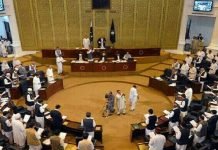
Islamabad: Rising tobacco and nicotine use among Pakistan’s youth, especially around educational institutions, emerged as the central concern at a national review session on tobacco control held by the Aurat Foundation in Islamabad.
Participants from Parliament, government departments, health organizations, and civil society warned that easy availability of cigarettes, vapes, nicotine pouches, and flavored tobacco near schools is creating a growing public health threat. The discussion also pointed to a noticeable increase in tobacco use among women, indicating a shifting trend.
The session called for stronger legislation, faster policy action, and strict enforcement to counter the rapid spread of emerging nicotine products. Speakers emphasized that existing laws remain poorly implemented due to procedural delays, weak monitoring, and limited coordination between federal and provincial bodies.
The need for clear parental awareness, community engagement, and better recognition of new nicotine products was highlighted as an essential part of early prevention. Officials noted that families and schools often remain unaware of modern products marketed to young people.
Technical briefings identified major enforcement gaps and policy loopholes that allow the tobacco industry to expand its reach. Participants noted that companies are increasingly using social media trends, entertainment content, and youth-focused marketing to promote vaping in urban areas.
Government representatives reaffirmed ongoing federal efforts to implement the Prohibition of Smoking and Protection of Non-Smokers Health Ordinance 2002 and to tighten regulations where required. Provincial representatives also announced plans to introduce new resolutions to strengthen tobacco control.
Education sector officials raised alarms over the rise of nicotine products around private institutions and called for tougher regulatory checks. Regulatory authorities stressed the need for a broader social movement to counter tobacco use nationwide.
Closing the event, the Aurat Foundation reiterated its commitment to evidence-based advocacy, cross-sector collaboration, and long-term public awareness initiatives aimed at building a healthier, tobacco-free society.ISLAMABAD: The federal government has increased the prices of petrol by Rs8.36 and diesel by Rs10.39 per litre for first half of July 2025, putting an additional burden on the masses.
According to the Ministry of Finance, the new price of petrol has been set at Rs266.79 per litre and the price of high-speed diesel at Rs272.98 per litre.
A notification of the increase in petroleum prices has been issued. Sources said the new prices of petroleum products have been implemented immediately.
It should be noted that OGRA sent a summary to the Ministry of Petroleum, after which the Finance Minister, in consultation with the Prime Minister, made the final announcement of the new prices.
According to sources, the prices of petroleum products have been increased due to the increase in crude oil prices in the global market and the depreciation of the rupee.
Earlier, it was expected that petrol prices may rise by up to Rs11 per litre, while diesel prices could increase by as much as Rs15 per litre in the fortnightly review.
This price hike is largely attributed to recent surge in crude oil prices in the international market coupled with the weakening of the Pakistani rupee.
The adjustment in fuel prices is likely to have widespread effects on the economy, impacting transportation costs and the prices of goods across the country.
It is recalled that a 12-day war that started with Israel targeting Iran’s nuclear facilities on June 13 pushed up Brent prices, which surged above $80 a barrel after the U.S. bombed Iran’s nuclear facilities. However, it slumped to $67 after President Donald Trump announced an Iran-Israel ceasefire.
Read more: Government Decides To Scrap ‘Electricity Duty’ On Bills To Give Relief To Masses