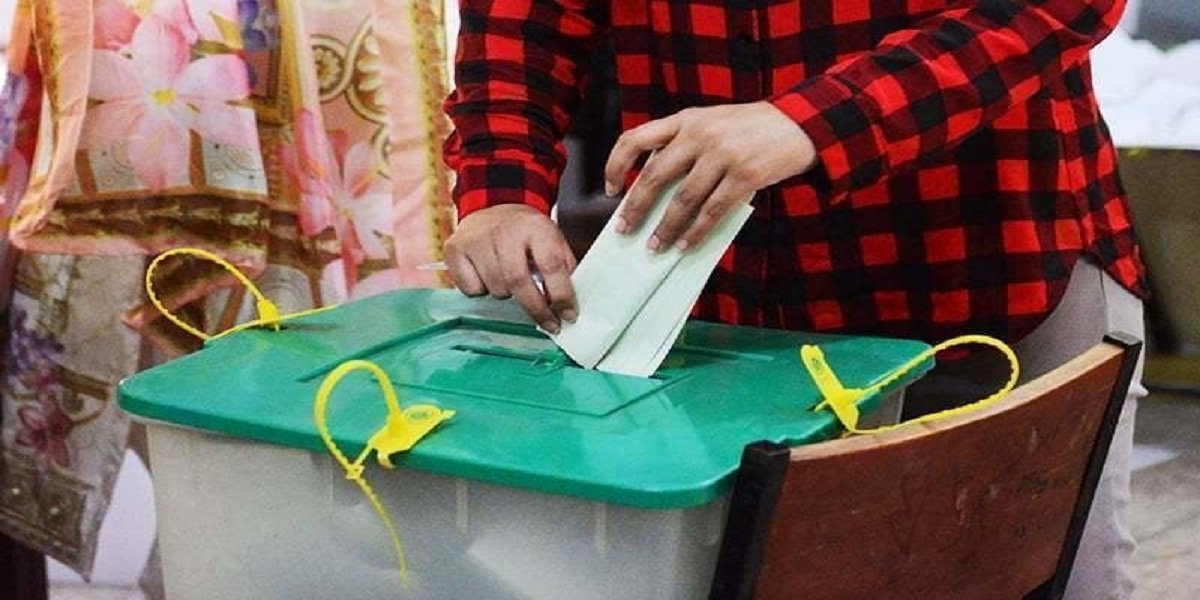
If today, the 14th of May 2023, had been a normal day and we lived in a civilized society, the Election Commission would have already arranged – in an organized and orderly fashion – the conduct of elections of the Punjab and KP Assemblies in accordance with the constitution. This would have been exactly 90 days after the dissolution of those assemblies and the government would have provided 20 Billion PKR and security in compliance of Supreme Court of Pakistan’s decision to hold elections on May 14th.
The people of the two provinces would have been lined up cheerfully and in complete safety to cast their ballots – a fundamental right – to choose a government of their choice and mandate it to create enabling conditions in which they could pursue their dreams and aspirations while leading the provinces to progress and prosperity.
But today is not a normal day, as security around the country has been tightened (security that strangely was not available for election duty), internet resources have been blocked to prevent the airing of views and opinions, and obtaining the cheapest and the most effective means of getting feedback and public pulse.
However, perhaps this feedback is too bitter and sour for the government and the establishment to swallow. The media is completely gagged and incentivized to dedicate most of its time to air PML(N) and speeches of the PDM which are planned and scheduled at regular intervals to occupy most of the screen time – leaving a little space for the lone opposition party of the country. The independent media voices have been muffled and journalists perceived as opposing the government or ‘authorities’ have been lifted and whereabouts of most of them are not known.
In a civilized society, all pillars of the state – the government, parliament, judiciary, and the media – function normally and independently to ensure good governance. However, in our unfortunate country, all pillars of the state are arraying against each other; the executive and its extension legislatures have launched a coordinated and joint assault on the judiciary and lone opposition party.
The army, which is created and resourced by the people, is poised against the people and threatens them of dire consequences if any of its installations are attacked by angry demonstrators without realizing the undercurrent that the people are behaving erratically not because they do not love or respect their armed forces, but because the armed forces have become utterly immersed in politics. It is holding press conferences and issuing statements against a political party and its leader by abandoning its independent and impartial status, which has made it defacto a political stakeholder and thus all rules of politics become applicable to it, which also means that the political leader and its followers have the right to rebut the armed forces’ political statements in equal coin.
It is also worth noting that the constitution does not specifically protect the armed forces from criticism but does protect the defense of Pakistan, which includes the national government, which is responsible for setting defense policies and strategies, allocating defense resources, and overseeing the implementation of these policies, and the military, which is responsible for carrying out the defense policies and strategies, the civil law enforcing agencies and a variety of actors and institutions working together to safeguard the nation’s and its residents’ security and well-being.
Unfortunately, the government and legislatures, blinded by their vested interest and their desire to stick to power as far as possible, disregard the cost of their belligerent dispensation incurred to the people who are the ultimate paymasters. They have systematically planned to avert the implementation of the supreme court’s ruling. They first orchestrated the arrest of the popular leader by circumventing the mainstream judicial system and using NAB and rangers to make the arrest and sparked widespread demonstrations and use ensuing violence as reason to postpone the election indefinitely.
Their plan to create chaos succeeded and as a result of commotions and protests over 40 precious lives were lost, and losses of billions of dollars was sustained by the economy. Interestingly, a fraction of this cost and fraction of the law enforcing agencies deputed to quell the demonstrations were enough to hold the elections.
Secondly, the executive and the legislatures launched a joint lethal defamatory and insulting attacks on the judiciary. The leaders tried to beat each other in their attempt to gain their leadership’s favor by expressing their anger, hurling insults and abuses against the Supreme Court and the lone opposition leader. Such language is generally considered to be disrespectful, inappropriate, and potentially harmful to the integrity of the judiciary and the rule of law can also contribute to the erosion of public trust in institutions and undermine democratic norms.
PDM and unfortunately the entire leadership of the government and the legislator are united against the Supreme Court of Pakistan and for that matter against the constitution and all of the law and regulations under it by announcing a sit in on 15th May when the Supreme Court is likely to take the case of implementation of Supreme Court’s verdict to hold elections on 15th May which has been mercilessly trampled, disobeyed and thrown in the dustbin as a useless piece of paper.
This is indeed a desperate attempt to save whatever political capital they had but in their frustration, they are committing mistakes after mistakes and ending up further eroding their political standing. They are indeed in a catch 22 situation, they are sure of losing the elections and their perks and perquisites and if they face the consequences of contempt of court they will lose the government and become martyred and use this as a rallying point in the upcoming election.
As a part of the strategy, the government is using the legislatures to shift the blame and dilute the contempt of court proceedings which is fraught with several significant consequences for the country and its people as if the supreme court’s decisions are trampled it would lead to political instability. There may be no way to resolve disputes and conflicts that arise between different branches of government or within society, which can lead to an erosion of democratic values, as the government may be able to operate outside the bounds of the constitution without any checks or balances, and people lose trust in the institution, as people may no longer believe that justice is being served. The country’s economy will be affected due to ensuing political instability or a loss of trust in the court, it can lead to a decline in foreign investment and a slowdown in economic growth.
The society will face heightened unrest and can lead to political turmoil, as opposition parties and civil society organizations may mobilize to demand compliance and hold the government accountable by holding protests, strikes, and other forms of public unrest, which can further undermine the stability of the political system.
PDM and unfortunately the entire leadership of the government and the legislator are united against the Supreme Court of Pakistan and for that matter against the constitution and all of the law and are holding demonstration and setting before the Supreme Court of Pakistan on Monday 15th of May when the Supreme Court is expected to hear expected to commence contempt of court proceedings against the state, not against the government for against the government and the election commission for having failed to comply with the constitution and its order to hold the election on 14th of May.
In their attempt to malign the opposition and to avert holding of elections, the government and the PDM leaders have created precarious situations which have resulted in dragging the armed forces in the political arena. In a normal and civilized country the armed forces make sure that they are not entangled in any act of omission or commission of any political party or immerse themselves in political, economic and civilian matters which are fraught with danger. Nowhere in the world, the public relations Wing of the defense forces threatens its own people, and demonstrators with dire consequences, instead, they don’t let such a situation to arrive in the first place.
The Armed Forces – which are and will remain an important and indispensable institution of the country – should take a deep introspection into their public relations dispensation in the large interest of the nation. They should immediately, re-determine and reset the entire ISPR scope and objectives, and limit and confine itself to only professional and operational matters and issues. All this without making even a reference to any political, legal or economic issues as has been done more frequently by the ISPR and by do inflicted immeasurable harm to the image and stature of the armed forces.
We all know in our hearts that our economy is too delicate to withstand any further shocks, and we all know that we can achieve tremendous progress if we set aside our vested interests and work with selfless determination to bring prosperity and progress to our country. We are all aware that strong governance must be established in the country in order to boost business, trade, and commerce. We are all aware that we must improve the country’s reputation and image by embracing universally accepted values such as honesty, keeping promises, meeting deadlines, honoring commitments and pledges, and creating an enabling environment within the country to attract investment, win business, and make favorable trade deals. We all know that the military should stay out of politics, but we draw them in by hook or by crook.
What prevents us from doing so is our vested and deeply established interests, as well as a lack of collective and national thought to focus our resources and abilities on lifting our country out of its morass. This is doable; we can do it; however, when we will unify for this seemingly achievable goal is dependent on our leadership’s capability, capacity, and vision. (Edited by Khadijah Kamili)
Opinions in this piece are based on personal observations of the writer.
Also Read: Can our dying Economy take violent shocks?