
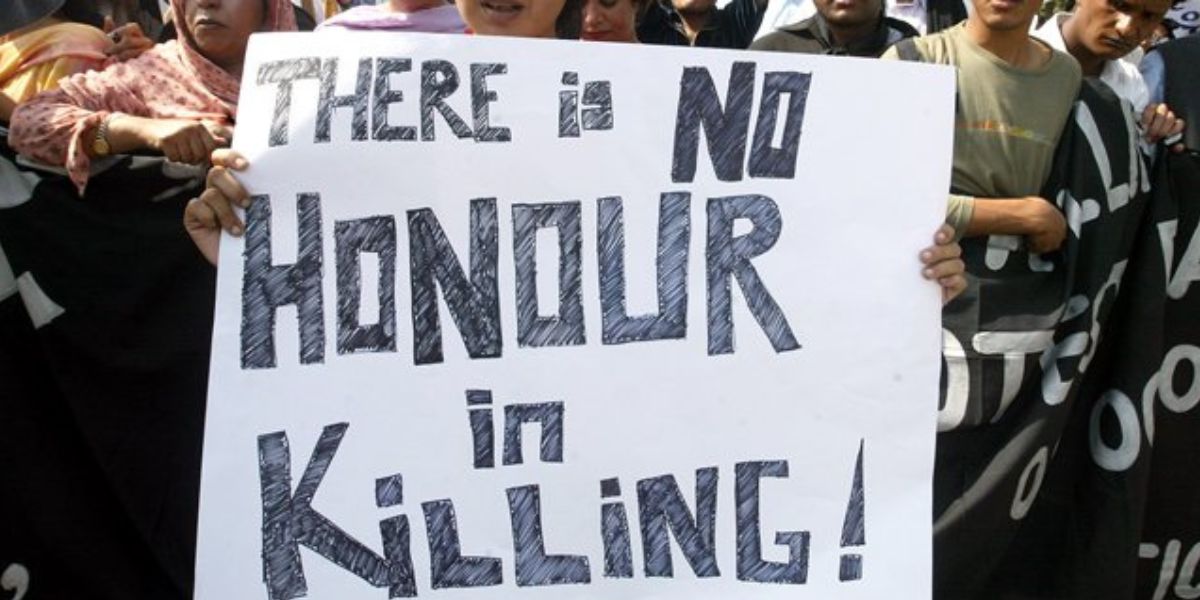
A tragic incident of honour killing in Balochistan has once again jolted the national conscience. It underscores how ignorance, tribal ego, and outdated customs continue to poison our society. Innocent lives are being stolen in the name of honour, but there is no honour in taking a life—only dishonour, cruelty, and injustice.
Under Islamic law, every adult has the right to choose their life partner. No one—not family, not society—can deny this. Islam strictly prohibits murder, yet such killings persist under the false pretense of religious or cultural justification. These crimes violate moral values, legal frameworks, and the very faith they claim to uphold.
The state must stop accommodating feudal and tribal interests. Honour killers are not cultural guardians—they are murderers. The demand is clear: arrest and try them under anti-terrorism laws, and sentence them publicly to deter future acts. Without this, such crimes will remain unchecked.
Historical silence and institutional failure
Since 1947, honour killings have continued to stain the fabric of Pakistan. From Punjab’s rural fields to Balochistan’s rugged mountains, thousands—mostly women—have lost their lives in the name of patriarchal honour.
In 1951, a 17-year-old girl in Sindh was murdered for refusing an arranged marriage. No one was arrested due to the influence of a local feudal family. The trend continued. During the 1970s and 1980s, under General Zia’s rule, honour killings were normalized. Courts remained silent, and the Qisas and Diyat law gave killers legal protection. In one 1984 case in Dera Ghazi Khan, a man killed his sister and walked free after being “forgiven” by his father.
The pattern has repeated itself over decades. In 2002, five women in Jacobabad were buried at night while police stood by. In 2008, five women in Naseerabad, Balochistan, were allegedly buried alive by powerful tribal figures. A senator even defended the act in parliament. No one was convicted.
In 2016, social media celebrity Qandeel Baloch was murdered by her brother. He confessed publicly. Yet in 2019, he was released after being “forgiven” by his parents under Islamic law. The system failed her, and many others like her.
An endless chain of impunity
The truth is brutal: politicians, landlords, and tribal leaders have long protected the killers. Through bribery, threats, and political interference, they bury evidence, silence witnesses, and manipulate investigations. Laws exist, like the 2016 Anti-Honour Killing Law, which aimed to remove the forgiveness loophole—but implementation is weak. Cases are still quietly “resolved,” witnesses vanish, and the justice system bows to wealth and power.
What must be done?
To eradicate honour killings, these steps are essential:
-
Parliament must make honour killings non-compoundable—no forgiveness, no settlements.
-
Law enforcement and judiciary must be shielded from tribal or political pressure.
-
Civil society, media, and religious scholars must unite in condemning these acts.
-
Schools, especially in rural areas, must teach gender equality, legal rights, and respect for human dignity.
Let us be clear: the real dishonour lies not in a woman’s choices but in a society that allows men to murder in the name of pride and go unpunished. Silence is complicity. We must draw a firm red line: no more tolerance for honour-based violence.
Pakistan must now decide—will it continue in the darkness of barbarism, or will it rise for justice and humanity?