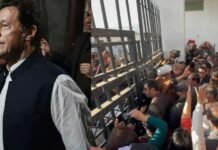

I neither desire nor support violence, but I do desire elections. These few words were sufficient to calm the nation’s anxiety, wrath, and desperation. This had resulted in violent protests, demonstrations, and agitation throughout the country, resulting in the loss of precious lives and property. The widespread violence throughout the nation prompted the government to send in the army, which complied without hesitation. It was the same army that was unavailable for civil duty a few days prior.
Certain images and videos depicting furious protestors attacking the army motorcade with stones and batons were extremely disturbing. Even the President was compelled to write an open letter advocating for peaceful assembly and protest, but averting violence. The government may have miscalculated the response and was astonished by the spontaneous reactions of nearly all of the nation’s citizens. In addition, there was an attack on the Army Headquarters and military installations, which was extremely disquieting and gave sane people the chills.
The judiciary ultimately saved the nation from further devastation, disorder, and deterioration of the law and order situation. The court remained focused on the legal issues and posed pertinent questions. Whether the rangers and the National Bureau of Investigation were authorised to detain Imran Khan. Both the Secretary of the Interior and the Inspector General of Police denied knowledge of the arrest warrant or the plan to execute it.
The second question was whether Rangers or NAB had sought permission from the registrar of the Islamabad High Court (IHC) prior to the arrest, which was answered in the negative. The third question was whether NAB Peshawar had sought written permission from the government of Punjab to execute arrest warrants, which was also answered in the negative.
On the basis of Article 10 of the Constitution, which states that no one shall be detained without being informed of the reason for their detention and that no one shall be denied the right to consult and be defended by a legal practitioner of their choice, and Section 17(2) of the Criminal Procedure Code (CrPC), which prohibits police officers from entering the court’s precincts to arrest an accused person who is attending or about to attend a hearing, the supreme court ruled that police officers may not enter the court premises, the Supreme Court placed Imran Khan in its own custody, ordered that a suitable rest house be provided for him, and permitted his party members and relatives to visit him. The Court’s caution prevented Imran from returning to his Bani Gala home, ostensibly out of concern that he would be re-arrested by the government on some other pretext.
Tomorrow (12th May), Imran will appear before the IHC. Interestingly, it was the same high court that, upon hearing of Imran’s illegal arrest right under his nose and without his specific permission, became enraged, demanded an explanation from the authorities within an hour, and threatened to call the prime minister, but later caved in and declared the arrest legal, which stunned all the legal minds. However, the supreme court’s reversal of the arrest and IHC’s decision and the direction to restart the entire proceeding from the same point where it was interrupted by the rangers corrected many legal anomalies.
The Supreme court also disregarded the hurriedly called fiery press conference of the Information minister, a close associate of Maryam Nawaz who shortly after the supreme court’s order for presentation of Imran Khan before the Court within an hour, she threatened dire consequences even to the extent of torching down the houses of superior judiciary, if the court did not reverse its order. It also disregarded her abusive language and her acknowledgement, wherein while citing various examples, she proved that the entire country is on fire and threatened that the situation will deteriorate even further if the supreme court ordered his release.
The government and security agencies reportedly held a high-level meeting to discuss the deteriorating law and order situation and the shocking news that Imran Khan had been released. They must have been formulating a new plan, but this time they must take into account all constitutional, legal, political, and law and order factors and circumstances prior to launching a new attempt to arrest or eliminate Imran Khan; otherwise, they are likely to lead the nation into an even more dire situation than they did after their most recent failure.
This time, they should consider taking the normal legal path through the normal justice system and refrain from taking shortcuts like NAB and rangers, which is neither prudent nor in the national interest. No matter how grave and dire the situation, the army or its offshoots should avoid coming face-to-face with the public, who are also taxpayers and pay their salaries with their blood and sweat.
Communication during such dire law and order situations in which a sizeable portion of the public is on the road in an agitated state was crucial, given the author’s familiarity with many similar situations in the past. Any miscalculation, particularly because of the permeation of social media at the grassroot level, can either settle or worsen the situation. As a member of the media, I am of the opinion that all institutions, especially the armed forces and the judiciary, should exercise extreme caution when communicating with the public and adhere to the universally accepted principles which state that the armed forces and the judiciary should avoid communicating directly with the public, as doing so could undermine the separation of powers and raise concerns about legal and political interference in civilian matters.
Instead, it is expected that both institutions should function independently and impartially, free from undue public influence or pressure. In extraordinary circumstances, if the armed forces or the judiciary are constrained to communicate, they should limit themselves to technical and professional matters and refrain from making any statements with a political undertone or connotation. Additionally, they should ensure that communications are open, accurate, and do not violate the rights and privacy of individuals. Armed forces should seek expert advice to ensure that their communications are free of political, economic, and legal entanglements, as accessing the public domain is fraught with dangers and complications that should be avoided.
The armed forces are the nation’s most valuable asset, and their sanctity, respect, and love must be preserved at all costs. At the same time, the armed forces should seek outside expertise to improve their image, which has been damaged by the army’s alleged involvement in political, economic, and international affairs and businesses.
As a patriot media practitioner, the army should, in the best interest of itself, the government, and the nation, delegate all communications pertaining to political, economic, or foreign affairs or business to the government and limit itself to technical professional inert issues only. They should also adopt the communication model of the civilian bureaucracy, which never communicates directly with the public or engages in dialogue with the media or the public. As a result, they have been able to avoid any negative consequences to their lives or property.
The government and the establishment have virtually taken the nation’s pulse at this point. The new slogans assert that we will no longer be intimidated by the kinetic force purchased with their tax dollars, that they will no longer be intimidated or harassed, and that the armed forces should focus on its fundamental duty of defending the motherland and operating strictly and precisely within the authority granted to it by the constitution. These pulses must be treated seriously.
Interestingly, this time around, it was not only the uneducated and rural populace that took to the streets, but also a large number of women who bravely confronted law enforcement agencies and middle and upper class citizens who normally avoid endangering their lives and, as in the past, preferred to remain in the comfort of their drawing rooms discussing politics while watching breaking news on the large television.
The government and institutions under it may have also taken note of the fact that Imran was absent this time, but PTI workers and supporters defied heavily armed law enforcement agencies and even the army in certain instances across the country, something that had rarely occurred in our history. They must also consider that all attempts to malign and discredit Imran Khan have been ignored and rebuffed by the general public, and therefore any additional audio or video leaks will have no effect.
The best course of action for the government is to comply with the Supreme Court’s directives, which are still in effect, and hold Punjab and KP elections expeditiously, as they no longer have the excuse that the army is unavailable or that they lack funds, as the army was deployed throughout the country in support of civil administration to quell agitation, which required an enormous amount of funds for mobilisation, which the government had no choice but to pay. The Election Commission can be allocated the same funds and army to conduct elections.
Government should also consider disobeying the supreme court order, as any refusal would constitute a grave violation of the rule of law, constitutional principles, and separation of powers. The supreme court of Pakistan is the country’s highest court, and its decisions are binding on all branches of government, including the executive, legislative, and judicial branches. Any violation of its mandates will result in legal and political consequences.
The court, for instance, may issue additional orders or sanctions against the government, and the public may hold the government accountable through protests, demonstrations, and civil disobedience. In extreme circumstances, a government’s refusal to comply with the Supreme Court could result in a constitutional crisis or even the collapse of the democratic system.
The second course of action is for the government to engage in serious negotiations with the political parties, including the PTI, to deliberate and set a date for general elections. This would enable the government to focus its efforts on improving governance, boosting the economy, and providing relief to the populace in an effort to reclaim some of the lost political capital. It would also allow the security agencies to redeploy their assets from civilian surveillance to national security, giving the nation and its people a sigh of relief and allowing them to concentrate on earning a livelihood, which is becoming increasingly difficult as time passes. (Edited by Khadijah Kamili)
Opinions in this piece are based on personal observations of the writer.
Also Read: Maryam’s winning streaks