ISLAMABAD: The International Monetary Fund (IMF) has unveiled its assessment of Pakistan’s economic performance, projecting a positive trajectory for the country.
The report reveals promising news on multiple fronts, including a decline in unemployment rates and a decrease in average inflation for the current financial year.
The IMF forecasts a moderate economic growth rate of 2.5% for Pakistan in the year 2023-24.
Last financial year, the country experienced a negative 0.5% growth rate, but the government claimed a slight positive growth of 0.3% for the Gross Domestic Product (GDP).
With the new budget in place, the government has aimed for a growth rate of 3.5%. The current unemployment rate of 8.5% is expected to drop to 8% in 2024.
This reduction could potentially alleviate the economic burden on many families and improve the overall well-being of the nation.
Another positive indicator outlined in the IMF report is the projected decrease in average inflation. Currently standing at a staggering 29.6%, inflation is estimated to decrease to 25.9% by the end of the financial year.
According to the IMF, the fiscal deficit is expected to narrow slightly to 7.5%, while the primary surplus is estimated to reach 0.4% of the GDP.
Moreover, the IMF report reveals a positive trend in reducing the volume of debt attributed to Pakistan. The current debt-to-GDP ratio of 81.8% is projected to decrease to 74.9%.
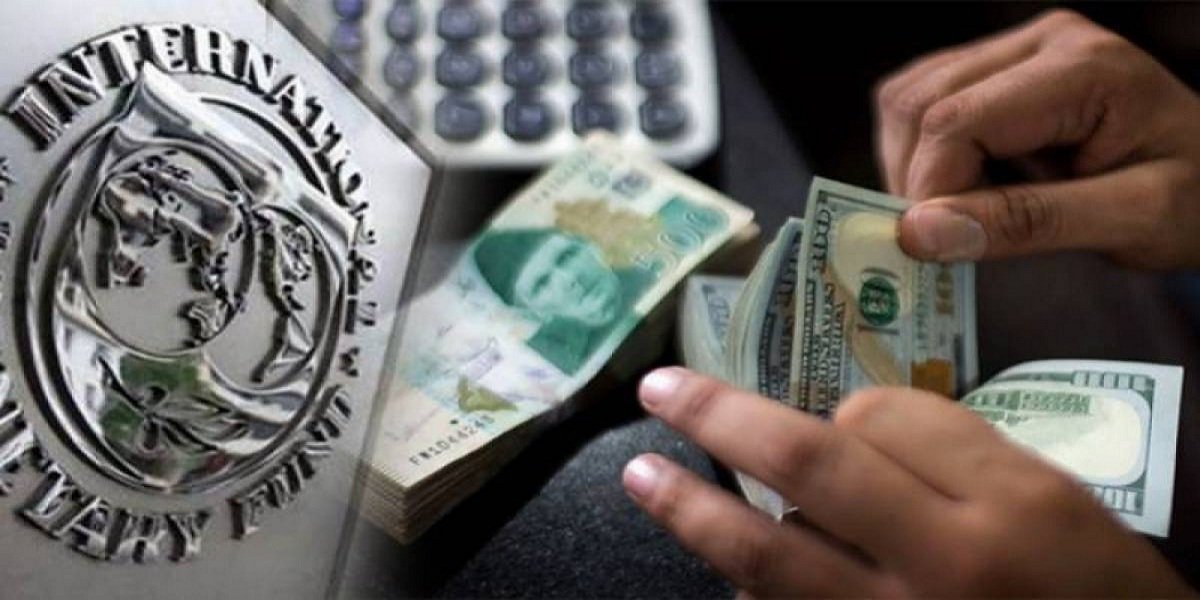
Yesterday, the Executive Board of IMF approved a 9-month Stand-By Arrangement (SBA) for Pakistan for an amount of SDR2,250 million (about $3 billion, or 111 percent of quota) to support the authorities’ economic stabilization program.
The arrangement came at a challenging economic juncture for Pakistan.
A difficult external environment, devastating floods, and policy missteps have led to large fiscal and external deficits, rising inflation, and eroded reserve buffers in FY23.
Pakistan’s new SBA-supported program will provide a policy anchor for addressing domestic and external imbalances and a framework for financial support from multilateral and bilateral partners.
The program will focus on implementation of the FY24 budget to facilitate Pakistan’s needed fiscal adjustment and ensure debt sustainability, while protecting critical social spending.
A return to a market-determined exchange rate and proper FX market functioning to absorb external shocks and eliminate FX shortages and an appropriately tight monetary policy aimed at disinflation; and further progress on structural reforms, particularly with regard to energy sector viability, SOE governance, and climate resilience.
The Executive Board’s approval allows for an immediate disbursement of SDR894 million (or about US$1.2 billion). The remaining amount will be phased over the program’s duration, subject to two quarterly reviews.
The finance ministry officials were optimistic that Pakistan might get $1.2 billion as the first tranche from the standby agreement.
Additionally, financing worth $2 billion from Saudi Arabia and $1 billion from the UAE has also been obtained.
Read more: IMF Board approves $3bn stand-by arrangement for Pakistan