
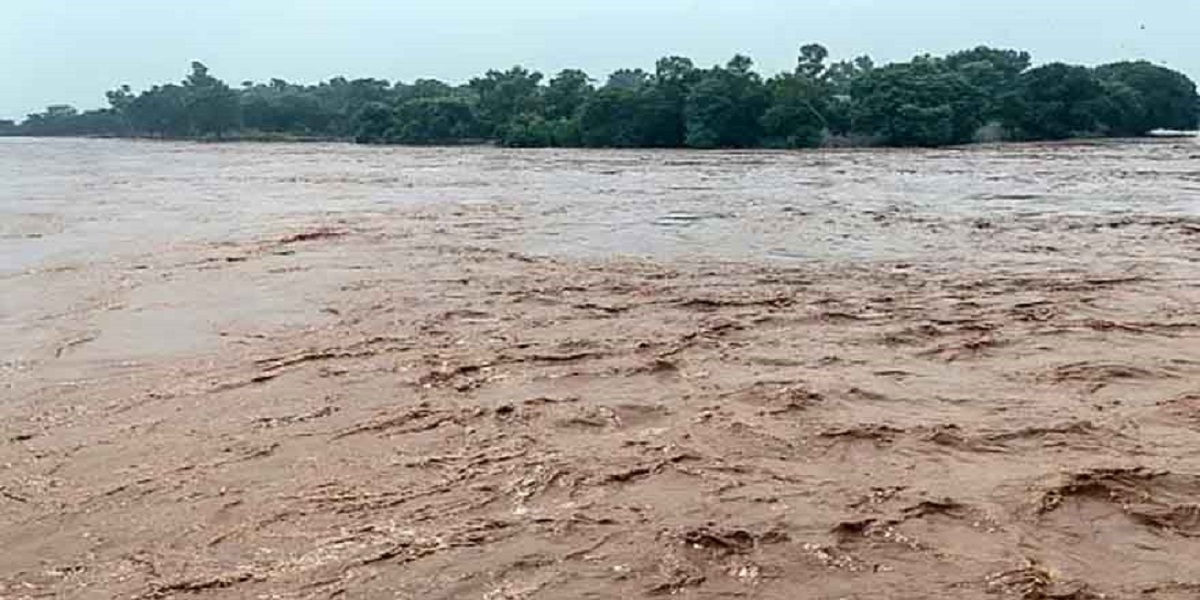
LAHORE: Dangerous flooding in the Ravi, Sutlej, and Chenab rivers, combined with torrential rains, has caused massive destruction across many cities of Punjab. Hundreds more villages have been submerged, millions of acres of crops destroyed, and in Gujrat, urban flooding caused by heavy downpours has paralyzed life.
As a result of flooding in the Ravi, Chenab, and Sutlej rivers, nearly 4,000 villages and more than 3.5 million people have been affected in Punjab, while millions of acres of crops have been wiped out.
The Indian High Commission in Islamabad has sent another letter to the Indus Water Commission, stating that the Sutlej River is facing high flood levels at Harike and Ferozepur, which will send additional water surges into Pakistan.
According to the Punjab Flood Forecasting Division, flood conditions persist across rivers in Punjab. Extremely high floods have been recorded at Head Sidhnai and Ganda Singh Wala. The Chenab River is also facing extremely high floods at Head Khanki, Head Qadirabad, and Chiniot Bridge.
High flood levels have been reported at Head Marala, Ravi Siphon, Shahdara, Balloki, and Head Sulemanki, while Trimmu, Jassar, Islam, and Mailsi Siphon are experiencing medium floods. Guddu, Sukkur, Kotri, and Panjnad are witnessing low floods. In tributaries of the Chenab, Nullah Aik is experiencing very high floods and Nullah Palku high floods, while water levels in Nullah Basantar and Nullah Bein, linked to the Ravi, have decreased.
The confluence of the Ravi and Chenab near Khanewal has created a double threat for Multan and Muzaffargarh districts. Despite controlled breaches last week, the risk remains. At Head Muhammad Wala and Sher Shah, the water level was recorded at 412 feet, only five feet below the danger mark. Authorities have termed the next 12 hours extremely critical as pressure is increasing at erosion points near the confluence of the two rivers.
At Head Ganda Singh Wala in Kasur, a dangerous flow of 319,000 cusecs in the Sutlej River has engulfed more than 100 villages, including Noori Wala, Bhedian, and Usman Wala. Around 132 villages and 18,000 acres of land have been submerged, causing crop losses worth millions of rupees. In the surrounding areas of Luddan, high floods in the Sutlej caused breaches in protective bunds, submerging many settlements. A government elementary school collapsed, and its building and furniture were swept away.
In Kabirwala, floodwaters from the Ravi entered villages including Kund Sargana, Qatalpur, and Barbegi. The makeshift embankments built by locals broke at multiple points, allowing water to rapidly enter homes and fields.
In Gujrat, 506 millimeters of rainfall within 24 hours triggered severe urban flooding. Four feet of water accumulated at Kutchery Chowk, Gondal Chowk, Zahoor Elahi Stadium, Jail Chowk, and other key points. Overflowing of Nullah Bhandar and Nullah Bhimber swept away a house. The session court, government offices, and shops in Gujrat went underwater, causing panic among residents as mosque loudspeakers made continuous announcements.
In Multan, floodwaters from the Ravi reached the railway bridge. In Shujabad tehsil, the flood destroyed many villages, forcing people to migrate on their own. In Lodhran, protective bunds in five villages broke, flooding crops and cutting off road links. In Khanewal, 136 villages have been affected, while 75 villages have been impacted in Toba Tek Singh. In Kot Momin’s Ram Deyana area, a government elementary school and several buildings were submerged. At Shorkot on the Chenab, high floods inundated nearby areas along Jhang-Multan Road, where army and rescue teams carried out relief operations.
In Multan, riverbank erosion caused by flood surges washed away land. In Pindi Bhattian, Chenab floodwaters entered several areas, submerging the Government Technical College and a police patrolling post. In Jhoke Venus, Chenab floodwaters devastated multiple villages, while in Chishtian, an entire settlement was submerged, forcing residents to climb rooftops for safety. At Head Islam, water levels rose again, submerging more villages. In Vehari, more than 15 government schools have been destroyed by floodwaters.
DG Punjab Disaster Management Authority Irfan Ali Kathia confirmed that the death toll from floods in Punjab has reached 46, and more than 3.5 million people have been affected. Nearly 4,000 villages have been submerged, about 1.5 million people rescued, and more than 1 million livestock relocated to safer places. He added that floodwaters from the Chenab at Qadirabad will again hit affected areas, and once the river reaches Jhang, the situation will worsen further. He warned that a massive surge of 900,000 cusecs will enter Sindh on the night between September 6 and 7.
Floods have destroyed over 1.326 million acres of crops in Punjab. Faisalabad Division was the worst hit, with 323,215 acres damaged. In Gujranwala Division, 262,000 acres were destroyed, and in Gujrat Division, 238,000 acres. Bahawalpur Division lost 145,000 acres of crops, Sahiwal Division 137,000 acres, and Lahore Division 99,421 acres.
Read more: Jammu-Srinagar Highway, Other Vital Roads Closed For Traffic