
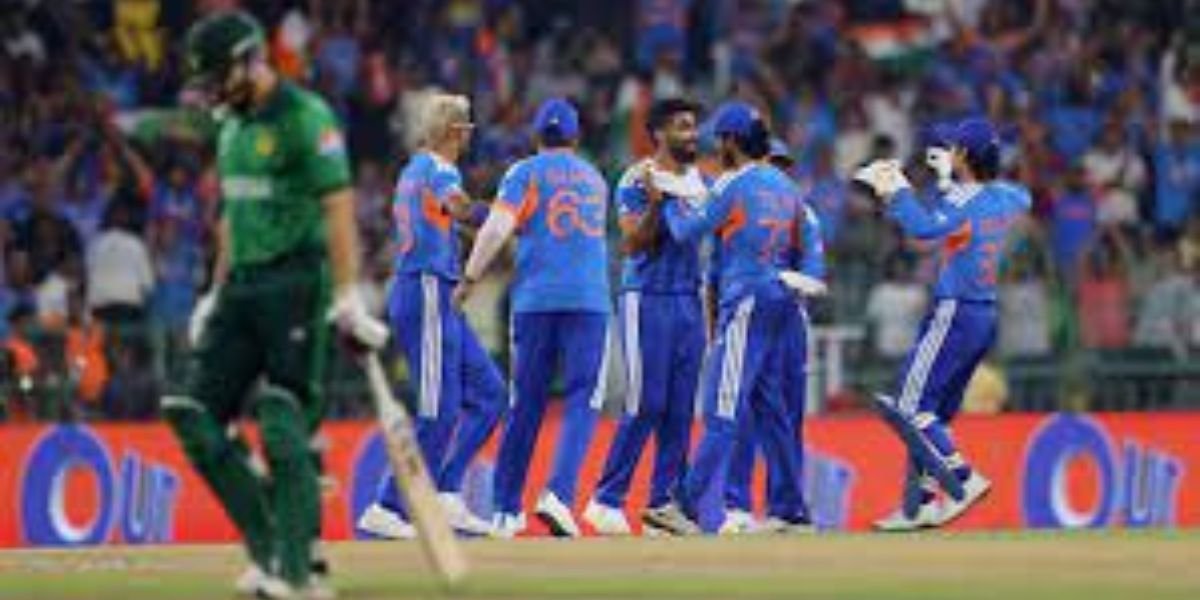
Beyond tactics, this match exposed a structural difference. India operated as a cohesive 11-player unit — role clarity, tactical flexibility, and collective contribution defined their approach. Pakistan, however, continued to lean heavily on individual brilliance. When those individuals failed or were misused, the system collapsed. A few players cannot defeat a complete team.
That contrast defined Pakistan’s 61-run defeat to India in the ICC Men’s T20 World Cup 2025. While tactical errors and captaincy misjudgments shaped the evening, the deeper narrative lay in how the two teams functioned — one as a synchronized machine, the other as a collection of dependent match-winners.
A Team That Functions vs A Team That Hopes
India did not rely on one batter or one bowler. Contributions came in phases. When one player slowed down, another accelerated. When the pitch assisted spin, adjustments were immediate. When pressure moments arrived, clarity of roles ensured calm execution.
Pakistan, in contrast, appeared dependent on moments of brilliance rather than a structured plan. When early breakthroughs came, the momentum was not sustained. When spin worked, it was not maximized. When bowling resources were available, they were not deployed at optimal times.
The issue was not just what happened — but how it happened.
Tactical Hesitation Reflecting Structural Gaps
The decision to bowl first after winning the toss handed India scoreboard control. Against a settled Indian unit, chasing under pressure magnified Pakistan’s structural weaknesses.
Early spin success — including the dismissal of Abhishek Sharma — should have dictated strategy. Instead, the shift in bowling rhythm allowed India breathing space.
Delaying Usman Tariq until the 11th over was perhaps the clearest example of reactive captaincy. In T20 cricket, overs are not saved — they are invested. Pakistan invested too late.
Faheem Ashraf, effective on such surfaces, did not bowl. Shaheen Afridi returned for the final over despite his earlier expensive spells. These were not isolated decisions; they reflected a pattern of indecision.
In international cricket, one miscalculation may be absorbed. Multiple ones become fatal.
Leadership and the Momentum Factor
T20 cricket is a format of momentum swings. Often, a single over shifts control irreversibly.
Pakistan surrendered more than one.
The reluctance to attack when India showed vulnerability suggested conservative leadership rather than assertive direction. By the time corrective measures were attempted, India had built a platform too strong to dismantle.
Leadership in modern T20 demands anticipation, not reaction. The difference between a system-driven team and an individual-reliant one lies precisely there.