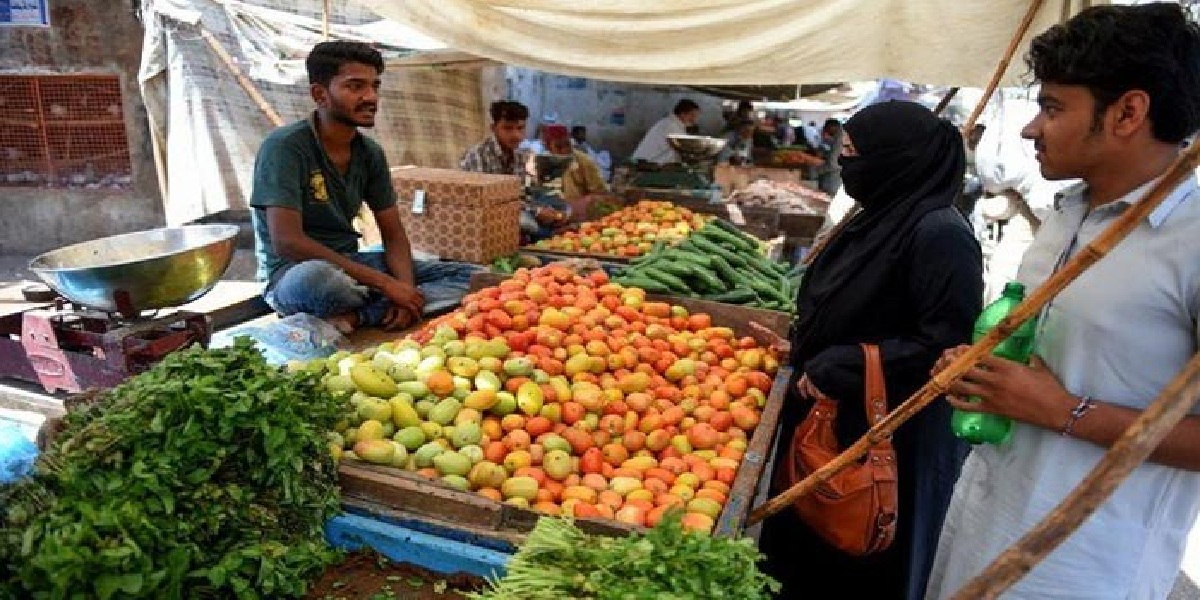
ISLAMABAD: December 2021 once again saw a double-digit increase in the prices of consumer items as inflation edged up to 12.3 per cent from 11.5 per cent in November 2021, data released by the Pakistan Bureau of Statistics (PBS) showed on Saturday.
Analysts had already anticipated the inflation to be double-digit, as the current CPI inflation was in line with their expected targets.
On a month-on-month basis, inflation remained “flattish”, slightly declining by 0.02 per cent owing to a significant decline in food inflation.
According to Arif Habib Limited (AHL), the inflation for the month of December is the highest in 22 months (February 2020: 12.40 per cent).
Sana Tawfiq an analyst from AHL said that the inflation rate is in line with the market expectation.
“The year-on-year increase was fueled by non-food items — household equipment. Moreover, the base inflation last year was lower”, Sana Tawfiq said, adding, “A slight decrease of 0.02 per cent on a month-on-month basis came on the back of an improvement in food inflation”.
Sana elaborated that a decrease in food group month-on-month was as expected “and was reflected in the weekly sensitive price index (SPI).”
The national data-collecting agency has reported the latest inflation figures before the Monetary Policy Committee meeting this month. The meeting is expected to maintain a status quo at 9.75 per cent.
The Wholesale Price Index (WPI), which captures prices in the wholesale market, also rose sharply by 26.2 per cent in December compared to 9.5 per cent in the same month a year ago.
The PBS reported that the overall inflation rate recorded an increase in both the urban and rural areas. The inflation rate in urban areas edged to 12.7 per cent in December and rural areas surged to 11.6 per cent over the same month of the last year. In December last year, the inflation rate in urban areas was 7 per cent meanwhile, in rural areas it stood at 9.5 per cent.
The food inflation rate in villages and cities dropped to 9 per cent and 11.7 per cent on a yearly basis. In December 2020, food inflation for villages and cities clocked in at 13.4 per cent and 12.6 per cent respectively.
The non-food inflation rate was recorded at 13.4 per cent in urban areas and 14 per cent in rural areas compared to 3.8 per cent and 6.1 per cent in the same month of last year.
Core inflation — calculated by excluding food and energy items — rose by 8.3 per cent in urban areas and by 8.9 per cent in a rural area during the month under review, reported the national data collecting agency
The food group saw a price increase of 10.33 per cent in December from the same month a year ago. Within the food group, prices of non-perishable food items surged by 14.18 per cent on an annualised basis meanwhile the prices of the perishable goods were effectively reduced by 10.23 per cent year-on-year.
The inflation rate for the housing, water, electricity, gas, and fuel group — having one-fourth weight in the basket — rose by 16.56 per cent (year-on-year) in the last month.
Average prices for the clothing and footwear group increased by 11.24 per cent in December. Prices related to transportation surged by 24.07 per cent (year-on-year).
On a month-on-month basis, the price of pulse masoor skyrocketed to 8.64 per cent, followed by an increase of 6.58 per cent surge in pulse mash, 6.02 per cent increase in cooking oil, over 5.27 per cent in pulse gram, according to the PBS. The prices of fruits, gram whole, milk and fish recorded an increase of 4.81 per cent, 4.71 per cent, 2.83 per cent and 1.54 per cent in the outgoing month.
The average inflation rate for the first half of the current fiscal (July – December) year came in at 9.81 per cent, according to the PBS.
Tawfiq predicted that in the next monetary policy, scheduled to be held on January 24, the central bank is expected to maintain a status quo.
“Going forward, inflation is expected to remain high year-on-year because of base inflation being low last year, however, it depends on three factors; electricity prices, rupee-dollar parity and international commodity prices,” the analyst added.
Meanwhile, Tariq predicted that due to the measures taken by the government to reduce food inflation, month-on-month inflation will record a decrease next month.
“Overall inflation will decline after January,” she said, adding that the State Bank of Pakistan (SBP) should adopt a “wait-and-watch” strategy before taking a deciding the interest rate.
She said that clarity regarding the International Monetary Fund (IMF) loan tranche and current account balance should be monitored before the final decision.
Read more: Finance ministry spokesperson admits higher inflation in country