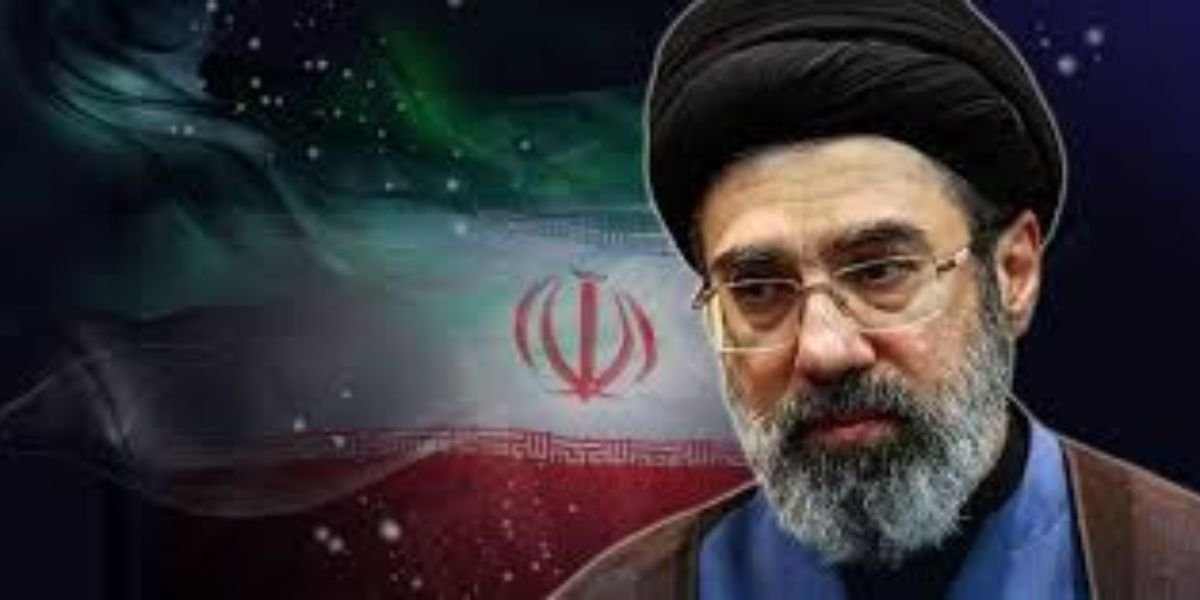
DUBAI: Iran on Monday named Mojtaba Khamenei to succeed his father Ali Khamenei as supreme leader, signalling that hardliners remain firmly in charge, while the week-old U.S.-Israeli war with Iran sent oil prices surging and Asian stock markets into a nosedive.
As the war entered its 10th day and fresh missile and drone strikes reverberated across the Middle East, Iranian institutions and politicians, from the foreign ministry to lawmakers, issued statements expressing their allegiance to the country’s new supreme leader.
A statement from the defence council said, “We will obey the commander-in-chief until the last drop of our blood.”
Senior cleric Ayatollah Sadeq Amoli-Larijani said Mojtaba Khamenei’s appointment was “a balm for the spiritual suffering of our people and an emphasis on the need to continue the luminous path of the late Imam (Khamenei senior).”
The show of solidarity for Mojtaba comes after U.S. President Donald Trump earlier rejected him as a candidate to be Iran’s new supreme leader, and Israel saying it would target whoever leads Iran.
Who is Mojtaba Khamenei
Mojtaba Khamenei is the second son of Ayatollah Ali Khamenei.
He has a powerful following within Iran’s Islamic Revolutionary Guard Corps (IRGC).
Iran’s Assembly of Experts – the 88-member clerical body that selects the country’s supreme leader – has called upon Iranians to maintain unity and pledge support to Mojtaba Khamenei.
In a statement circulated on state media on Sunday, the assembly said that Khamenei was chosen based on a “decisive vote”.
It urged all Iranians, “especially the elites and intellectuals of the seminaries and universities”, to “pledge allegiance to the leadership and maintain unity”.
Khamenei has never run for office or been subjected to a public vote, but has for decades been a highly influential figure in the inner circle of the previous supreme leader, cultivating deep ties to the paramilitary Islamic Revolutionary Guard Corps (IRGC).
The younger Khamenei’s ascension is a clear sign that the government has little desire to agree to a deal or negotiations in the short term.
Mojtaba Khamenei has never discussed the issue of succession publicly.
Instead, Khamenei has largely kept a low profile, not giving public lectures, Friday sermons, or political addresses – to the point that many Iranians have not heard his voice, despite knowing for years that he was a star rising within the theocratic establishment.
Also read:India thrash New Zealand by 95 runs to win ICC Men’s T20 World Cup 2026