
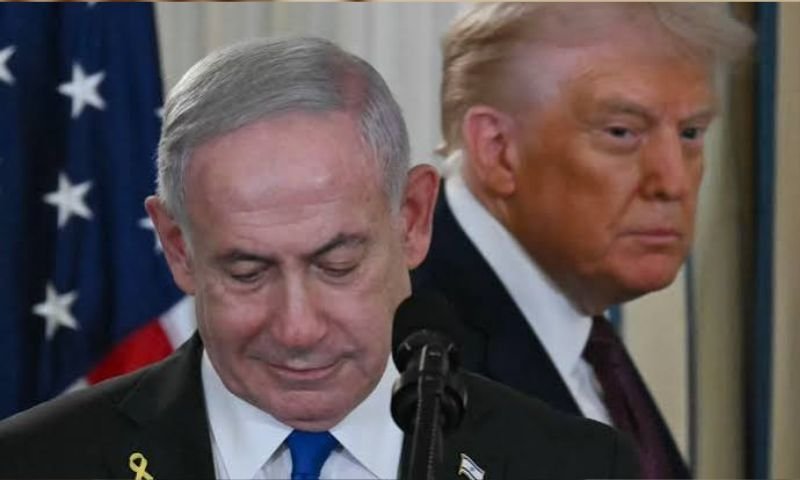
The Iran war and elections in both countries have exposed the political cost of an alliance once treated as untouchable.
The US-Israel alliance has not ended, but its old immunity has weakened. Donald Trump says Washington will end nearly $4 billion in annual aid to Israel, while Democrats have won control of both houses of Congress after an Iran war opposed by most Americans.
In Israel, Benjamin Netanyahu has lost his parliamentary majority, and his rival has been asked to form a government.
Israel’s election produced no outright majority. Netanyahu’s bloc won 53 seats in the 120-member Knesset, while Gadi Eisenkot’s alliance secured 48.
Two Arab-led parties won a record 19 seats and endorsed Eisenkot, bringing his support to 67 lawmakers against Netanyahu’s 46 recommendations.
United Torah Judaism, a seven-seat party long allied with Netanyahu, declined to back anyone.
President Isaac Herzog announced on Saturday that he would give Eisenkot the mandate to form a government at 5 p.m. on Sunday. Netanyahu will remain caretaker prime minister while negotiations continue. The support of Arab lawmakers has given his opponents a possible path to power.
Netanyahu’s departure would not end scrutiny of his record. He is facing a corruption trial, which he denies. Eisenkot’s bloc wants to replace the Knesset speaker, reverse Netanyahu-era judicial changes and establish a state commission of inquiry into the failures surrounding the October 7, 2023, attack.
Questions have also been raised about Netanyahu’s policy of allowing Qatari payments into Hamas-run Gaza. Reports have highlighted concerns over possible diversion of the funds, while Netanyahu’s office disputes the claims.
These allegations require investigation rather than conclusions before the evidence is examined.
Across the Atlantic, the electoral outcome was more decisive. Democrats won control of the House and Senate in the November 3 midterm elections. Vice President JD Vance attributed the losses to the Iran war, saying it had alienated former Trump voters.
He identified four demands: ending the war, tackling inflation, putting America first and changing the relationship with Israel.
Trump acknowledged that Iran was partly responsible for the losses but insisted he would make the same decision again. Their disagreement over the reasons cannot obscure the political cost of the war and the alliance associated with it.
The conflict has lasted far longer than Trump initially promised. A Pew survey in early October found that 65 percent of Americans disapproved of his handling of the war. Beyond casualties, families are feeling its impact through energy prices, transport costs and pressure on household budgets.
On Election Day, Trump said he and Netanyahu had agreed months earlier to end annual US aid by the close of 2026, arguing that Israel no longer needed it. He also described the payments as a “bad talking point” for Republicans. Israeli finance and defence officials said the announcement had caught them by surprise.
The existing agreement provides $3.8 billion annually through fiscal 2028, while Congress controls appropriations. Trump has promised continued arms sales and assistance if Israel needs it. Ambassador Mike Huckabee said Washington wanted to shift towards trade rather than aid, although the exact cutoff date remains unclear.
The announcement signals a political rupture, not yet a completed financial separation.
The nearly $4 billion in annual assistance has become an increasingly difficult question for Washington. Israel is a wealthy, technologically advanced country with universal healthcare, a strong education system, modern infrastructure and substantial research investment.
Yet the United States continues to provide billions in military assistance while many American families struggle to afford healthcare, education, housing and insurance.
Critics are questioning why US taxpayers, many of whom lack affordable access to basic services, should continue financing a prosperous ally. Trump’s pledge to end the payments reflects the growing political force of that debate.
The domestic pressure is significant. The US Census Bureau’s supplemental poverty measure found that 13.1 percent of Americans lived in poverty in 2025.
The Federal Reserve reported that only 63 percent of adults could cover an unexpected $400 expense entirely with cash or its equivalent, while 26 percent had skipped medical care because of cost.
For families living paycheck to paycheck, billions in foreign assistance raise a difficult question: why can Washington guarantee such sums for Israel while many Americans struggle to afford basic necessities?
Washington’s ability to shape global events through economic and military pressure is also facing challenges.
Trump’s tariff campaign against China prompted retaliatory trade measures, while Beijing’s control over rare earth supplies strengthened its bargaining position. European countries opposed his ambitions over Greenland, Canada resisted economic pressure, and Cuba rejected US demands.
Iran, meanwhile, has endured sanctions and a joint military assault by the United States and Israel without surrendering. Its resistance has highlighted the limits of military pressure in achieving Washington’s objectives.
These developments have affected the regional balance of power. Netanyahu faces the possibility of losing office after a war that failed to break Iran, while Trump faces a Democratic-controlled Congress and voters demanding an end to the conflict and a reassessment of ties with Israel.
Iran has retained its government and capacity to resist. Turkey is asserting greater regional influence, while Pakistan’s nuclear deterrent, capable air force, missile systems and experienced military also make it an important regional actor.
Israel can no longer assume that American support will remain unlimited or that Washington can impose its preferred regional order through force.
The United States has not literally parted ways with Israel. What is weakening is the assumption that American support must remain unconditional, permanent and beyond public scrutiny.
Trump could reverse his position, Eisenkot could fail to form a government, and Congress could preserve the aid.
But the political bargain underpinning the alliance has come under unprecedented pressure.
If Washington prioritises domestic concerns over prolonged war and makes its relationship with Israel subject to greater accountability, the latest political developments could mark the beginning of a significant shift in bilateral ties.