DUBAI: Israel launched widescale strikes against Iran on Friday, saying it targeted nuclear facilities, ballistic missile factories and military commanders during the start of a prolonged operation to prevent Tehran from building an atomic weapon.
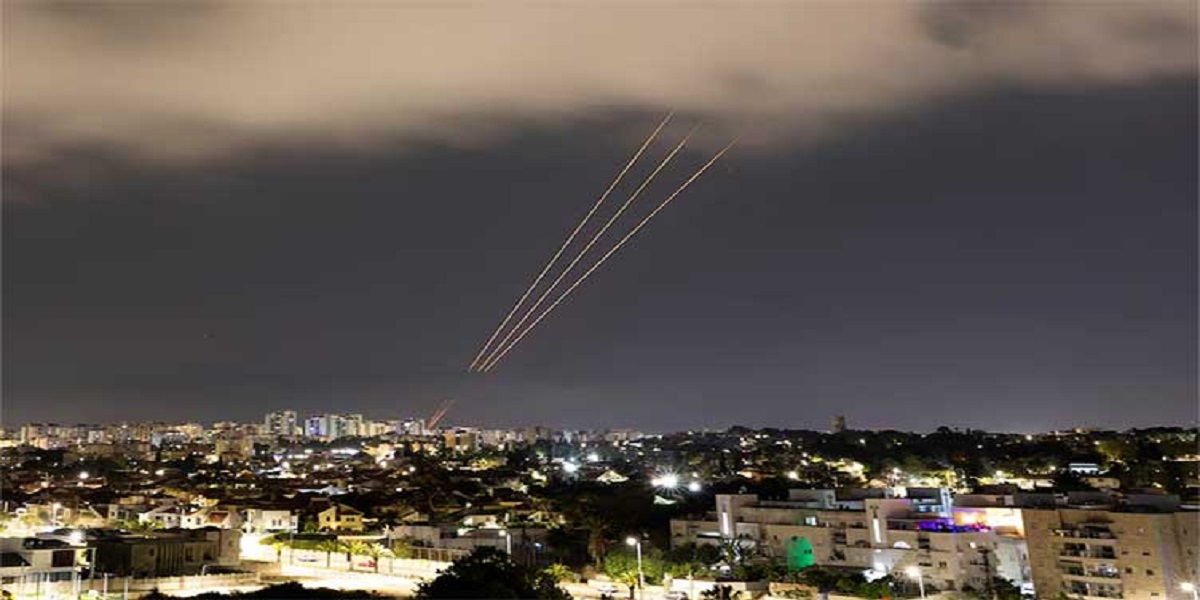
Iran had launched about 100 drones towards Israeli territory in retaliation, which Israel is working to intercept, Israeli military spokesman Brigadier General Effie Defrin said.
Iranian media and witnesses reported explosions including at the country’s main uranium enrichment facility at Natanz, while Israel declared a state of emergency in anticipation of retaliatory missile and drone strikes.
Iranian state television reported that Hossein Salami, the chief of the elite Revolutionary Guards corps, had been killed and the unit’s headquarters in Tehran had been hit. Several children had been killed in a strike on a residential area in the capital, it said.
“We are at a decisive moment in Israel’s history,” Israeli Prime Minister Benjamin Netanyahu said in a recorded video message.
“Moments ago Israel launched Operation Rising Lion, a targeted military operation to roll back the Iranian threat to Israel’s very survival. This operation will continue for as many days as it takes to remove this threat.”
Iran’s Supreme Leader Ayatollah Ali Khamenei said in a statement that Israel had “unleashed its wicked and bloody” hand in a crime against Iran and that it would receive “a bitter fate for itself”.
An Israeli military official said Israel was striking “dozens” of nuclear and military targets including the facility at Natanz in central Iran. The official said Iran had enough material to make 15 nuclear bombs within days.
The United States said it had no part in the operation, which raises the risk of a fresh escalation in tensions in the Middle East, a major oil producing region.
Alongside extensive air strikes, Israel’s Mossad spy agency led a series of covert sabotage operations inside Iran, Axios reported, citing a senior Israeli official. These operations were aimed at damaging Iran’s strategic missile sites and its air defence capabilities.
Iranian state media reported that at least two nuclear scientists, Fereydoun Abbasi and Mohammad Mehdi Tehranchi were killed in Israeli strikes in Tehran.
Tel Aviv’s Ben Gurion Airport was closed until further notice, and Israel’s air defence units stood at high alert for possible retaliatory strikes from Iran.
“Following the pre-emptive strike by the State of Israel against Iran, a missile and UAV (drone) attack against the State of Israel and its civilian population is expected in the immediate time frame,” Defence Minister Israel Katz said in a statement.
Israeli military Chief of Staff Eyal Zamir said tens of thousands of soldiers had been called up and “prepared across all borders”.
“We are amidst a historic campaign unlike any other. This is a critical operation to prevent an existential threat, by an enemy who is intent on destroying us,” he said.
The statement said that an “immediate change will take place” in the country’s defence policy.
“As part of the changes, it was decided to move all regions of the country from a full activity level to a necessary activity level.”
Meanwhile, US President Donald Trump said that Iran cannot have a nuclear bomb and that the United States was hoping to get back to the negotiating table, in an interview with Fox News after the start of the Israeli air strikes on Iran.
“We will see,” Fox News reporter Jennifer Griffin quoted Trump as saying in a post on X.
The Islamic Republic has repeatedly denied such intentions, saying it wants nuclear energy only for civilian purposes, and has publicly rejected Washington’s demand to scrap enrichment as an attack on its national sovereignty.
Iran’s government said in a statement that Israel’s “cowardly” attack shows why Tehran insists on enrichment, nuclear technology and missile power.
Iran’s armed forces spokesperson said Israel and its chief ally the United States would pay a “heavy price” for the attack, accusing Washington of providing support for the operation.
US Secretary of State Marco Rubio said the United States was not involved in the strikes and Tel Aviv had acted unilaterally for self-defence.
“Let me be clear: Iran should not target US interests or personnel,” he said.
Global crude oil benchmark Brent had surged 7.3% to $74.40 by 0556 GMT, its highest since April 2, before Trump’s sweeping tariffs announcement.
Read more: Iran’s Nuclear Crossroads: A New Cold Front in the Making