ISLAMABAD: The Japan International Cooperation Agency (JICA) and the United Nations Development Programme (UNDP), in partnership with the Government of Khyber Pakhtunkhwa (KP) launched a new initiative new project titiled ‘The Project for Development of Public Service Infrastructure in the Merged Districts of Khyber Pakhtunkhwa’ to strengthen local governance and improve public convenience in KP’s merged districts.
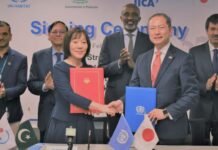
The partnership was formalised through a signing ceremony in Islamabad, implemented under UNDP’s Merged Areas Governance Programme (MAGP).
Following their merger with KP in 2018, the merged districts are undergoing a critical transition towards decentralised governance and localised service delivery. While progress has been made, newly established local government systems continue to face administrative and service delivery challenges, necessitating institutional support.
The project aims to strengthen the capacity of the first-ever elected Tehsil Local Governments (TLGs) to deliver essential public services and promote community-responsive governance. With a Japanese contribution of 518 million yen (approximately $3.5 million), the initiative will support 19 TLGs across eight merged districts.
Through small-scale, community-driven infrastructure schemes, the project is expected to directly benefit around 18,000 people, while indirectly reaching nearly 500,000 community members. The initiative will work closely with local administrations to identify priority projects, enhance coordination, and strengthen accountability and citizen engagement.
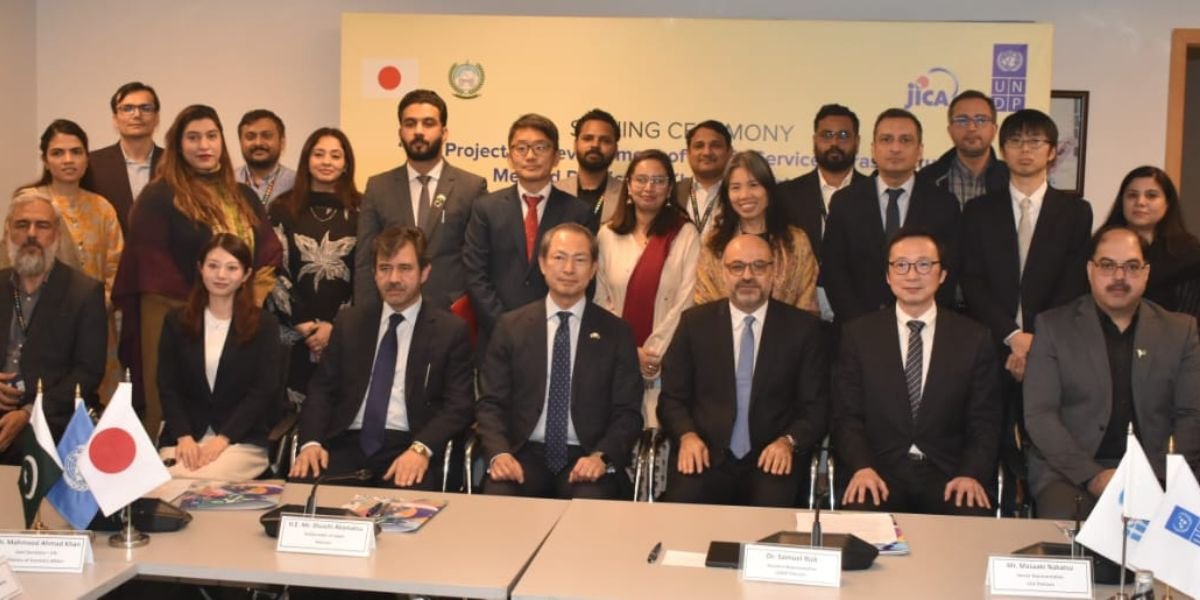
The signing ceremony was attended by senior representatives from the Ministry of Economic Affairs, the Government of KP, the Embassy of Japan, JICA and UNDP, underscoring a shared commitment to improving governance and service delivery in areas historically lacking formal administrative structures.
Addressing the ceremony, Japan’s ambassador to Pakistan, Akamatsu Shuichi, said the merged districts were among the most challenging yet critical regions for ensuring sustainable peace and development in Pakistan. He noted that the project would support essential community infrastructure while fostering inclusive and participatory local governance.
JICA Pakistan Office Senior Representative Nakatsu Masaaki said the project would complement JICA’s ongoing technical cooperation initiative (2022–26), which helped formulate tehsil development plans through participatory approaches. He added that the collaboration with UNDP would be instrumental in implementing these plans and building trust between local governments and communities.
The initiative builds on JICA’s earlier technical cooperation project focused on strengthening the capacity of local government officers in the merged districts.
Speaking at the event, Mahmood Khan, Joint Secretary (UN) at the Ministry of Economic Affairs, said the project aligned with Pakistan’s vision of sustainable development and would help local communities contribute to achieving the Sustainable Development Goals.
KP’s Planning and Development Department official Dr Ehtisham-ul-Haq welcomed the support from Japan and UNDP, expressing confidence that the partnership would lead to tangible improvements in service delivery, institutional capacity and public trust.
UNDP Pakistan Resident Representative Dr Samuel Rizk said the initiative reflected a commitment to delivering essential services, strengthening institutions and rebuilding trust in underserved communities. He added that, with Japan’s support and close coordination with government partners, the project would translate commitments into measurable improvements for residents of the merged districts.
The project aligns with UNDP’s five-year strategy for inclusive and accountable governance in Pakistan, as well as federal and provincial development frameworks, including the Tribal Decade Strategy and Accelerated Implementation Programmes I and II.
Also read: Naqvi praises Qatar’s growth and leadership on national day