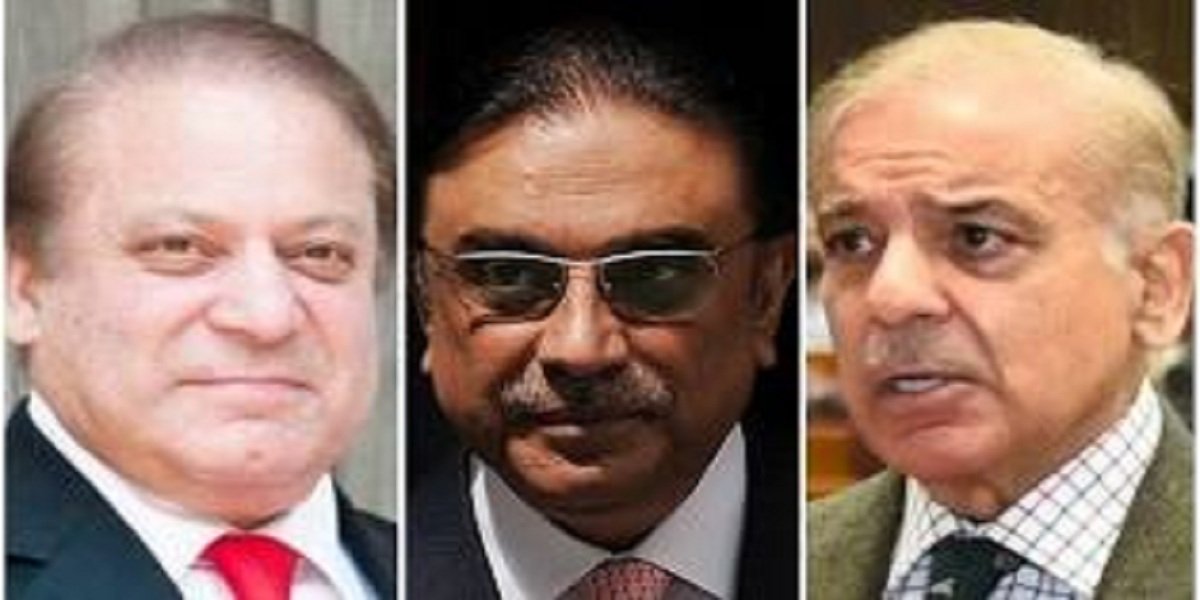
ISLAMABAD: Finance Minister Miftah Ismail defended on Tuesday the federal government’s decision to hike the price of petrol after backlash from his party’s supremo Nawaz Sharif and a strong coalition partner — PPP.
The government jacked up Monday night the price of petrol by Rs6.72 per litre for the next fortnight, taking it to 233.91 per litre, while the rate of diesel was also moved up to 244.44 per litre.
In his press conference today, the finance minister clarified that he had not stated that he would not be increasing the price of petroleum products.
“I had never said that I will not increase the price of petrol, I had stated that I will not be imposing taxes [on petroleum products] further,” Miftah said.
“I stand behind every decision of the government with full responsibility,” the finance minister said, noting that no economic decision was taken without his input.
Finance Minister Miftah Ismail also said that he respects the PPP leadership and would address their reservations over the decision related to the prices of petroleum products.
In his statement, PPP Co-chairman Asif Ali Zardari criticized the government for increasing the prices despite a massive appreciation in rupee value and a decline in international oil prices.
Expressing concern over the development, the former president said the PPP is a part of the government and supports it, but there must be consultations on such decisions.
“We are all here in this government to give relief to the people and that should be our top priority. We are with the prime minister and will meet him soon and talk about the economic team.”
The government’s decision invited a lot of criticism from the public. Citizens are of the view that the prices of petroleum products are on a downward slope all over the world but their prices are being increased in Pakistan.
As people vented out their views on the government’s decision, a user on Twitter tagged Maryam Nawaz and requested her to “speak to Mian Nawaz Sharif to take notice of the increase in the price of petrol.”
Replying to the user, Maryam wrote: “Mian Sahib strongly opposed this decision. He even said that I cannot burden the people with one more penny.”
She said her father stressed that he was not on board and that if the government was bound by some constraint, it should go ahead with the increase. Maryam said the PML-N supremo disowned the POL increase decision and left the meeting.
Before discussing the petrol prices, Miftah had said that the dollar was in the government’s control after July 17, and it would gradually depreciate against the rupee.
The finance minister said the International Monetary Fund’s (IMF) programme had “started”. Once the government sends the Letter of Intent (LoI) back to the Fund, its executive board will meet and give its approval for the dispersal.
He reiterated that the executive board was scheduled to meet later this month — August 29 — for considering Pakistan’s request to approve the seventh and eighth reviews and release a tranche of $1.17 billion under the Extended Fund Facility (EFF).
The finance minister also castigated the Imran Khan-led government for “moving away” from the agreement and conditions it had set with the IMF for the loan dispersal.
“Imran Khan did not target us (the incoming government), but he targeted Pakistan’s economy,” Miftah said, indicating the previous regime’s decision to give petroleum subsidies.
Miftah added that it was always his belief that once the imports fall, the rupee will ultimately strengthen. “We imposed a ban on non-essential commodities.”
He slammed the previous government for leaving a circular debt of Rs1,500 billion. “You (the PTI) left a current account deficit which was more than Gen Pervez Musharraf’s tenure.”
After coming under severe criticism, the finance minister explained how petrol prices are calculated.
Miftah Ismail said the government has not imposed any tax on petroleum products.
Miftah Ismail explained that the Oil and Gas Regulatory Authority (OGRA) takes the average of Platt prices, adds freight and premium paid by PSO on top of these prices, and multiplies that by the exchange rate.
Read more: Bulls toss KSE-100 index over 43,000-mark on positive cues