
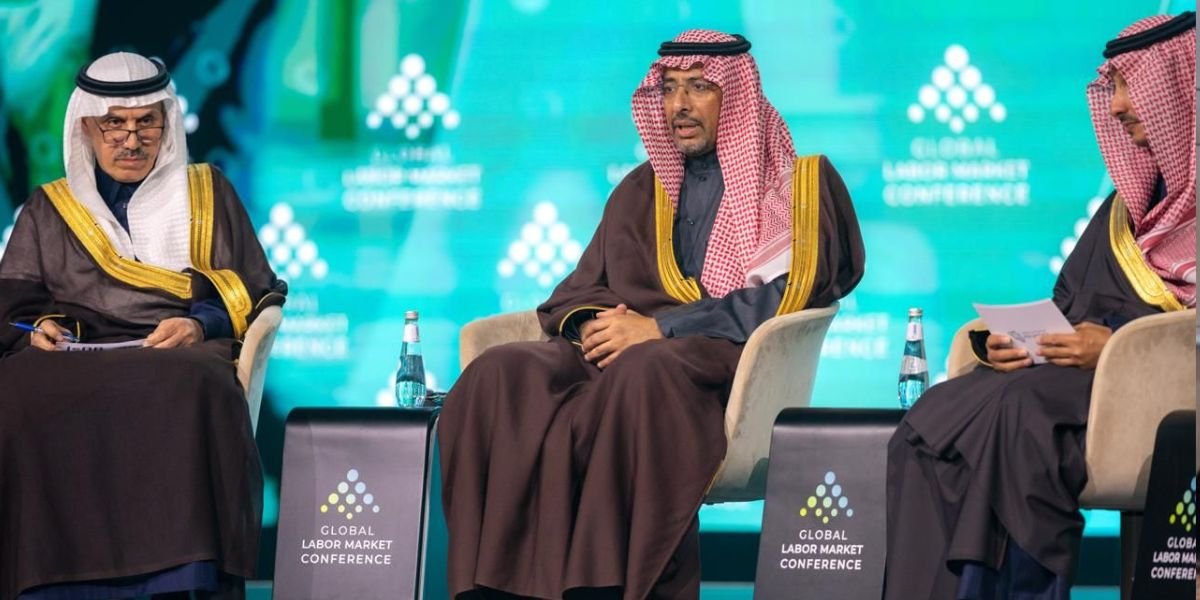
RIYADH: The Global Labor Market Conference (GLMC) opened in Riyadh with a high-level ministerial panel discussing how high-impact sectors can accelerate job creation, improve workforce readiness and promote inclusive economic growth amid major global labor market shifts.
The session, titled ‘High–Impact Sectors as Drivers of Job Creation’, brought together ministers and international leaders who emphasised the role of targeted public policy, strategic investment and stronger collaboration between governments, the private sector, and development institutions in unlocking employment opportunities across both traditional and emerging industries.
Saudi Arabia’s Minister of Tourism Ahmed Al-Khateeb described tourism as one of the world’s largest employment-generating sectors, contributing nearly 10 percent of global GDP and supporting around 370 million jobs worldwide. He highlighted the sector’s inclusive nature, noting that women make up about 45 percent of tourism jobs globally, while youth account for nearly 80 percent.
The minister said Saudi Arabia’s Vision 2030 reform agenda has enabled the growth of new tourism segments, including education-linked and cultural tourism. He added that the Ministry of Tourism has been tasked with preparing young Saudis for careers in the sector through significant investment in training and development programs. The Kingdom aims to create between 400,000 and 600,000 new jobs in hospitality, with a strong focus on equipping young people with the skills needed for long-term career growth.
Saudi Arabia’s Minister of Industry and Mineral Resources Bandar Al-Khorayef stressed the importance of government policies in shaping future-ready labor markets. He said effective frameworks must encourage the adoption of new technologies while ensuring that education systems support continuous upskilling and reskilling.
He also underlined the private sector’s role in fostering supportive work environments and delivering on-the-job training. He pointed to the recent launch of an “Occupational and Skills Framework” for the mining and industrial sectors, covering more than 500 occupations and detailing the competencies required for each role. The framework, he said, strengthens the training ecosystem and improves alignment between labor market needs and workforce development.
Islamic Development Bank Group Chairman Dr Muhammad Sulaiman Al Jasser highlighted infrastructure as a highly inclusive sector for job creation. He said infrastructure projects generate both direct and indirect employment and deliver long-term economic and social benefits, making them central to sustainable development.
Turkiye’s Minister of Labour and Social Security Prof. Dr. Vedat Işıkhan emphasised manufacturing’s continued importance to national and global economic growth. He called for the promotion of decent, fair, and sustainable jobs while tackling informality in labor markets.
Syria’s Minister of Social Affairs and Labor Hind Aboud Kabawat addressed the employment challenges linked to post-conflict recovery, including the reintegration of displaced populations. She noted that returning workers often bring valuable international experience and skills that can support national rebuilding efforts.
The panel concluded with a shared call for stronger alignment between education systems, training programs and labor market demands. Participants agreed that skills development, institutional reform and cross-sector collaboration are essential for building resilient labor markets and ensuring that economic growth translates into broad-based employment opportunities.
Also read:PM Keir Starmer embarks on first UK-China visit in eight years to strengthen ties