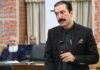

PESHAWAR: Faisal Karim Kundi, Governor Khyber Pakhtunkhwa has expressed concern about the administrative, financial, and academic issues of public sector universities in the province and urged Chief Minister Ali Amin Gandapur to work together to resolve these issues to secure the future of youths.
In a letter addressed to the chief minister, the governor called for the immediate appointment of VCs to those universities.
Kundi, who is also the chancellor of government universities in the province, said that the prolonged delay in the appointment of vice-chancellors to 25 government universities had caused serious administrative, academic, and financial challenges for them, jeopardising the future of students.
Former governor Ghulam Ali had also issued such letter to the chief minister on April 17 regarding the appointment of VCs.
Governor asks the KP Government to take corrective steps besides filling VC posts
Under Section 12(3) of the Khyber Pakhtunkhwa Universities Act, 2012, the process of selection of a new vice-chancellor shall be initiated six months prior to the expiration of the existing term of the incumbent, according to letter of Kundi.
He, however, said that despite the recommendations of the academic search committee, the process for approving recommended candidates had not been initiated, exacerbating the situation.
“Failure to act promptly may jeopardise the future of higher education in the province and may also lead to the displeasure of the Peshawar High Court due to the established violation of law. Your (chief minister’s) sincere cooperation in resolving this issue is essential for securing the future of our province’s youth,” he said.
The issue of long delays in the appointment of VCs to universities was recently taken up by a Supreme Court bench headed by Chief Justice Qazi Faez Isa.
During the May 15 hearing into the case, the bench observed that it expected that the vacant positions in universities would be filled “as soon as practicable.”
Khyber Pakhtunkhwa additional advocate general Shah Faisal Ilyas informed the bench that the search committee had selected eligible candidates for the appointment as VCs, but they had yet to be appointed.
Meanwhile, the Government fficials were of the view that the universities functioning in Khyber Pakhtunkhwa without regular VCs for the last one year included Abbottabad University of Science and Technology, Gomal University Dera Ismail Khan, Khushhal Khan Khattak University Karak, University of Agriculture Dera Ismail Khan, University of Lakki Marwat, Hazara University Mansehra, University of Engineering and Technology Mardan, and Women University Swabi.
Also, seven other universities in the province have been awaiting the filling of the top position for four months. They include Abdul Wali Khan University Mardan, Bacha Khan University Charsadda, Shuhada-i-APS University of Technology Nowshera, Kohat University of Science and Technology, University of Peshawar, University of Science and Technology Bannu, and University of Engineering Peshawar.
Officials said five universities, including Fata University Dara Adamkhel, Islamia College University Peshawar, the University of Buner, and the University of Chitral, had been functioning without regular VCs for the last two months.
The newly-established University of Agriculture Swat, University of Engineering and Applied Sciences Swat, University of Veterinary and Animal Sciences Swat, and University of Shangla also don’t have regular VCs, according to them.
Read more: Convene in Islamabad for OICCI, Shell Pakistan’s Energy Symposium