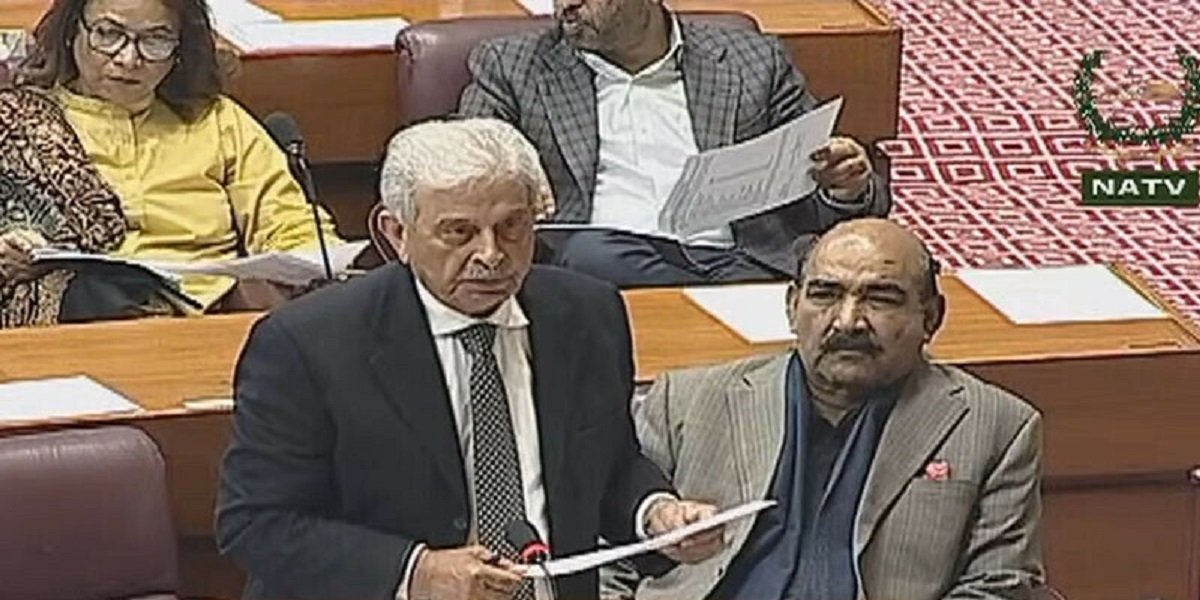
ISLAMABAD: The National Assembly, the lower house of the Parliament has passed a controversial amendment bill to the country’s cybercrime laws amid a walkout by PTI lawmakers and journalists from the proceedings.
The latest draft of changes to the cybercrime laws, seen by Dawn.com and titled “The Prevention of Electronic Crimes (Amendment) Bill, 2025”, was tabled in the National Assembly a day ago by Law Minister Azam Nazeer Tarar and referred to the standing committee.
Journalists staged a walkout from the press gallery in protest of the bill’s passage after it was presented by Federal Minister for Industries and Production Rana Tanveer Hussain.
.
Lawmakers from the opposition Jamiat Ulema-i-Islam Fazl also opposed the bill.
The National Assembly also passed“The Digital Nation Pakistan Bill, 2024“ which was moved by Minister of State for Information Technology and Telecommunication Shaza Fatima Khawaja. The bill aims to create a digital identity for citizens — to centralise social, economic and governance data — and to provide for the transformation of Pakistan into a digital nation, enabling a digital society, digital economy and digital governance.
The PTI lawmakers had already walked out earlier after protesting against party founder Imran Khan’s incarceration and saying they would not allow the house’s proceedings to go ahead.
The bill proposes a new provision, Section 26(A), to Peca, so as to penalise perpetrators of “fake news” online, that said: “Whoever intentionally disseminates, publicly exhibits, or transmits any information through any information system, that he knows or has reason to believe to be false or fake and likely to cause or create a sense of fear, panic or disorder or unrest in general public or society shall be punished with imprisonment which may extend upto three years or with fine which may extend to Rs2m or with both.”
It also proposes the establishment of the Social Media Protection and Regulatory Authority which would perform a range of functions related to social media such as education, awareness, training, regulation, enlistment, blocking and more.
It said that anyone “aggrieved by fake and false information” would be able to approach the authority to remove or block access to the content in question, adding that the authority would issue orders no later than 24 hours after the request.
The changes propose that the authority might require any social media platform to enlist with it in any manner, form and on payment of such fee as may be prescribed.
It added that apart from the requirements of the act, additional conditions or requisites as deemed appropriate might also be stipulated while enlisting a social media platform.
Read more: Pakistan For Accountability Of Israel’s Crimes In Gaza War