
There was a time when nature was beyond the reach of treasury officials. Elements such as the sky, the wind, the rivers, and the heat and light of the sun were regarded as gifts beyond calculation. Today, however, it appears that even these natural bounties must pass through the gate of revenue.
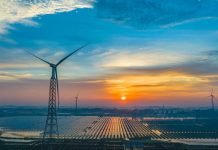
When households invest their hard-earned savings in solar panels, they are not only reducing their bills; they are easing the burden on a strained national grid, reducing fuel imports, and cutting pollution. They assume the risk and bear the upfront cost to generate clean electricity without demanding any subsidy from the state. Yet, instead of encouraging this initiative, the government restricts it through reduced compensation.
If such a discouraging trend continues, what will remain untouchable? Perhaps tomorrow breathing will be assessed and oxygen measured in taxable units. Even trees may be credited for producing air, only for that air to be priced before it reaches human lungs. Rainwater collected from rooftops might require a permit. One could imagine a “cloud utilization fee” or a “wind access charge.” Absurd? Perhaps. But once sunlight can be fiscally penalized, nothing seems entirely beyond imagination.
The deeper issue is not technical; it is structural. Policies are increasingly shaped in ways that safeguard entrenched interests rather than public welfare. When regulations consistently disadvantage citizens who attempt self-reliance, suspicion grows. It appears less like reform and more like revenue extraction. A troubling pattern emerges: decision-making that benefits a narrow circle while shifting costs onto ordinary families. The affluent are buffered; the struggling are squeezed.
The salaried class pays documented taxes, indirect levies, surcharges on utilities, inflated fuel costs, and rising food prices. Meanwhile, leakages through corruption, inflated contracts, and politically connected monopolies quietly drain national resources. Public office, in principle, is a trust. In practice, it too often becomes an instrument. Contracts are awarded not always on competence but on proximity. Standards are compromised, safety shortcuts tolerated, and inflated invoices normalized. The burden of these arrangements does not fall on the architects of policy; it falls on citizens who pay more for less.
When governance transforms into a revenue-maximizing enterprise rather than a service structure, policy becomes an industry of its own. Regulations multiply. Permissions become commodities. Delays acquire price tags. Influence turns into currency. Instead of encouraging productivity and innovation, the system rewards access and compliance.
Energy policy should be rooted in national interest. A country facing foreign exchange constraints ought to welcome domestic generation that reduces import dependency. Oil and gas are purchased in dollars; sunlight arrives without an invoice. To discourage local renewable adoption in such circumstances is economically counterintuitive.
Beyond economics lies a moral dimension. Essential resources like air, water, and sunlight were not created by any administration. They are provisions embedded in creation itself. Governance exists to manage distribution fairly and sustainably, not to convert every natural blessing into a billable service. If citizens begin to feel that even survival necessities are potential revenue streams, trust erodes. Once trust diminishes, compliance weakens, investment slows, and cynicism deepens. A society cannot thrive where initiative is penalized and inefficiency is protected.
The true measure of reform is not how much revenue is collected, but how justly burdens are shared. Leadership should lighten loads, not add new ones. It should close avenues of waste before widening avenues of taxation. It should reward efficiency rather than shield incompetence.
The sun will rise tomorrow as it always has — impartial and free. The question is not whether it can be taxed, but whether governance will choose wisdom over short-term gain. A nation’s prosperity is built not by squeezing its citizens, but by empowering them.
When policy begins to resemble profit-seeking, it ceases to be public service. And when essentials are treated as luxuries, the issue is no longer energy — it is ethics.