
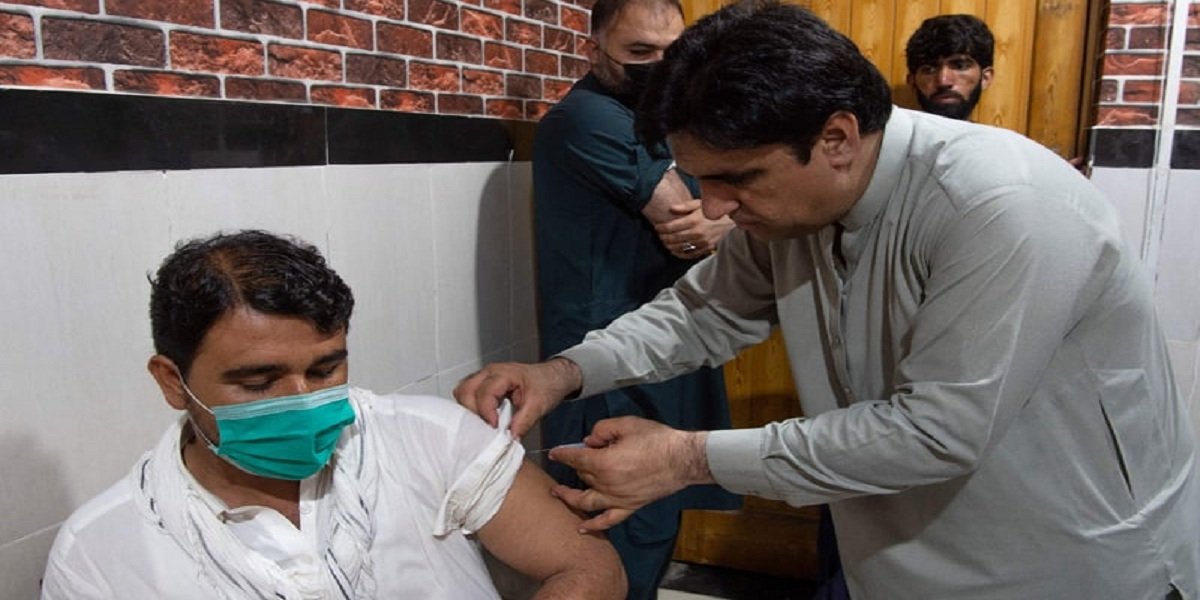
ISLAMABAD: The National Command and Operation Centre (NCOC) has confirmed presence of different variants of coronavirus, including the delta (Indian), beta (South African) and alpha (UK) variants, in Pakistan and detection of their cases in May and June across the country.
According to a study conducted in more than 28 countries across the globe by World Health Organization (WHO), drugs that block the effects of interleukin-6 reduce the risk of death by Covid-19 and the need for mechanical ventilation.
Interleukin-6 (IL-6) is a protein produced by various cells which helps regulate immune responses. IL-6 antagonists improve outcomes in hospitalized COVID-19 patients.
According to the NCOC, the National Institute of Health (NIH) has been monitoring the presence of different variants of coronavirus in Pakistan. This is done via whole-genome sequencing of COVID-19 patients’ samples.
“Samples collected in late May and the first half of June 2021 have shown the presence of different variants of concern, including the delta, beta and alpha variants. Of note, the data has been shared with the Field Epidemiology and Disease Surveillance Division of NIH for response activities such as quarantine and contact tracing, and with other relevant national stakeholders,” it said.
The NCOC data showed that 25 deaths and 830 new cases were reported in a single day. The number of active cases was 33,390 and 2,223 patients were admitted to hospitals as of July 6.
The number of cases, which remained over 1,000 for five consecutive days, dropped to three digits i.e. 830. However, according to an official of the Ministry of National Health Services (NHS) sudden increase or decrease in the number of cases can be reported in a single day and that is why weekly data is considered credible.
Special Assistant to the Prime Minister Dr Faisal Sultan has warned that indications are showing that the situation has started worsening.
“COVID-19 data from last week show small but definitive uptick in cases, percentage positivity and other parameters. Masks, avoidance of large crowds and continued vaccination remain crucial tools in this work,” he tweeted.
Findings from a study published on Tuesday in the Journal of the American Medical Association have prompted new WHO recommendations to use interleukin-6 antagonists in patients with severe or critical COVID-19 along with corticosteroids.
According to a statement of the WHO, new analysis of 27 randomized trials involving about 11,000 patients found that treating hospitalized COVID-19 patients with drugs that block the effects of interleukin-6 (the interleukin-6 antagonists tocilizumab and sarilumab) reduces the risk of death by COVID-19 and the need for mechanical ventilation.
The study, which was coordinated in 28 countries by the WHO in partnership with King’s College London, University of Bristol, University College London and Guy’s and St Thomas’ NHS Foundation Trust, found that interleukin-6 antagonists were most effective when administered with corticosteroids. In hospitalised patients, administering one of these drugs in addition to corticosteroids reduces the risk of death by 17 per cent, compared to the use of corticosteroids alone. In patients not on mechanical ventilation, the need for mechanical ventilation and risk of death is reduced by 21 per cent, compared to the use of corticosteroids alone.
This analysis included information on 10,930 patients, of whom 6,449 were randomly assigned to receive interleukin-6 antagonists and 4,481 to receive usual care or placebo.
Results showed that the risk of dying within 28 days is lower in patients receiving interleukin-6 antagonists. In this group, the risk of death is 22pc compared with an assumed risk of 25pc in those receiving only usual care.
Read more: Statistics show only 3.5% of Pakistan’s population vaccinated so far