By Reuters
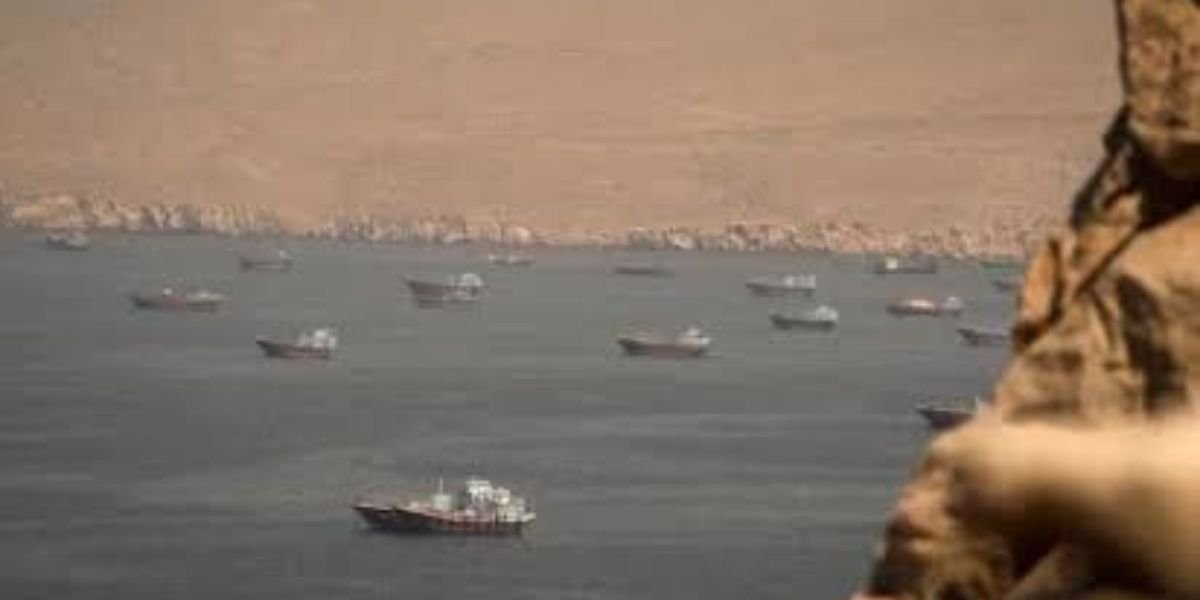
DUBAI: Maritime trackers received new reports of an attack on a ship in the Strait of Hormuz on Sunday, adding to concerns about Iran-related threats to global energy supplies following Saudi Arabia shut down a vital oil pipeline.
The British navy-affiliated agency UKMTO said it had a report of a projectile hitting a vessel as it moved through the strait. The amount of damage and the status of the crew were unknown as of early Sunday, the agency said.
UKMTO’s report came the day after Saudi Arabia said it had temporarily closed its East-West pipeline as a precaution after a drone attack that both Baghdad and Riyadh said had originated in Iraq, where Iranian-backed militias operate.
Ongoing attacks in the widening Middle East war could send energy prices even higher after a week that saw the cost of Brent crude surge back above $100 a barrel.
The 1,200-km (745-mile) East-West pipeline running across the Arabian Peninsula has served as the main route out for global supplies of Middle East oil for the past six months while the Strait of Hormuz has been largely shut by war.
UKMTO’s report came the day after Saudi Arabia said it had temporarily closed its East-West pipeline as a precaution after a drone attack that both Baghdad and Riyadh said had originated in Iraq, where Iranian-backed militias operate.
Ongoing attacks in the widening Middle East war could send energy prices even higher after a week that saw the cost of Brent crude surge back above $100 a barrel.
The 1,200-km (745-mile) East-West pipeline running across the Arabian Peninsula has served as the main route out for global supplies of Middle East oil for the past six months while the Strait of Hormuz has been largely shut by war.
Iranian state media reported an Iranian commercial vessel was struck off its southern coast early on Sunday, killing one person and wounding three others, without giving further details.
Oil prices shot up over the past week and the retail price of diesel in the United States surged past a record $6 a gallon as the United States and Iran both fired on tankers and the Houthis in Yemen rapidly advanced along the Red Sea, potentially
giving Tehran leverage over both of the region’s main oil-shipping corridors.
Washington now faces a dilemma over whether to help the Saudis fight the Houthis, risking further expansion of the war.
Saudi Arabia’s de facto ruler, Crown Prince Mohammed bin Salman, phoned Trump on Thursday and asked for U.S. military help fighting the Houthis, three sources told Reuters. They said the prince was told that Washington would not intervene directly for now but would help with intelligence.
Trump confirmed on Saturday that he had spoken to the crown prince, and said the Houthis had also phoned his administration and asked Washington not to become directly involved in the conflict.
Four Yemeni government sources told Reuters that the Houthis had seized the strategic island of Perim on Friday in the middle of the Bab el-Mandeb strait — the “Gate of Tears” at the southern entrance to the Red Sea. The Houthis have been attacking Saudi ships in the area since declaring a blockade in July and targeting its other oil facilities.
There have been no talks between the United States and Iran to end the conflict since a June agreement that collapsed within weeks.
In a post on X on Saturday, Ebrahim Azizi, head of the Iranian parliament’s national security committee, said: “As long as the American side does not accept all of Iran’s conditions, dialogue and negotiation are of no use.”
Iran’s Foreign Ministry announced on Friday that Iran would be attending a meeting with Gulf Arab states in Oman on Monday, at which the future of the Strait of Hormuz would be discussed.
But a senior Iranian official, speaking to Reuters on condition of anonymity on Saturday, played down the chances of a breakthrough, saying the meeting, called at Oman’s initiative, was intended to discuss issues including the strait but was not expected to yield a signed agreement.
An agreement on routes through the strait between Iran and Oman will be presented at the meeting on Monday, but the strait will not reopen unless seven conditions conveyed by Iran to the U.S. are met, a source told Tasnim news agency, without elaborating.
Iran wants its control of the Strait of Hormuz to be recognised, allowing it to collect fees from ships that use it, which Washington rejects. Oman, which controls the opposite bank of the strait, says it is negotiating with the agreement of other regional states.
Ships had free and open passage through the strait before the war began.
Also read:Houthi advance in Yemen puts U.S. in a new bind