
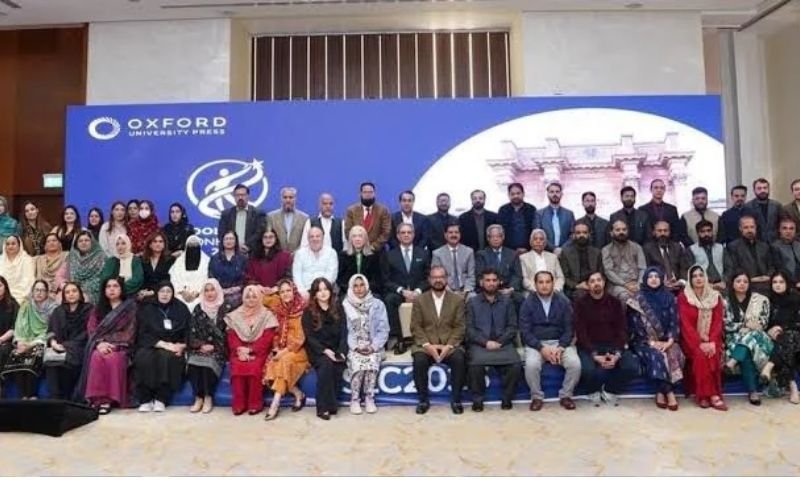
ISLAMABAD: Oxford University Press (OUP) Pakistan organised a two-day School Leaders’ Conference 2026 in Islamabad, bringing together school leaders, educationists and practitioners to discuss emerging challenges and the future of education.
The conference tilted “Shaping Tomorrow: Navigating Change, Driving Impact”, provided separate platforms for educators from local and international examination board schools to discuss changes in education, school leadership, technology integration and teaching methods.
Speaking at the event, Arshad Saeed Husain, managing director of Oxford University Press Pakistan, said educational transformation required collective efforts from school leaders, teachers and the wider education community.
He said school leaders needed to recognise emerging educational needs, help teachers adapt their teaching practices and place meaningful learning at the centre of decision-making.
Elizabeth Munn, managing director of education at Oxford University Press UK, also attended the first day’s programme and discussed changing priorities in education.
She stressed the need to combine innovation with a focus on learning outcomes, saying technology and new teaching approaches could create opportunities if integrated thoughtfully into the learning process.
Dr Nadeem ul Haque, former vice-chancellor of the Pakistan Institute of Development Economics and chairperson of RAC, delivered a keynote address titled “Transformative School Leadership in Changing Times” for educators from local examination boards.
The conference also featured presentations by education specialists on the role of technology, skills development and modern teaching methods.
Shazia Asad, senior product manager for mathematics at OUP Pakistan, spoke on “Mathematics in the Age of AI: New Imperatives and the Way Forward”.
Emma Baxter, product manager at OUP UK, discussed preparing students for the future through skills development, quality educational resources and effective teaching practices.
Dr Nicolas Brasch, an international author and educator, highlighted student-centred and inquiry-based approaches to science education in a session titled “The Science Learning Ecosystem”.
The programme also included interactive audience polls and panel discussions on “Shaping Tomorrow: Challenges and Opportunities”, allowing participants to exchange views on the practical challenges facing educational institutions.
The conference was part of OUP Pakistan’s broader engagement with school communities across the country, aimed at promoting professional dialogue and collaboration on educational leadership and teaching practices.
Also read:Trump meets key US regional allies in Manila ahead of China visit