
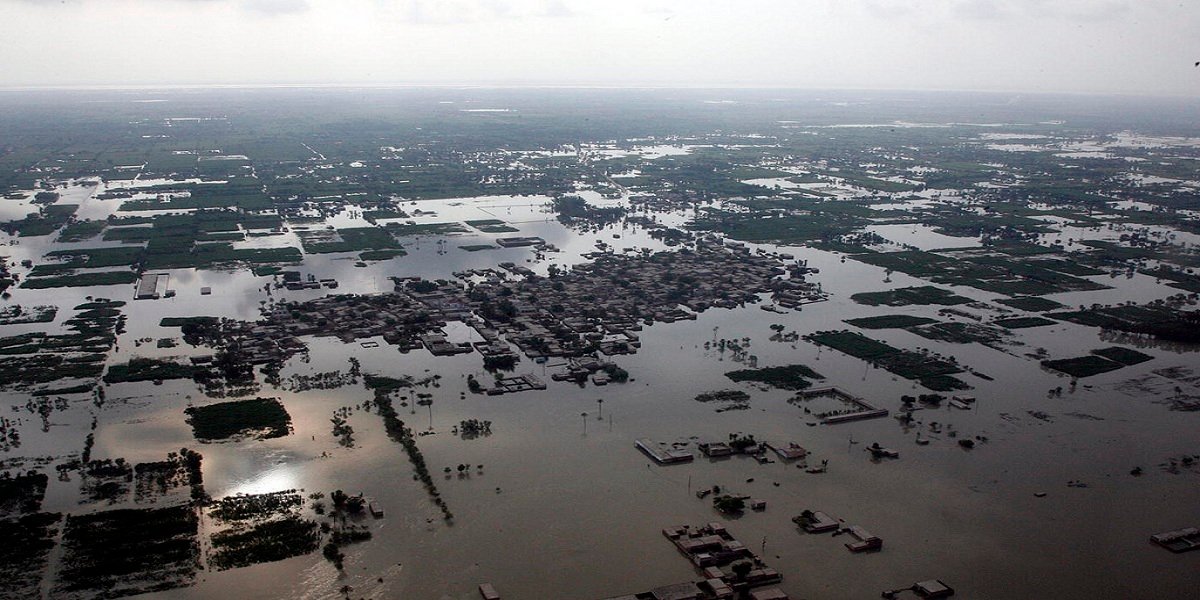
ISLAMABAD: A report released by the United Nations on Pakistan’s devastating floods stated that more than 240,000 people in the southern province of Sindh remain displaced while satellite images indicate about eight million are “still potentially exposed to floodwaters or living close to flooded areas”.
According to the situation report of the UN’s Office for the Coordination of Humanitarian Affairs (OCHA), released on Tuesday, at least 12 districts continue to report standing water, 10 of which are in Sindh and two in Balochistan.
Pakistan witnessed catastrophic floods this summer after heavy monsoon rains and melting glaciers submerged one-third of the country, killing more than 1,700 and affecting a total of 33 million people.
Houses, roads, bridges and rail networks were washed away, with the government estimating the total damage at more than $30bn.
The UN report says while receding water has allowed millions to return home, they continue to face acute shortages of essential items such as food and medicine. It adds that the flood-hit regions are now tackling health-related challenges, though the numbers are showing a declining trend.
Citing data from the World Health Organization (WHO), the UN report said cases of malaria have declined by 25 percent in Balochistan, 58 percent in Khyber Pakhtunkhwa and 67 percent in Sindh since early September.
The report added that a high number of malaria and cholera cases are still being reported from Sindh and Balochistan provinces, highlighting the “underlying vulnerabilities” in those regions.
The UN report further said more than 600,000 children in Pakistan have not received a single polio vaccine because of a lack of access to areas devastated by the floods. Pakistan remains one of the two countries in the world, along with Afghanistan, that is yet to be declared polio free.
The report also highlighted the food security situation in Pakistan. Quoting figures from the World Food Programme (WFP), another UN body, it said the highest food-insecure population was recorded in Sindh (3.9 million) and Balochistan (1.6 million).
“Evidence from available data indicates that relief response to date has fallen well short of the need, with over 5.1 million people now experiencing IPC 4 conditions in flood-affected areas,” it said, adding that an additional 1.1 million could fall in the same category by early 2023.
Read more: Chilla-i-Kalan; Forty days of intense chilling cold in Kashmir Valley