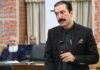
LAHORE: Mohsin Naqvi, Interior Minister has termed Ajit Doval and Amit Shah as real architects of Indian war strategy against Pakistan which was turned down by Pak Armed Forces,
Naqvi revealed that Pakistan has video evidence of six Indian aircraft that had been downed and revealed that the country had advanced knowledge of Indian decisions and strategies during the conflict.
“When their aircraft were shot down, we decided not to announce the numbers without proof,” Naqvi said while addressing a seminar organised by the Professor Waris Mir Foundation at Lahore’s Aiwan-e-Iqbal on the theme “Global Impacts of Pakistan’s Military and Diplomatic Victories over India”.
The Interior Minister went on t say that he was an eyewitness to many incidents during the Pakistan-India war and remained directly involved in several matters.
He paid rich tribute to the officers and soldiers of the Pakistan Army, Air Force, and Navy, while emphasising the pivotal role played by intelligence agencies in securing victory for the country.
Naqvi said that the services of intelligence officers, whom he described as “silent warriors”, were unforgettable.
“Whether it was India’s war planning or their aircraft taking off, our agencies had access to every move in advance,” he remarked.
“Within minutes, we had field evidence videos of six Indian aircraft that had been downed,” he said, adding that such successes were a testament to the capabilities and sacrifices of Pakistan’s intelligence community.
Highlighting what he described as “divine help”, Naqvi recalled that India fired seven missiles at one of Pakistan’s major bases, but none landed on target.
“Some fell before reaching, others fell outside or to the side.
“On the contrary, when Pakistan launched missiles at Indian military installations near civilian areas, those hit India’s largest oil storage depot, destroying it completely,” he said.
The minister added that Indian forces also attempted to strike Pakistani air bases, including Nur Khan, but suffered limited success.
“Except for one base where our soldiers embraced martyrdom, no major loss occurred. This was purely Allah’s help,” he observed.
Naqvi lauded the leadership of Field Marshal Syed Asim Munir, stating that he led with “great courage and bravery” during the conflict.
He narrated an encounter when a Saudi delegation visited Pakistan amid the crisis.
“The field marshal told them, ‘India is like a shining Mercedes, but we are like a dumper truck loaded with stones. Imagine the result if they collide.’ The delegation remained silent,” he said.
Read more: Asim Munir Orders Immediate Relief For KP Flood Victims